89, route de Turin à Nice
Soirée d'ouverture de la Biennale
13 Novembre 2026 de 18.00 à 21.00
Exposition du 13 Novembre - 6 Décembre 2026
Mercredi - Samedi, de 12h à 19h
Nocturne jeudi 19 Novembre de 18h à 21h
The flagship exhibition of the OVNi Biennial, conceived as a fluid departure from the « happening » toward the grace of dance, offers one of the many nuanced reflections on this 2026 edition’s theme: “Performancia.”
Since the 1970s, performance and video art have transformed the body into a topos—a fertile ground for political, social, and aesthetic experimentation. Originally envisioned as a radical, intimate, and situated gesture, the performed body has evolved. Through the lens of video and the rise of digital platforms, it has become a mechanism for the staging of the self, giving rise to unprecedented modes of mediatization.
The exhibition invites visitors on a historical and critical journey through these practices, illustrating how artists have anticipated new « writings » of the body—scripts that are sometimes diverted by contemporary logic and the shifting nature of the performative act. This transdisciplinary and transgenerational survey approaches the body as a site of lived experience, philosophical inquiry, and liberation.
Structured as a series of autonomous episodes, the exhibition calls upon the audience to reconstruct their own interpretation. Here, the body emerges as an event, a political and poetic vessel, and a conduit for plural imaginaries. Navigating the space between historical legacy and the contemporary moment, the artists illuminate the tensions between self-expression, mechanisms of control, and the pull of the spectacular.
“So Many Bodies Growing Within Us” opens vital spaces for the critical exploration of collective identities and cultural transformations, even as they collide with our own enduring relationship to the image.
Nathalie Amae
Curator
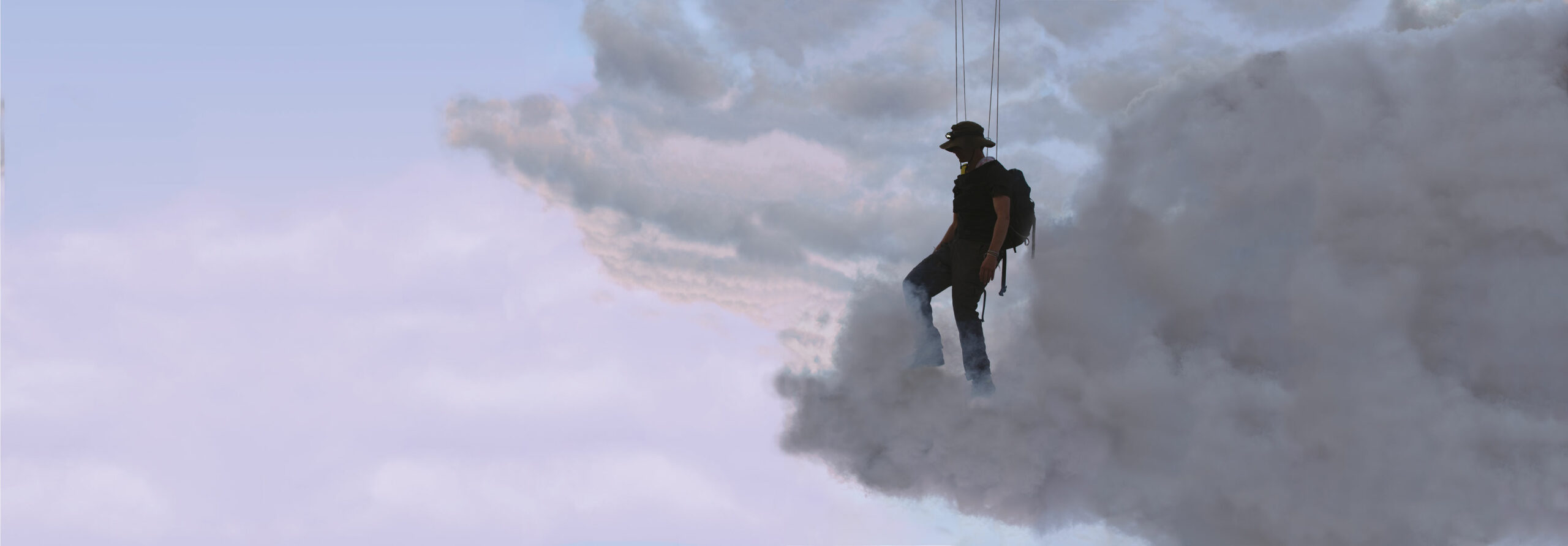
Video footage offers a partial glimpse into this expedition, which led the artist to explore the sky in search of an ever-shifting landscape — one where mountains and furrows dissolve and reform from one moment to the next. Contemplated, mapped, and interpreted, threatening or sheltering, clouds are also coveted in an age of global warming.
Several hundred metres above the ground, Abraham Poincheval walked through a borderless territory composed of water, earthly particles, and celestial dust. The account of this wandering is the first chapter of an odyssey across the cloud canopy — pointing toward other ways of inhabiting the world.
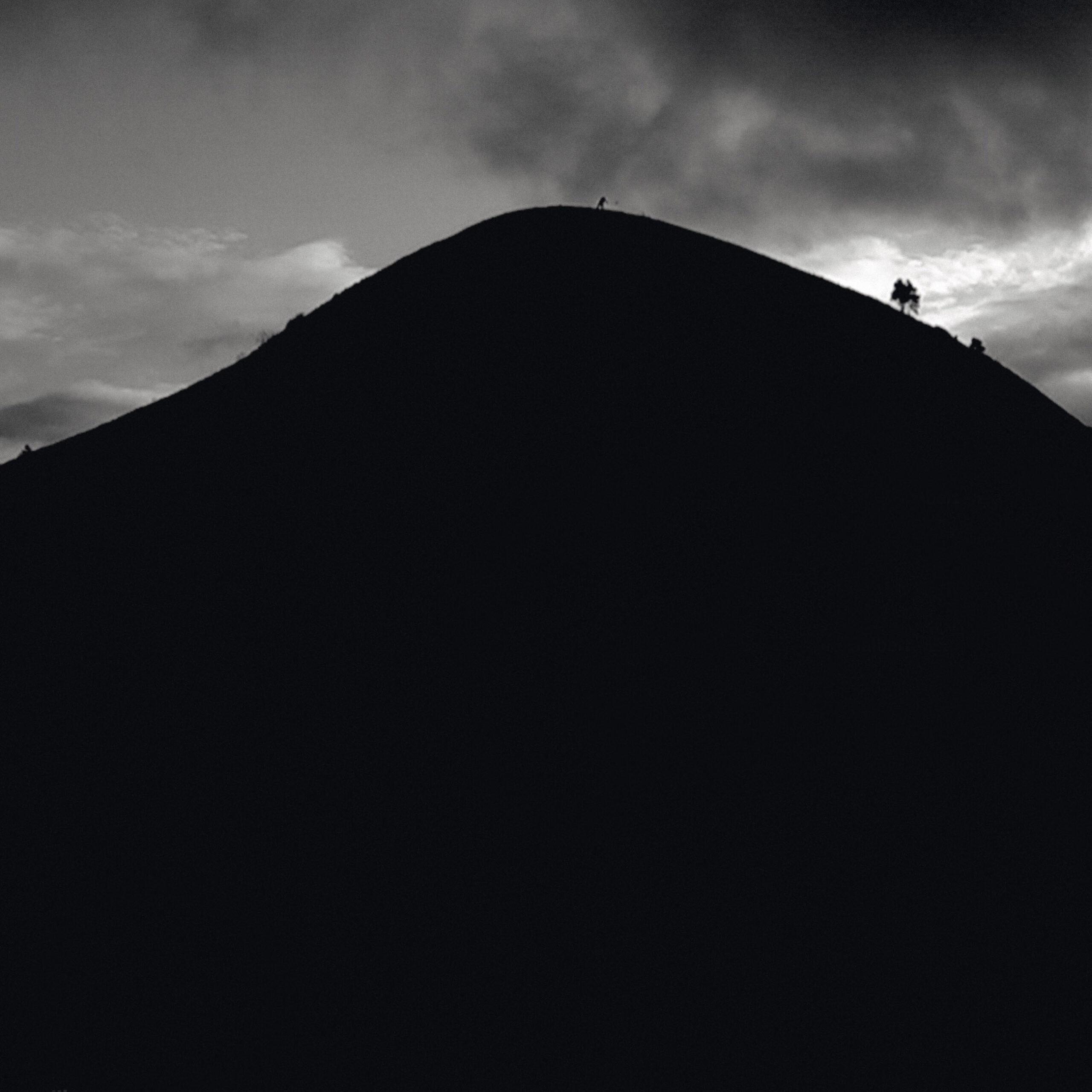
In End, Lucien Pelen — born in Aubagne in 1978 — films wild and sweeping landscapes, yet refuses to let the viewer surrender to pure aesthetic contemplation. Instead, he places himself within the frame as the subject of an intervention that quietly unsettles the scene. Nature becomes the pictorial ground for an action that blends the absurd with the poetic: a solitary figure toiling ceaselessly at the top of a hill. In an inverted power dynamic, man is not crushed by the elements — rather, his minuscule gesture, nearly imperceptible within the sequence shot, is enough to disturb the equilibrium of the vast.
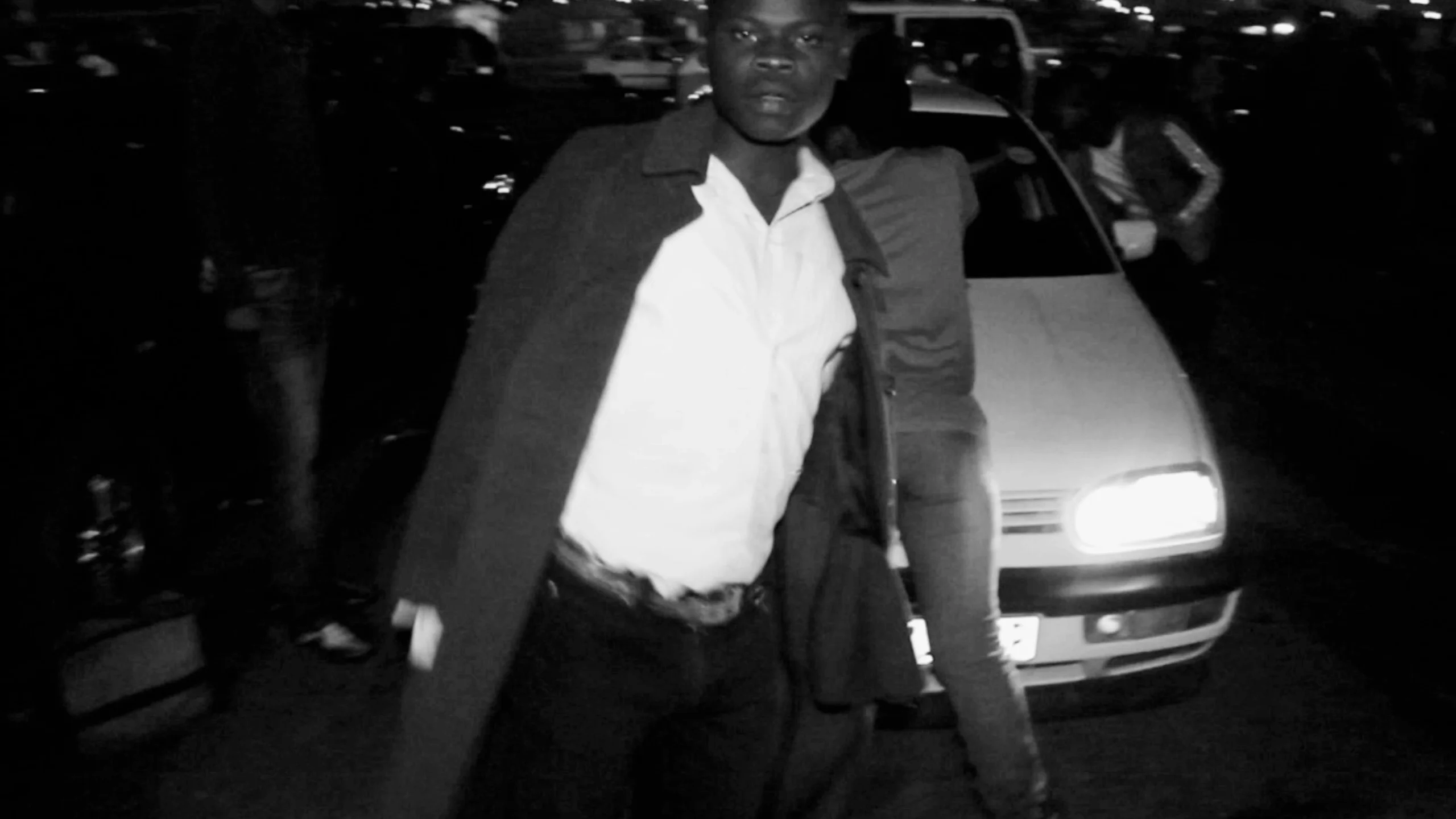
In his latest video work, The Young Shall Grow (I), Nxumalo translates his photographic research into the language of video art. The eight-minute piece follows a young man returning home after a night of celebration in Johannesburg. Between the gentle rain and the quiet dawn, his journey becomes a meditation on growth, memory, and the search for identity in a city oscillating between splendour and fragility.
The artist captures the contradictory atmosphere of the South African metropolis: streets still marked by social divisions, walls and gated spaces, shopping malls that symbolize both consumption and exclusion. Against this urban backdrop, the young man embodies a generation moving between euphoria and introspection, between collective noise and individual solitude.
Nxumalo’s camera operates with proximity and sensitivity, illuminating bodies, gestures, and silences with a light that reveals intimacy within the everyday. In this gesture, The Young Shall Grow (I) becomes a collective portrait of contemporary South African youth: a moment of transition between night and dawn, between the desire to belong and the need to reinvent oneself.
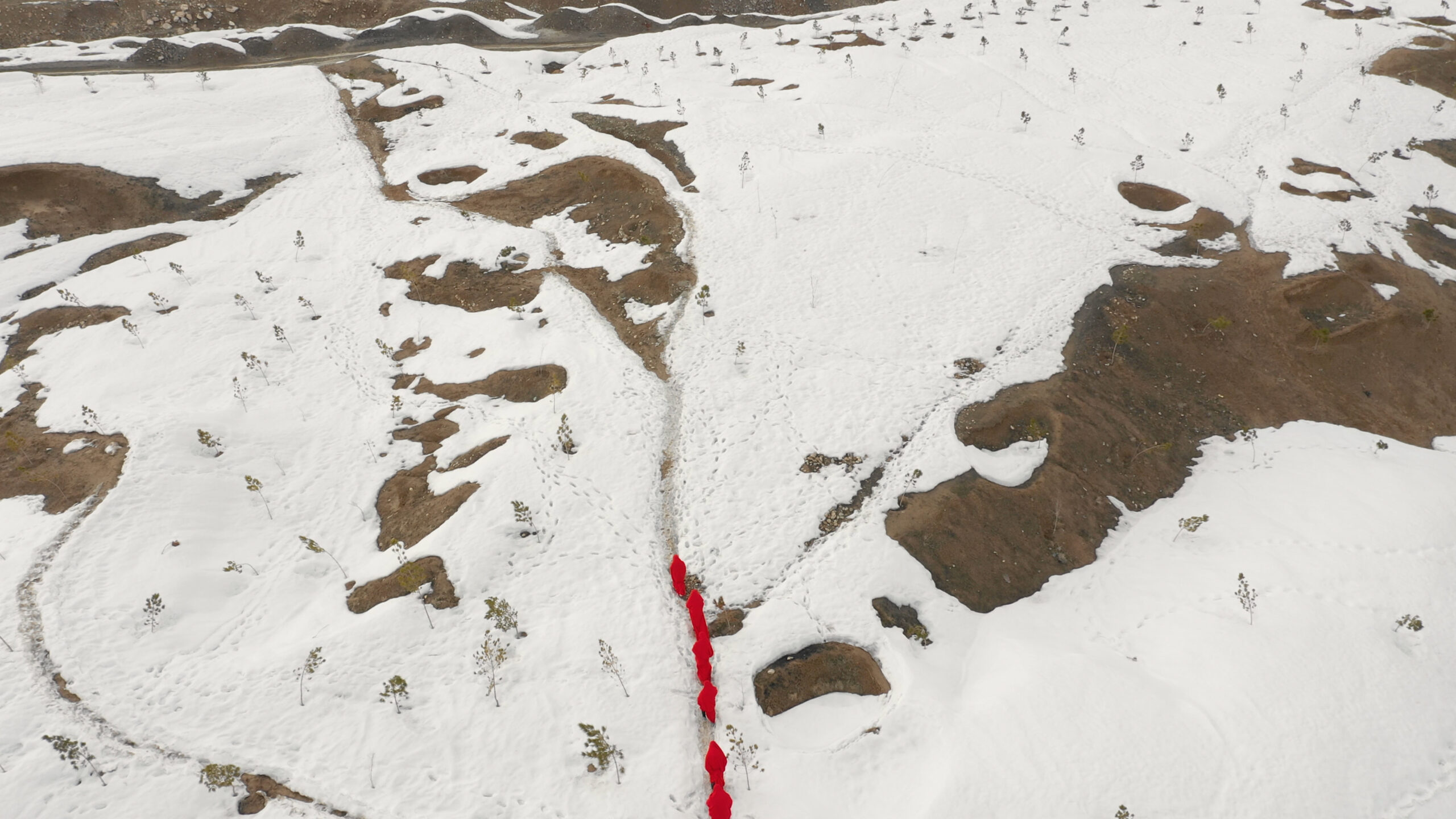
The Reds Move is a multidisciplinary project that combines live performance, video and paintings in a cohesive exhibition. Twenty-one performers will take part in an open-air procession, accompanied by video projections from Kabul, whilst selected paintings will provide a visual and historical context. This layered approach allows the audience to follow the evolution of the series and understand how the colour red becomes a space for memory, reflection and collective remembrance. The project connects personal and collective histories whilst demonstrating the capacity of performance to adapt to different geographical contexts and communities.
The unicorn’s existence is rooted in the writings of ancient authors — Pliny, Aristotle, and others — as well as in sacred texts. It is traditionally imagined as a white horse or goat bearing a long spiralling horn at the centre of its forehead, and stands as a symbol of purity and chastity. Extraordinary virtues were attributed to it, concentrated in its horn: ground into powder and consumed, this peculiar appendage was believed to serve as a powerful antidote capable of purifying poisoned drinks. The horns themselves — in reality the teeth of narwhals, the unicorn of the seas — were eagerly sought after by collectors of curiosities in the sixteenth and seventeenth centuries.
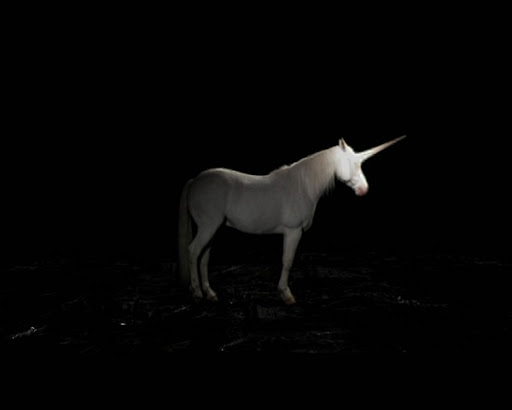
Maïder Fortuné offers an enigmatic video showing a unicorn against a black background. The image slowly comes to life as a fine rain of ash gradually settles over the animal, while the soft sound of falling drops and a few piano chords accompany what becomes an almost hypnotic vision. The film gives body to the strange creature to which this space is dedicated. In the tradition of the cabinet of curiosities, it brings together natural wonders and artistic representations — from the past and the present alike.
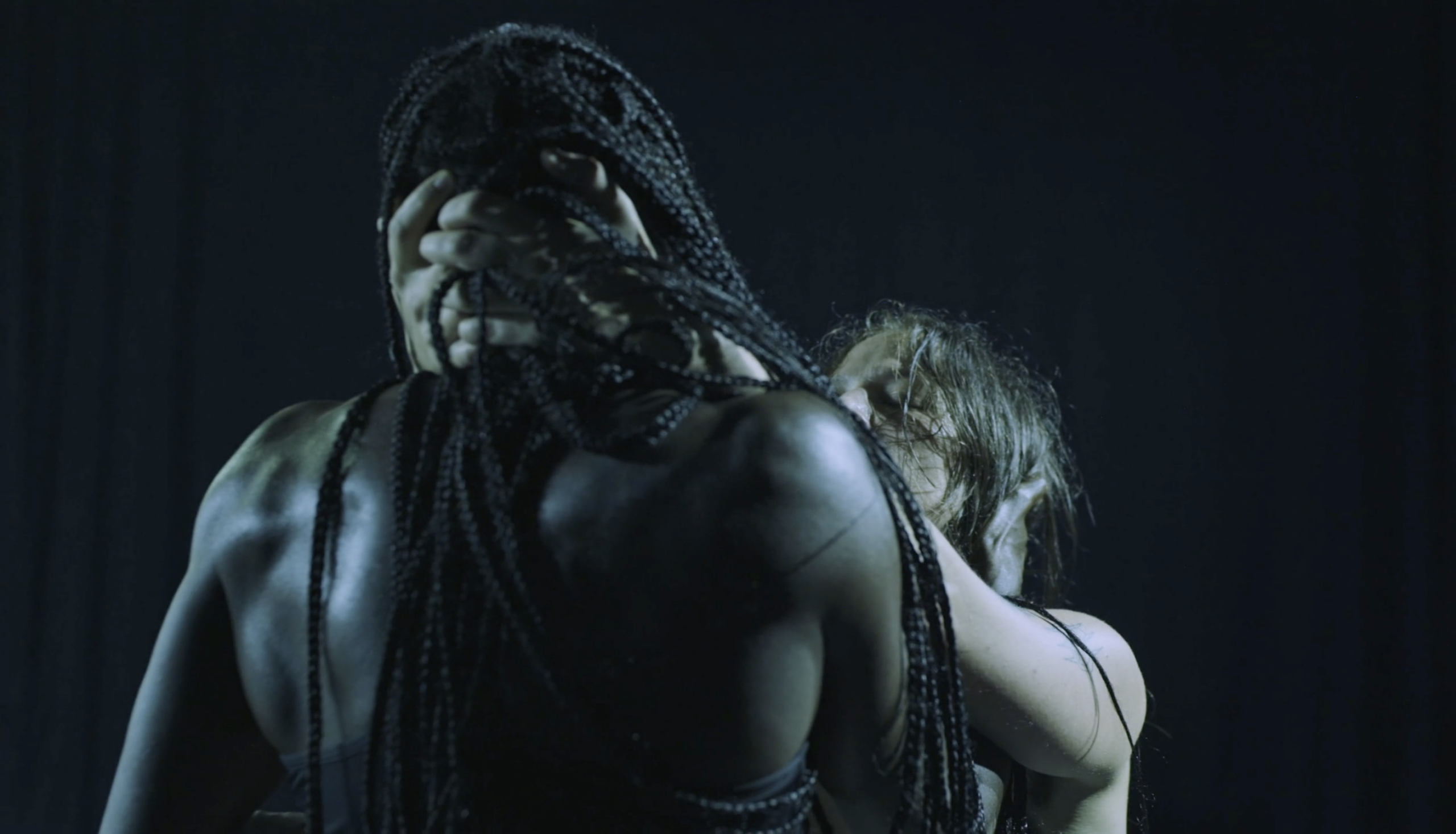
In remedy, caner teker translates the performance killjoy into a filmic encounter. Inside a theatre space, two performers move through the fragile distance between affection and conflict. Their fight becomes a choreography of care, a negotiation of touch and power. The camera stays close to gestures that shift between resistance and tenderness, tracing how the body remembers loss. What unfolds is not reconciliation, but relation in motion, unfinished and exposed. remedy continues teker’s search for how grief and intimacy appear through movement. It asks us how conflict can hold connection, and how love can remain within moments of rupture.
Adelita Husni-Bey’ s work addresses complex questions about race, class, and gender, often drawing inspiration from anarchist education theories and innovative teaching methods. Her projects are grounded in collective creative processes, such as role-playing, workshops, and group undertakings, which have involved students, athletes, lawyers, and activists. The task of an artist, in Husni-Bey’ s view, is to set up situations and experiments where the participants – and through them, the viewers – can come to terms with their own relationship to the social and economic power dynamics of our era.
Her piece for the Italian Pavilion, titled The Reading / La Seduta, was developed through a workshop held in Mannahatta (Lenape territory, known as Manhattan, New York) with a group of young people, selected via an open call circulated among a number of museum education departments around the city. This workshop, which took place in February 2017, included a series of meetings, discussions, and experimental theater exercises. Working with the artist and the other facilitators, the participants reflected on their own connections to the environment and to the exploitation of the earth, examining a series of complex questions related to ideas of extraction, threat, technology, use, value, and vulnerability. These themes appear in the video in the form of a tarot deck designed by the artist herself during the recent indigenous protests against the construction of a pipeline near the Standing Rock Reservation.
In the video, the participants, who are seated around a table, draw inspiration from a tarot reading performed with Husni-Bey’ s deck to talk about their own spiritual, colonial, and technological relationships to the earth and land. The artist uses the tarot reading as both a magical and a pedagogical tool: the young people – who in the video are seeing these cards for the first time – contrast an efficiency-based, capitalistic mindset, which views the earth as a source of profit to be mined, with a vision of it as something closely intertwined with human life, to be treasured and protected. The film cuts between the discussion around the table and scenes in which the participants perform a series of exercises inspired by themes adopted during the initial workshop, and based on the Theater of the Oppressed. Alongside the video, a series of sculptures – luminescent silicone hands – seems to suggest the advent of a virtual, prosthetic future, hinting at our own involvement in the consumption of resources and in new forms of colonization.
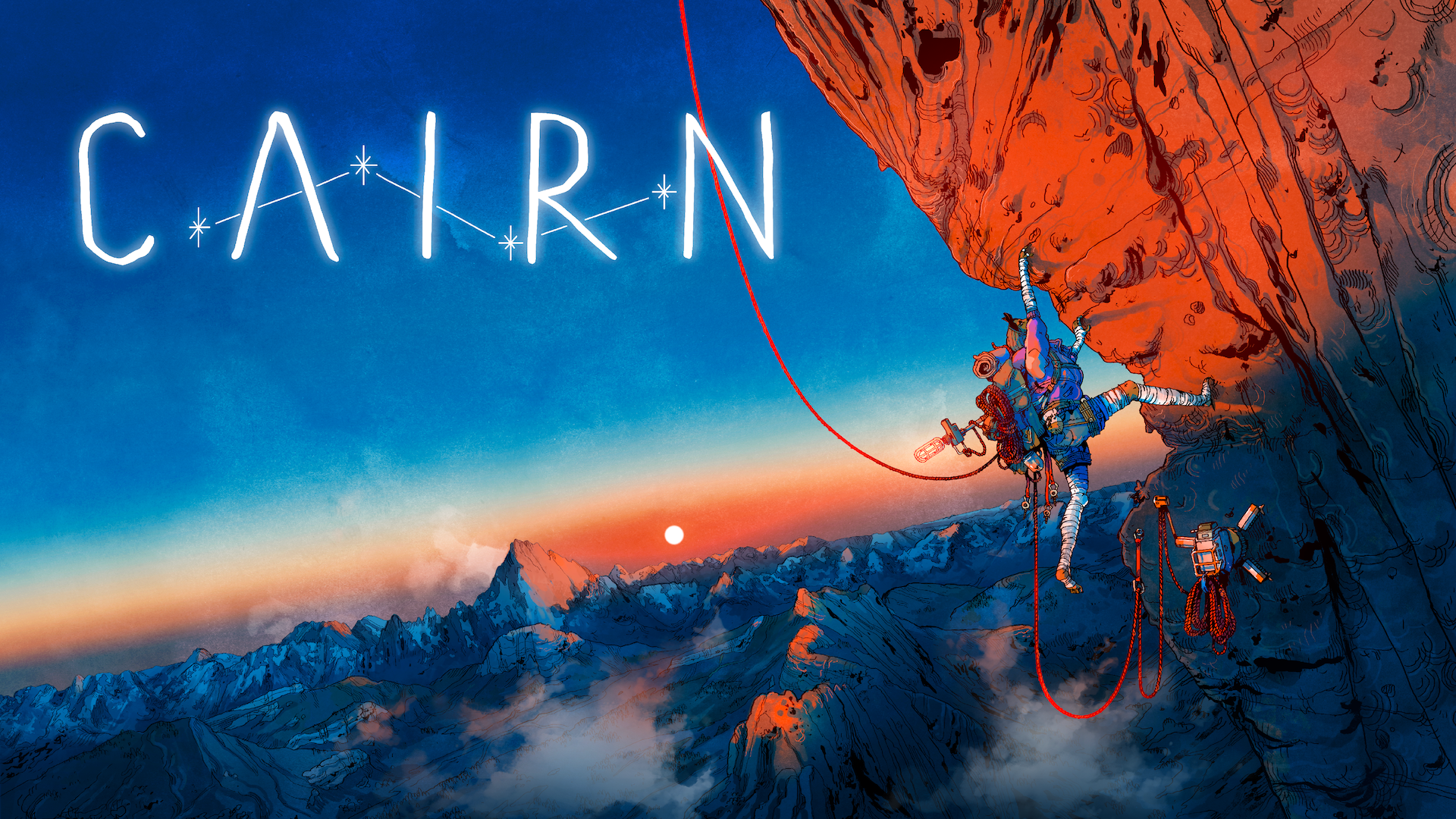
Cairn offers a disconcerting and highly original proposition within the realm of video games. This stems not only from its narrative depth but, above all, from the prospect of a never-before-achieved ascent: that of Mount Kami (a name referencing the Gods in Japanese). Beyond its cinematic visual prowess, the sheer tension of the art of climbing converges with a true trial of both body and mind. The economy of effort must align with resource management, including those vital for survival. As multiple paths unfold, scaling the mountain becomes a challenge of poetics. Inevitably, René Daumal’s Mount Analogue comes to mind; these alpine adventures—by virtue of being a concrete endeavor—reveal themselves to be a profound spiritual allegory.
« Thus, this game of climbing and introspection by The Game Bakers (Furi, Haven) leaves no one unmoved. The character of Aava sets her sights on ascending Mount Kami. There, she will discover the law of the mountain, and learn far more about herself and others. At the very heart of the game, the climbing is intuitive: placing ice axes, positioning the body and limbs wherever the path seems most forgiving. You move in free-form progression, set up camp, explore the mountain, and learn about the land as well as its inhabitants. You gain access to the experiences of past expeditions. Ultimately, it is a game about the meaning of life within the environment we inhabit.
A leading figure in performance art, her work is raw, striking, and uncompromising, marked by a critical engagement with the social realities of her country. Her experience as a forensic expert brings her into close contact with the realities of crime, material and symbolic violence, and social conflict. She is drawn to the human condition as it confronts inequality, predatory capitalism, police brutality, and hate crimes — as well as silence, erasure, and indifference. She makes the experience of the female body a mirror of society at large, using her own body as both a central aesthetic element and an instrument of creation.
Regarded as one of Brazil’s most significant contemporary artists, she has also worked as a forensic expert at the Centro de Perícias Renato Chaves in the state of Pará since 2010. She represented Brazil at the 56th Venice Biennale and her work is held in the collections of MAM São Paulo, MAM Rio, MAC-USP São Paulo, Instituto Itaú Cultural São Paulo, Kunsthaus Wiesbaden, UMoCA Salt Lake City, and the Gulbenkian Foundation.