31 Prom. des Anglais, 06000 Nice
27 novembre visite pro.
28 et 29 novembre
The Cosmopolis Award is one of the highlights of the OVNi Biennale. Conceived as an international crossroads, each edition brings together artists supported by the cultural institutes of embassies present in France under the auspices of FICEP, as well as by international art foundations and centres.
The concept is distinctive: each partner institution accompanies an artist and entrusts them with a room at the Hôtel West End — a Belle Époque establishment listed as a Historic Monument, situated on the seafront along the Promenade des Anglais. The intimate space of the hotel room thus becomes an exhibition territory, a site of scenography and artistic experience for the public.
For the 2026 edition, the works presented are set within the central theme « Performancia », exploring the place of the body in moving images, from video to immersive installation. An international jury made up of seven professionals selects a winner, who receives a grant of 5,000 euros dedicated to a research and creation project. The Cosmopolis Award is awarded during the Biennale’s closing evening on 28 November 2026 at 8pm, followed by a dinner cocktail bringing together all of the participating artists.
Jury Members :
Tania Mouraud – President of the Jury, artist, Académie des Beaux-Arts;
Mathilde Roman, independent curator, teacher at Pavillon Bosio;
Laura Lamonea, artistic director for video and sound art in Milan;
Rosa Tyhurst, curator at Gasworks London;
Bjorn Dahlström, director of the Nouveau Musée National de Monaco – NMNM.
Artists (… supported by …) :
Sophie Dupont (Le Bicolore);
Marina Gioti (Hellenic Cultural Centre);
Keiu Maasik (Estonian Centre for Contemporary Art, Embassy of Estonia);
M + M (Casino Luxembourg);
Erika Nieva Cunha (Laboratorio Arts Contemporains);
Daniela Pinto (Guatemala);
Yo-E Ryou (Korean Cultural Centre);
Anna Senno (Cultural Institute of Mexico in France);
Tanin Torabi (La Villa Arson, ParTAB);
Ugo Woatzi (Centre Wallonie-Bruxelles).
Supported by :
![]() |
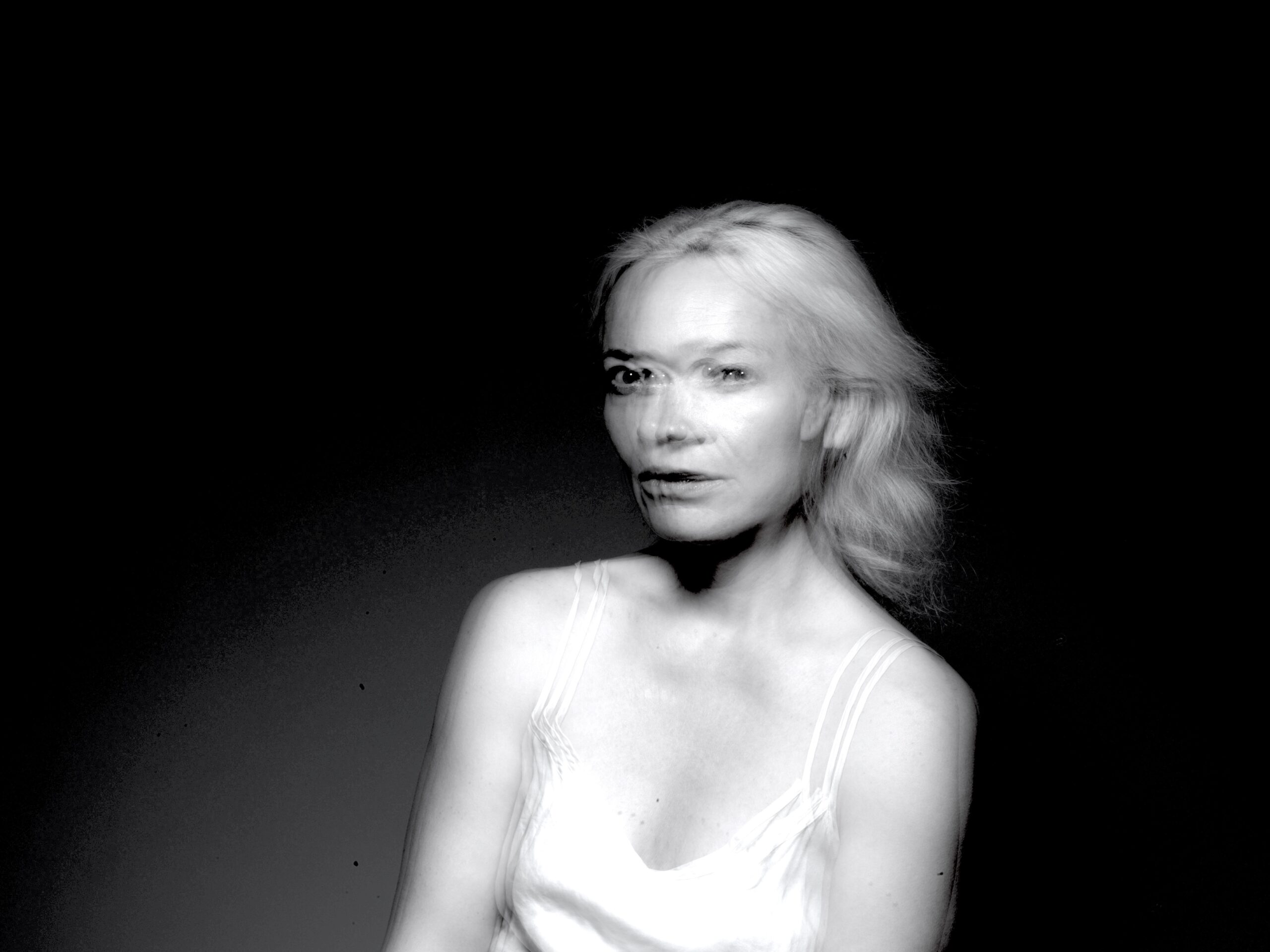
BREATHE – is a three-day immersive art project by Sophie Dupont, transforming one hotel room into an intimate space dedicated to breathing, presence and human connection. The project starts from a simple idea: behind every hotel room is a person, with their own memories, emotions, hopes and fears. Although guests may never meet, they share something invisible and universal — they all breathe the same air.
During the three days of the exhibition, the room becomes an artwork through video, sound and subtle interventions. Portrait-format videos show people of different ages, cultures and backgrounds simply breathing. The rhythm and quality of each breath suggest different emotional states, from calm and vulnerability to anxiety, exhaustion, joy or stillness.
Visitors are invited to enter the room and experience these portraits not simply as spectators, but through their own physical presence and memories. The sound of breathing may also extend into the surrounding spaces of the hotel, creating a quiet connection between the private room and the outside world. In a context dominated by movement, notifications and constant distraction, BREATHE offers a moment to slow down and become aware of something as simple and essential as breathing. The hotel room becomes, for a short time, a space for contemplation and a shared human experience.
One room holds one artistic encounter.
Every person carries a different story.
Every breath connects us.
Supported by :
![]() |
Information coming soon
Supported by :
![]() |
![]() |
The presentation features a video work projected on the wall, Inspect Pink Weapon (2026), a video loop showing various customized and colorful weapons. This type of hand movement and weapons embellishment is common in contemporary shooter games.
The elements of the installation Will I Die a Violent Death? (2026), surrounding the video and the performance, also combine military equipment with the color pink. Male online shooter players often look down upon the customization of characters and weapons in pink, perceiving it as unmanly. Out of defiance, I felt the need to surround myself more and more with the color pink.
The performance Cozy under the Table (2026) will take place throughout the duration of the exhibition, bringing a real-time presence of online gaming into the exhibition space while subtly referencing real war, as hiding under a table is often mentioned among safety tips in the event of a bombing.
Supported by :
![]() |
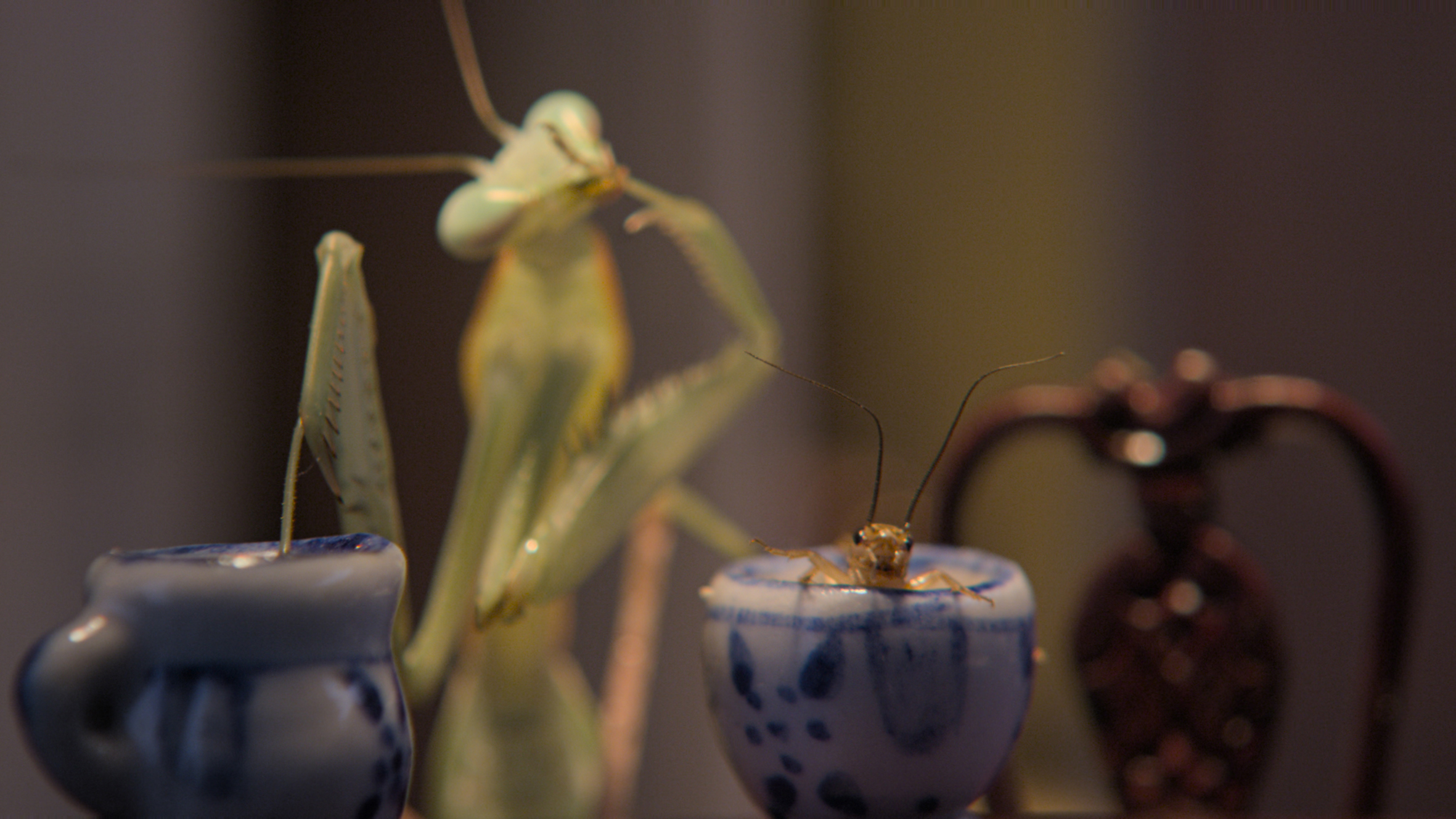
The Day of the Mantis brings together for the first time the three films: Mad Mieter (2019), Club Bunker (2023) and the new unseen production Silent Odd (2026). Designed as a fragmented cinematic environment, The Day of the Mantis immerses visitors successively into three stereoscopic macro-film installations inhabited by strange, non-human protagonists — praying mantises and stick insects — evolving within spaces traditionally associated with human activity. Combining highly realistic imagery with fantastic and hallucinatory atmospheres, the trilogy confronts viewers with scenarios of catastrophe, isolation, trance and latent violence.
Each film reflects specific contemporary anxieties and social conditions: the isolation of the individual and the loss of empathy in Mad Mieter; the uneasy coexistence of hedonism, latent conflict and retreat in Club Bunker; and, in Silent Odd, the escapist fantasy of seeking a new habitat beyond an Earth threatened by ecological collapse.Borrowing from philosopher Rosi Braidotti’s notion of a “radical repositioning of the subject,” the trilogy proposes a post-anthropocentric shift in perspective.
Supported by :
![]() |
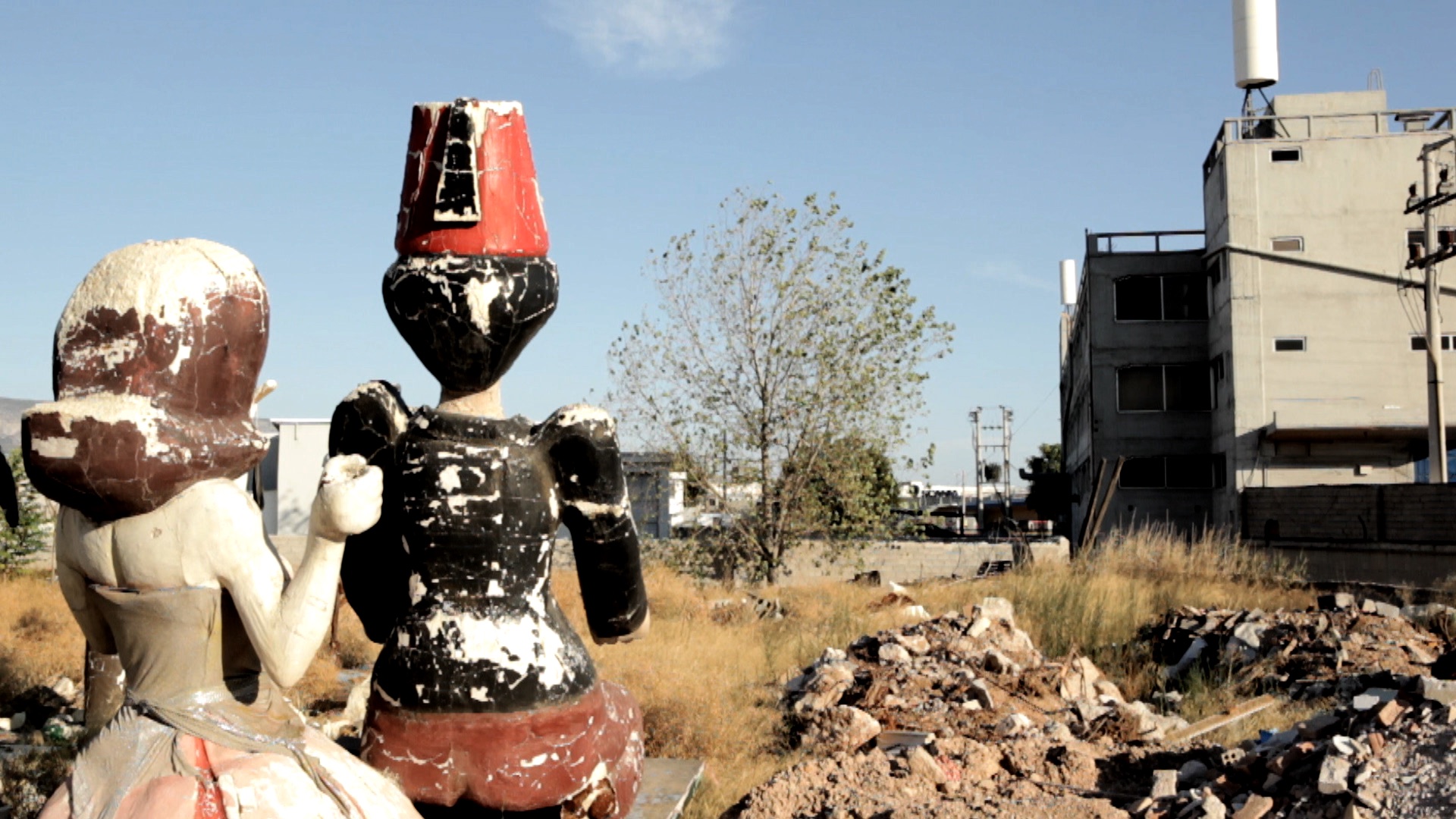
This film explores a disjointed relationship with time, where the present is permeated by both the memory of past insurrections and the horizon of a future yet to come. It brings together two realms of perception — the conscious and the unconscious — within an installation where text, sound, and photography resonate with one another. Born from a process where the image sometimes precedes what it seeks to reveal, the project embraces accidents, fragments, and textures: a landscape becomes an image, the image a film, the film a room, and the room an inner landscape.
The narrative follows A., an escapee from a labor camp, who seeks refuge in an isolated building where she encounters a humanoid artificial intelligence.
Supported by :
![]() |
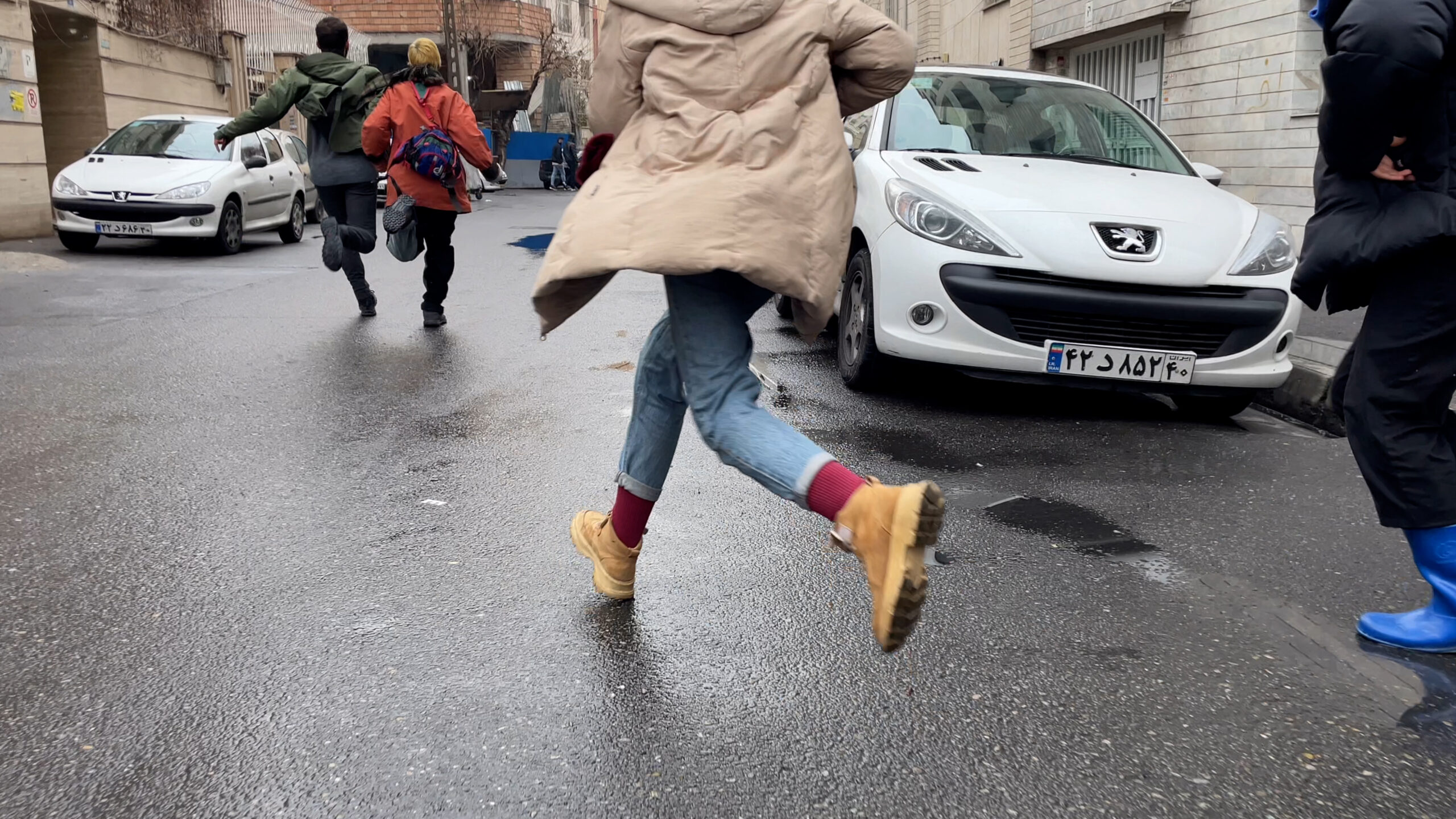
Until…is a single-take video, captured using only the switch between the front and back cameras of an iPhone by the performers, and filmed during the 2022 "Woman Life Freedom" protests in Tehran, Iran. The video not only presents a highly intricate choreography for the camera, infused with the originality and urgency of what is deemed 'possible' in that specific situation, but also encapsulates the essence of unity, resilience, and purposefulness demonstrated by young artists responding creatively and courageously to an actual brutal situation in Iran.
We walk. We run. We fall. We hug those who we love and then we run again. We walk together until the walls move.
Supported by :
![]() |
Supported by :
![]() |
Supported by :
![]() |