31 Prom. des Anglais, 06000 Nice
27 novembre visite pro.
28 et 29 novembre
The Cosmopolis Award is one of the highlights of the OVNi Biennale. Conceived as an international crossroads, each edition brings together artists supported by the cultural institutes of embassies present in France under the auspices of FICEP, as well as by international art foundations and centres.
The concept is distinctive: each partner institution accompanies an artist and entrusts them with a room at the Hôtel West End — a Belle Époque establishment listed as a Historic Monument, situated on the seafront along the Promenade des Anglais. The intimate space of the hotel room thus becomes an exhibition territory, a site of scenography and artistic experience for the public.
For the 2026 edition, the works presented are set within the central theme « Performancia », exploring the place of the body in moving images, from video to immersive installation. An international jury made up of seven professionals selects a winner, who receives a grant of 5,000 euros dedicated to a research and creation project. The Cosmopolis Award is awarded during the Biennale’s closing evening on 28 November 2026 at 8pm, followed by a dinner cocktail bringing together all of the participating artists.
Jury Members :
Tania Mouraud – Présidente du Jury, artiste, Académie des Beaux Arts,
Bjorn Dahlström, directeur Nouveau Musée National de Monaco – NMNM
Emmanuel Guigon, directeur du Musée Picasso de Barcelone.
Anya C.Harrisson, curatrice et critique d’art
Laura Lamonea, directrice artistique video sound art à Milan,
Mathilde Roman, independant curator, enseignante au Pavillon Bosio,
Rosa Tyhurst, curator Gasworks London
Artists (… supported by …) :
Sophie DUPONT (Le Bicolore)
Marina GIOTI (Centre Culturel Hellénique)
Keiu MAASIK (Estonian Centre for Contemporary Art, Ambassade d’Estonie)
M + M (Casino Luxembourg)
Erika NIEVA CUNHA (Laboratorio Arts Contemporains)
Daniela PINTO (Mazorca Art – Mimono)
Yo-E RYOU (Centre Culturel Coréen)
Anna SENNO (Institut Culturel du Mexique en France)
Eglė ŠIMKUS (Institut Culturel Lituanien)
Tanin Torabi (La Villa Arson, ParTAB)
Ugo Woatzi (Centre Wallonie Bruxelles).
Supported by :
![]() |
BREATHE – is a three-day immersive art project by Sophie Dupont, transforming one hotel room into an intimate space dedicated to breathing, presence and human connection. The project starts from a simple idea: behind every hotel room is a person, with their own memories, emotions, hopes and fears. Although guests may never meet, they share something invisible and universal — they all breathe the same air.
During the three days of the exhibition, the room becomes an artwork through video, sound and subtle interventions. Portrait-format videos show people of different ages, cultures and backgrounds simply breathing. The rhythm and quality of each breath suggest different emotional states, from calm and vulnerability to anxiety, exhaustion, joy or stillness.
Visitors are invited to enter the room and experience these portraits not simply as spectators, but through their own physical presence and memories. The sound of breathing may also extend into the surrounding spaces of the hotel, creating a quiet connection between the private room and the outside world. In a context dominated by movement, notifications and constant distraction, BREATHE offers a moment to slow down and become aware of something as simple and essential as breathing. The hotel room becomes, for a short time, a space for contemplation and a shared human experience.
One room holds one artistic encounter.
Every person carries a different story.
Every breath connects us.
Supported by :
![]() |
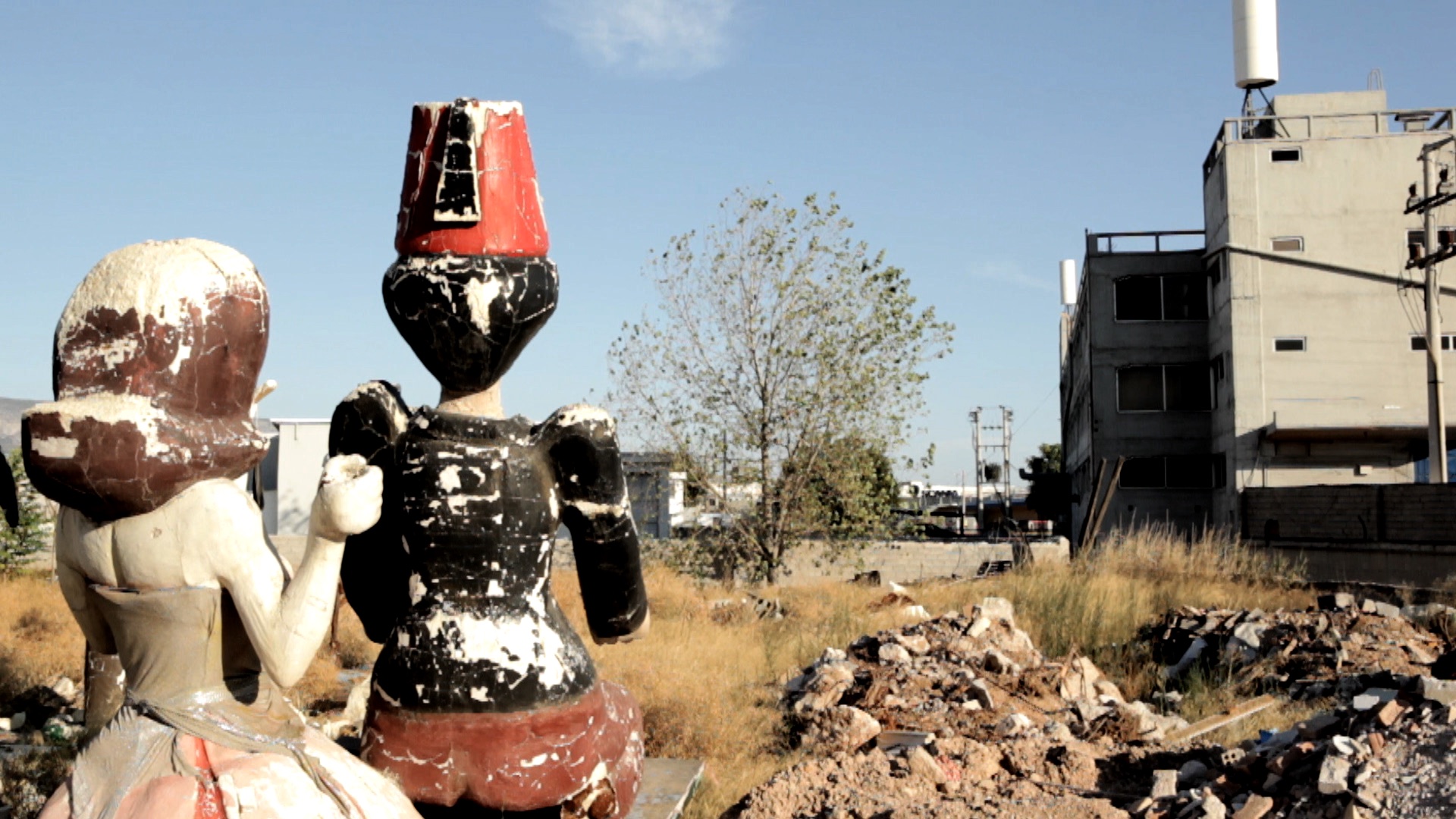
As to Posterity was filmed during the years of Greece’s economic crisis (2011–2014), over three years, across different seasons and times of day. Part science fiction, part archaeological mystery, the film constructs an Athens of the near future, devoid of people and human activity—a paradoxical yet radical rupture for an ancient metropolis that has been continuously inhabited for five millennia.
Its inhabitants have mysteriously disappeared, leaving behind a nondescript liminal space, an ‘archaeological’ site where decaying concrete, metal and plastic coexist with the glorious marble of a deeper past. In their absence, streets, buildings and infrastructures remain, while nature slowly but surely takes over, dissolving the boundaries between the built and the organic. As a city whose narrative has been suspended, Athens becomes a space in which absence is performed through the vestiges of its elusive protagonists: the Athenians, conspicuous by their absence.
Although shot years before the pandemic, the film acquired an uncanny relevance in the years that followed, as if its empty streets had anticipated a world in which cities could suddenly fall silent. At a time when wars, crises and accelerating ecocide continue to force populations to abandon the spaces they call home, absence becomes political presence, echoing the forces that determine who can inhabit and who can belong.
Supported by :
![]() |
![]() |
The presentation features a video work projected on the wall, Inspect Pink Weapon (2026), a video loop showing various customized and colorful weapons. This type of hand movement and weapons embellishment is common in contemporary shooter games.
The elements of the installation Will I Die a Violent Death? (2026), surrounding the video and the performance, also combine military equipment with the color pink. Male online shooter players often look down upon the customization of characters and weapons in pink, perceiving it as unmanly. Out of defiance, I felt the need to surround myself more and more with the color pink.
The performance Cozy under the Table (2026) will take place throughout the duration of the exhibition, bringing a real-time presence of online gaming into the exhibition space while subtly referencing real war, as hiding under a table is often mentioned among safety tips in the event of a bombing.
Supported by :
![]() |
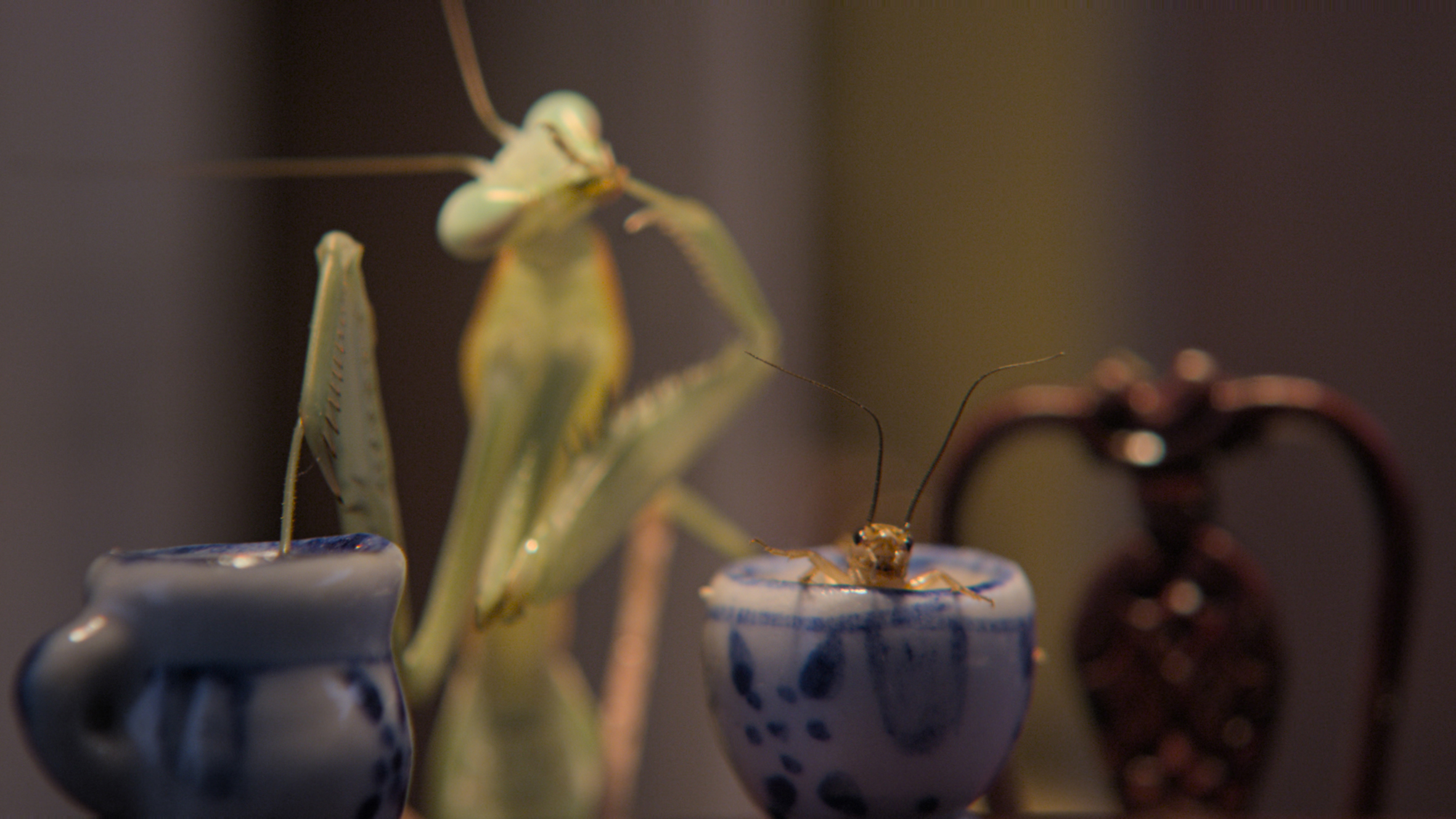
The Day of the Mantis brings together for the first time the three films: Mad Mieter (2019), Club Bunker (2023) and the new unseen production Silent Odd (2026). Designed as a fragmented cinematic environment, The Day of the Mantis immerses visitors successively into three stereoscopic macro-film installations inhabited by strange, non-human protagonists — praying mantises and stick insects — evolving within spaces traditionally associated with human activity. Combining highly realistic imagery with fantastic and hallucinatory atmospheres, the trilogy confronts viewers with scenarios of catastrophe, isolation, trance and latent violence.
Each film reflects specific contemporary anxieties and social conditions: the isolation of the individual and the loss of empathy in Mad Mieter; the uneasy coexistence of hedonism, latent conflict and retreat in Club Bunker; and, in Silent Odd, the escapist fantasy of seeking a new habitat beyond an Earth threatened by ecological collapse.Borrowing from philosopher Rosi Braidotti’s notion of a “radical repositioning of the subject,” the trilogy proposes a post-anthropocentric shift in perspective.
Supported by :
![]() |
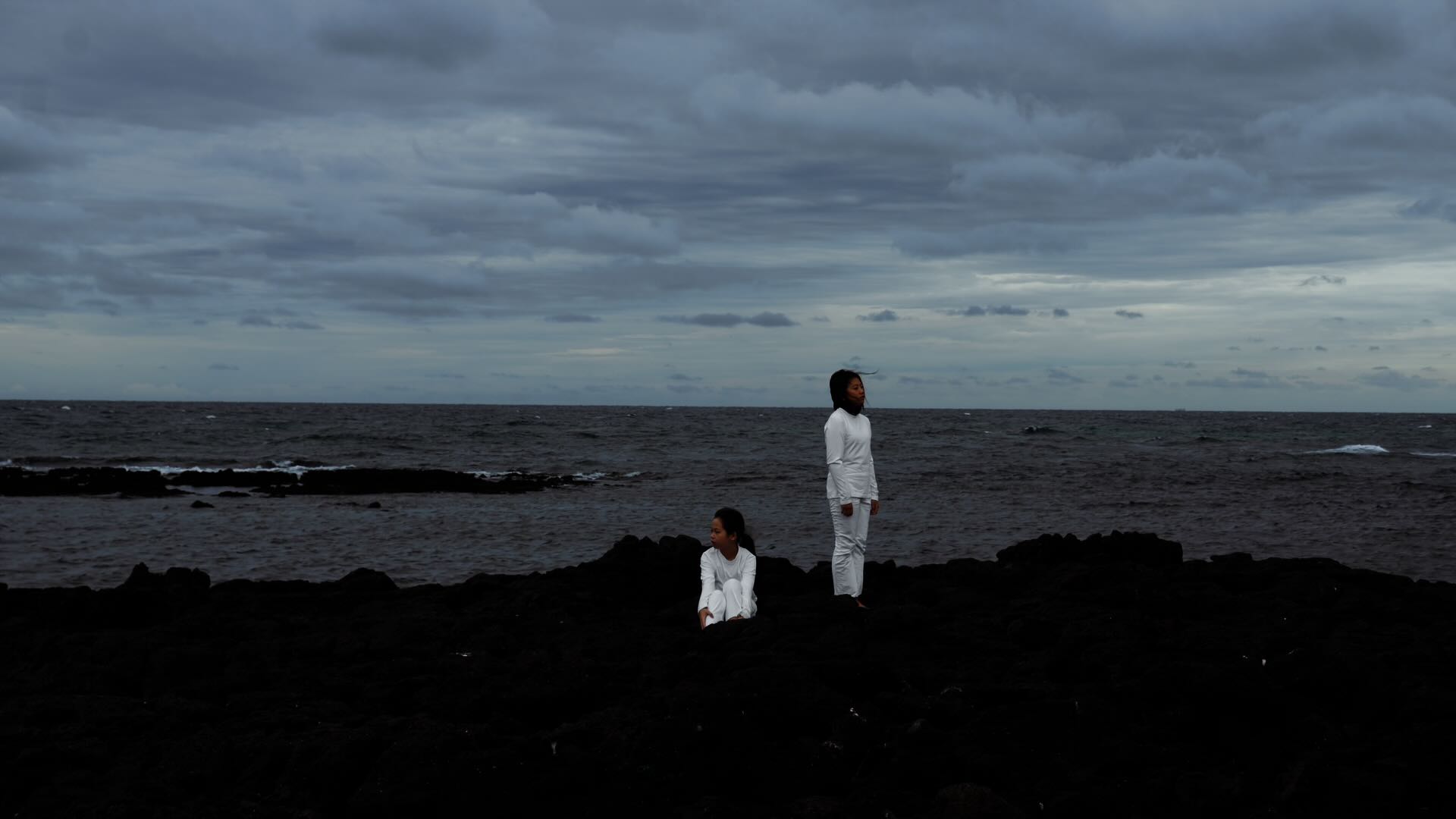
This film explores a disjointed relationship with time, where the present is permeated by both the memory of past insurrections and the horizon of a future yet to come. It brings together two realms of perception — the conscious and the unconscious — within an installation where text, sound, and photography resonate with one another. Born from a process where the image sometimes precedes what it seeks to reveal, the project embraces accidents, fragments, and textures: a landscape becomes an image, the image a film, the film a room, and the room an inner landscape.
The narrative follows A., an escapee from a labor camp, who seeks refuge in an isolated building where she encounters a humanoid artificial intelligence.
Supported by :
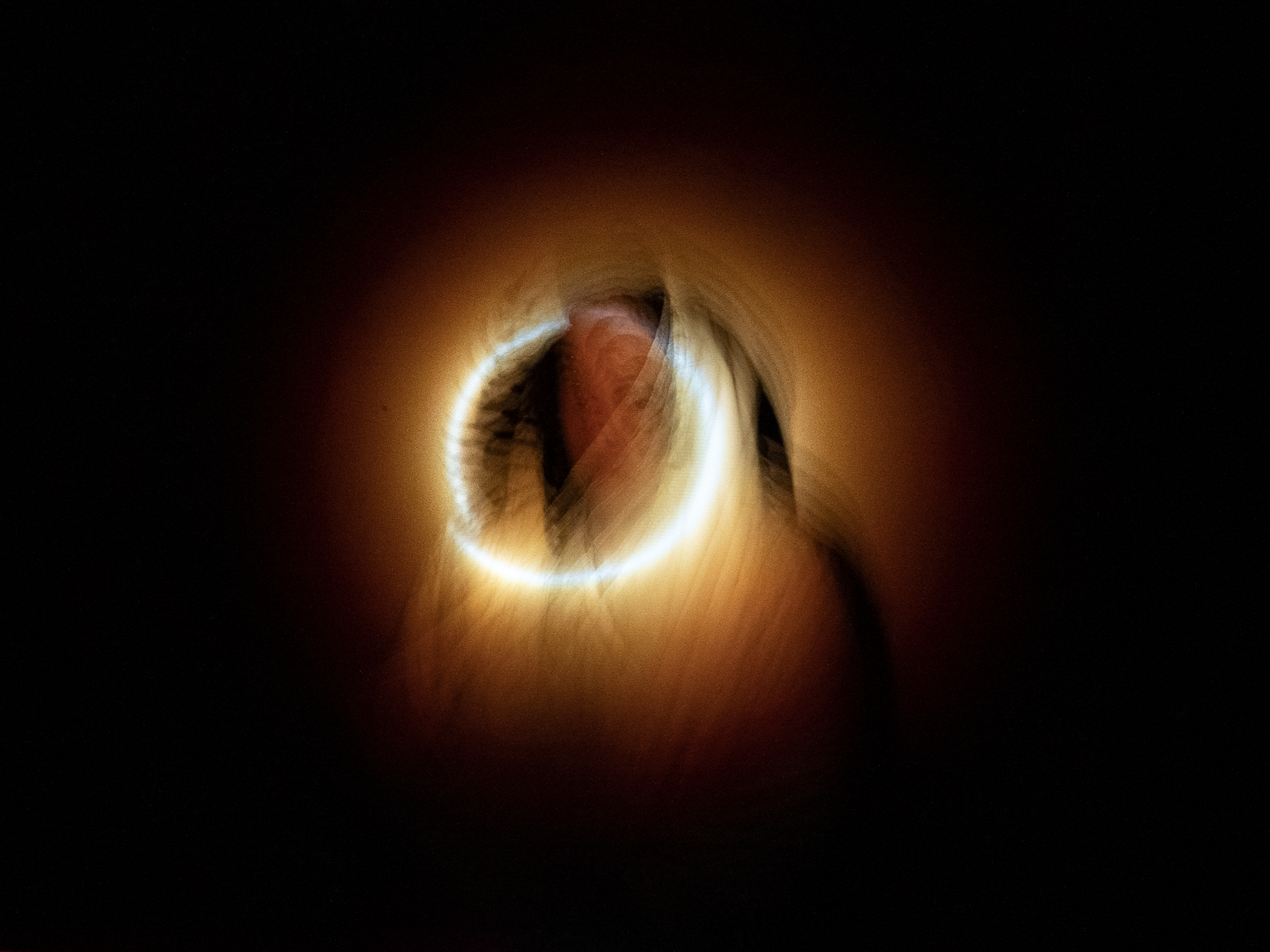
Light is not merely what allows us to see: it is a rhythm, a biological metronome that dictated human life for millennia. Today, the screen has replaced the sun, silently disrupting our circadian rhythms with our very first morning gesture. Remplacement du soleil explores this shift from natural to artificial light and the intimate disarray it breeds — between insomnia, fragmented attention, and bodies turned off in front of glowing displays.
Throughout the residency in a room at the Hôtel West-End, Daniela Pinto inhabits a darkened space where a projected eclipse moves across the room, embodying desynchronized cycles. Surrounded by plants nourished solely by artificial light, video fireflies, and a stop-motion sun looping on a TV screen, the artist puts her own body to the test of this disconnection. In a performative gesture that is both ritualistic and political, she navigates the tension between the technological habitat she has constructed and the vital need to open the window to seek out the real sun.
Supported by :
![]() |
Supported by :
![]() |
What memory do we choose to forget and can we belong without language? Can home be somewhere without a place? What happens when you realise the dream of home belongs to those who have stopped dreaming? Can you revive the dream?
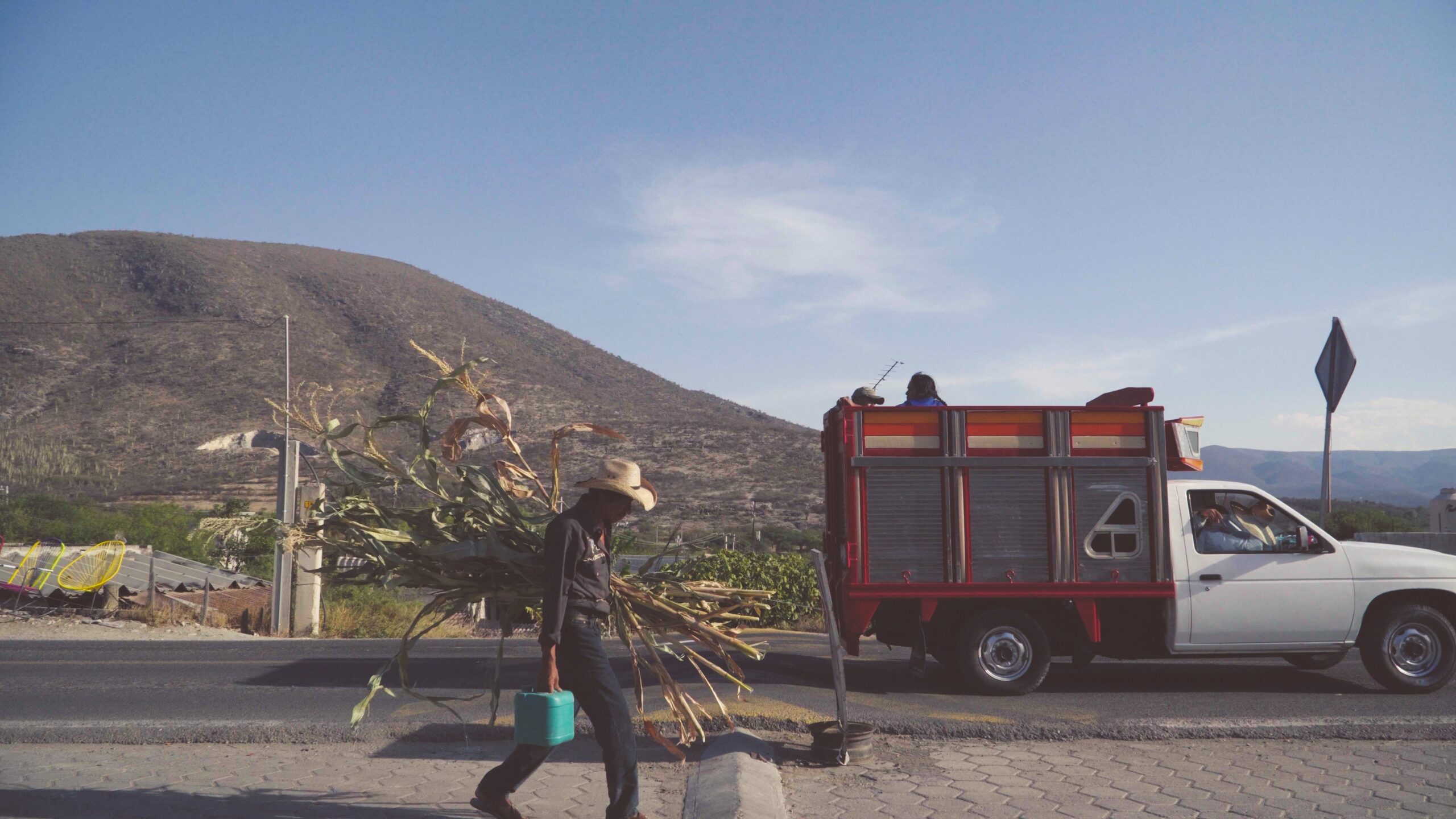
A road connecting northern and southern Mexico cuts through the small city of Zapotitlán Salinas. A single speed bump, a tope, forces all who pass to slow down. From daybreak to nightfall, the same frame receives a succession of people, vehicles and social worlds. A letter addressed to home runs through this passage of time. Behind the hills, silence interrupts the road. The salt terraces, worked since before the Conquest, place the present alongside a much older continuity of labour, knowledge and relation to land. Repetition, interruption and return structure the work, bringing different loves, histories and temporalities into the same present. The relation between Master and Beauty runs through the letter, alongside questions of language, memory and belonging, while the dream of home acquires both a sacred and a political reality.
Developed over several years, EL TOPE is written, filmed and edited by Anna Senno. Cyrus Bayandor composed its music and soundscape. The sound is an immersive, delicate weave through the rhythms of the road, the voice and the intervals of silence.
Anna Senno is a visual artist and filmmaker working between France, Mexico and Sweden. Cyrus Bayandor is a British composer and musician based in Mexico City.
Supported by :
![]() |
Trash Talk / Part 01 takes as its starting point an ordinary object—a beige shirt—and the intimate history it carries. In the video, the artist’s body acts upon the material through a sequence of precise gestures: destroying, purifying and reconstructing. As the object is dismantled and transformed, a voice emerges, gradually revealing what lies beneath its apparent banality. Through the repetition of gestures and the transformation of matter, the video explores how objects can become repositories of memory. Body, matter, gesture and voice bring to the surface what has been lived, left unspoken, and ultimately transformed.
Supported by :
![]() |
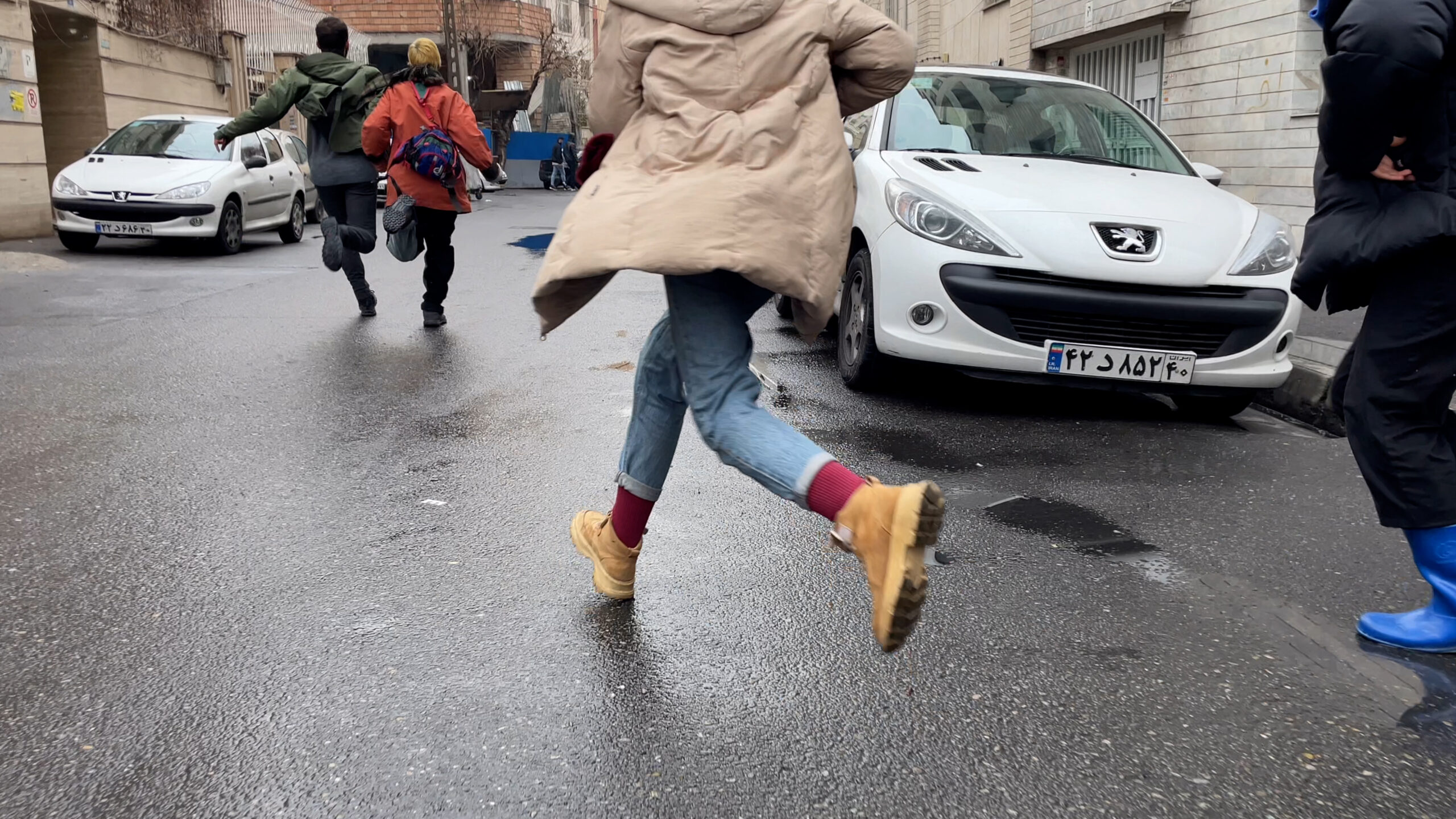
Until…is a single-take video, captured using only the switch between the front and back cameras of an iPhone by the performers, and filmed during the 2022 "Woman Life Freedom" protests in Tehran, Iran. The video not only presents a highly intricate choreography for the camera, infused with the originality and urgency of what is deemed 'possible' in that specific situation, but also encapsulates the essence of unity, resilience, and purposefulness demonstrated by young artists responding creatively and courageously to an actual brutal situation in Iran.
We walk. We run. We fall. We hug those who we love and then we run again. We walk together until the walls move.
Supported by :
![]() |
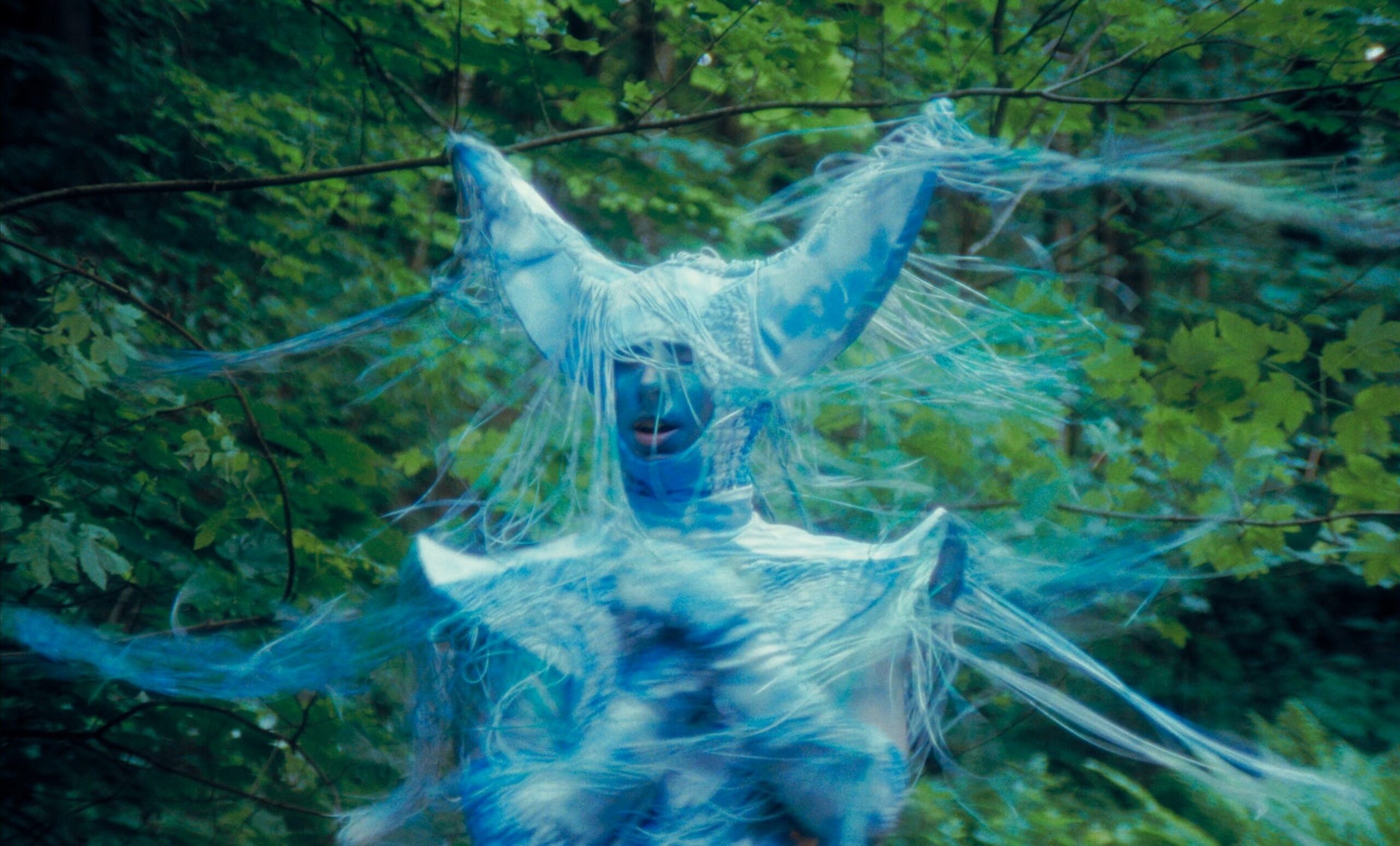
Alzou is a hybrid short film rooted in a mystical valley, evoking the memory of a queer community whose beliefs center on a fluid river deity. The film opens on the remnants of destruction, with sacred places reduced to ashes. Guided by a desire for healing, Alzou* reappears. They move through the landscape like a memory, initiating a ritual of resurgence. Flowers become elixirs, a dance emerges, and the body enters a trance. Night becomes a passageway between queer club culture and Dionysian mysteries, where identities circulate and new stories take shape. Gradually, Alzou becomes water; the river awakens, and with it, voices, presences, and becomings.
The film imagines kinship between humans, natural elements, and the spiritual, where queerness becomes a force of resistance, regeneration, and alliance. Alzou proposes a queer mythology: a speculative narrative in which ritual restores connection, the personal merges with the collective, and water becomes a space of care, memory, and transformation.
* Alzou takes its name from a river that flows through the Rocamadour valley in southwestern France, a place where, since my childhood, I have been able to observe the coexistence of nature, mysticism, and legends.
Coming Soon.
id-22542