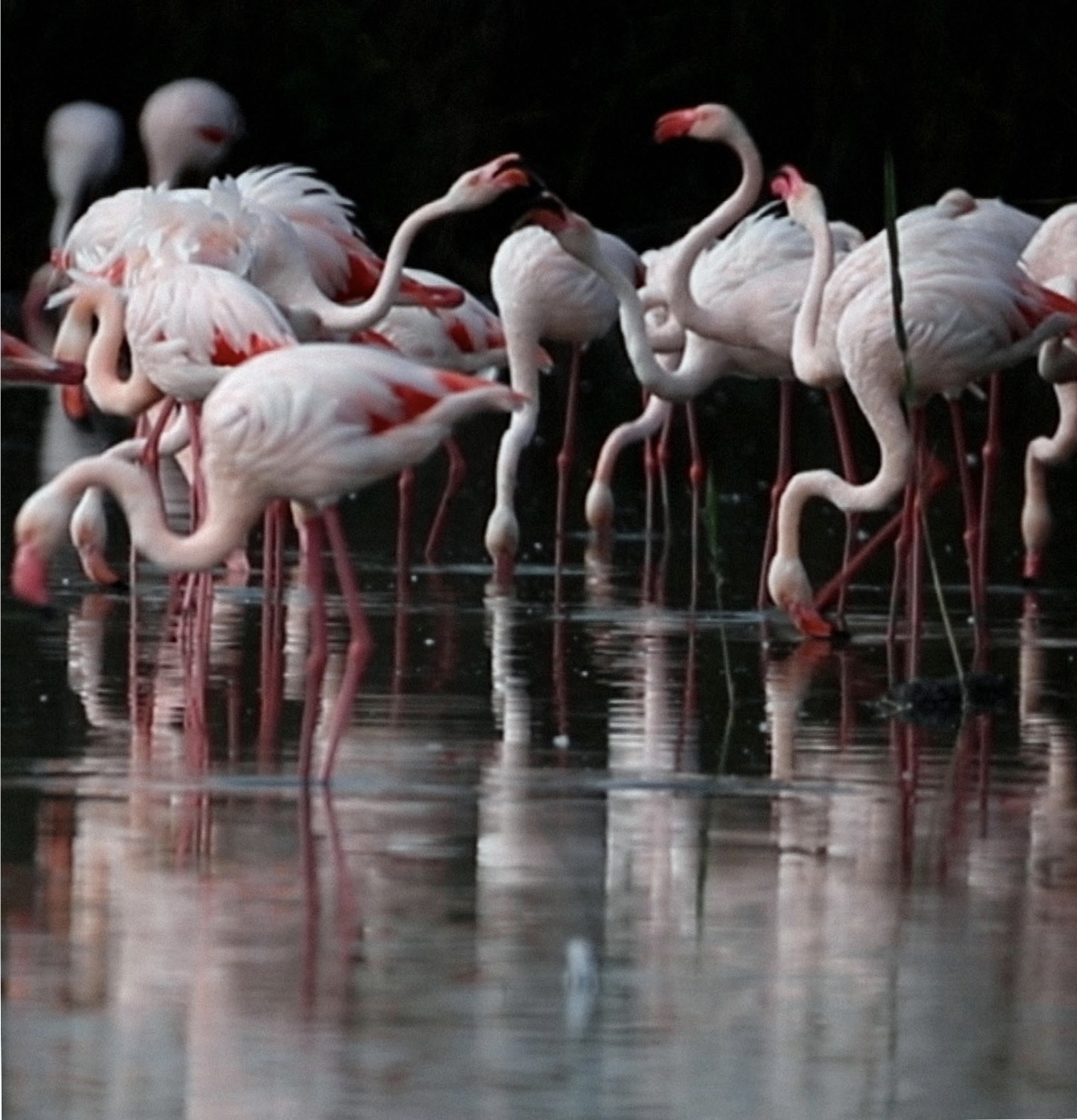
Curators : Marion Duvigneau et Nathalie Amae.
In 2021, during a road trip through the Camargue with three friends, Sacha Rey began filming flamingos. Her attention was drawn to the conflicts between these birds — even as seven years of friendship quietly dissolved under the pressure of diverging political commitments. From that rupture, a founding question emerged: how do we keep moving forward together despite our disagreements? How do we take care of the collective?
État des lieux des forces en présence (Surveying the Forces at Play) is a documentary video installation conceived as an « ethological road trip. » From Barcelona to the Ebro Delta and on to the Camargue, transfeminist and ecological activists travel the roads in search of flamingos, sharing their experiences of activism and drawing on the birds’ way of life to interrogate the relationship humans have with the collective. The flamingo — a protected Mediterranean species whose survival depends on the cohesion of the flock — becomes the lens through which the film examines the struggles for trans* lives and for the preservation of wetlands.
The installation is diffused through an acousmonium of 32 loudspeakers, a spatial sound system that orients the audience within the space and invites each visitor to compose their own path through it. The soundtrack — activists’ voices in Castilian, English, and French; field recordings from flamingo habitats; compositions by Hwaas and Gaëtan Parseihian — runs out of sync with the videos, opening the work to a non-linear, expansive form of narration. The physical journey is structured by photographs printed on textile (chiffon and satin), some cut through so that visitors may literally walk inside the image. Texts screenprinted in UV-sensitive ink, created with graphic designer H·Alix Sanyas (collective Bye Bye Binary), simulate in layered form the visual perception of flamingos, revealing themselves differently depending on where the viewer stands in the room.
The filming of interviews takes on a parodic form: a microphone wrapped in a red furry windscreen — evoking flamingo feathers — serves as a talking stick, passed from one protagonist to the next in a relay stretching from Barcelona to the Camargue. This device, conceived in dialogue with ethologist Dalila Bovet, weaves together natural and human sciences to question the separation between Nature and Culture, and the ways in which biology has been wielded as an argument for domination.
The wetlands of the Ebro Delta and the Camargue are under threat from rising Mediterranean waters. The installation maps this double territory — geographic and political — forging inter-species alliances where social and environmental struggles converge.
This project has received support from the OVNi Biennial in 2026; the Bourse Atomes Crochus from ADAGP, Culture Moves Europe, and the AIA from DRAC PACA in 2025; the Institut Français de Barcelone, ArTeC × le CNEAI=, and residencies at SOMA (Marseille), Hangar × Triangle Astérides (Barcelona), and Casa de l’artista (La Senia) in 2024; the Fondation des Artistes in 2023; and Mécènes du Sud Aix-Marseille, a development grant from the DICRéAM at the CNC, and the « Locus Sonus Vitae » residency (ESA Aix) in 2022. In 2024, the project was nominated for the COAL Prize.
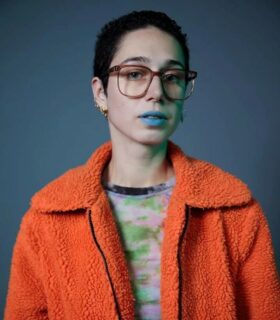
Lea-Rener-portrait-Sacha-Rey
Biography
Born in 1991, in Nice, France, Sacha Rey is a visual artist and director who lives in Marseille. He develops a methodology that he calls “documentary dance” to create “an ode to the multiplicity and instability of identities”, (I.Alfonsi) in an attempt to respond to the silence of a hierarchical society. In this way, Sacha uses documentary and living arts to question the theatricalization of perception, rather than documenting “truths”. Sacha used this methodology in three previous video installation and short films: But I’m a Cheerleader, which he presented in a solo exhibition at the FID in Marseille and for which he won the Sud Émergence prize at the OVNi video art festival in 2024, To Wander So Many Miles in Vain, made during a master’s degree at the École des hautes études en sciences sociales and screened at the Cinéma du Réel in 2022, and This Picture of You, for which he graduated with honors from the Beaux-arts de Paris in 2019.
Over the past years, Sacha has participated in group shows and film festivals including: Hetpaviljoen (Ghent, 2025), la Villette (Paris, 2023), la Villa Vassilieff (Paris, 2016), Bétonsalon (Paris, 2017), CAC Brétigny (Brétigny-sur-Orge, 2023), la fondation agnès b (Paris, 2023), le festival du film d’Amiens (FIFAM, 2024), le Générateur (Gentilly, 2017), le Festival Parallèle (Marseille, 2022), Hungry Eyes’Festival (2025 & 2022, Gießen) as well as Stadtmuseum (Düsseldorf) and at Spiral Wacoal Art Center (Tokyo) in 2019. Sacha has also performed in France, Belgium and Japan for choreographers and visual artists such as Jocelyn Cottencin, Matthieu Doze, Julia Droga, Emmanuelle Huynh, Jennifer Lacey, Hoang Lê, Yuko Mohri, Daniel Nicolaevsky, Clédat & Petitpierre, Rully Shabara , Nathalie Talec and Mélio Villemot.
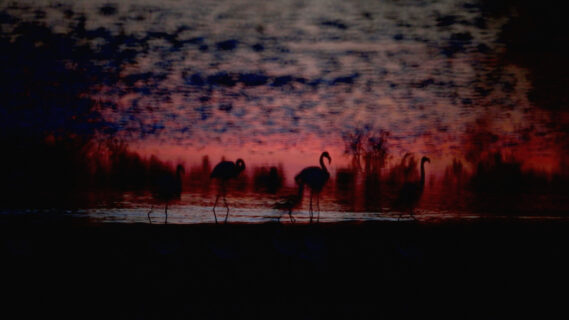
État des lieux des forces en présence , repérages, parc du pont de Gau, Camargue, 2024. © Sacha Rey
« From a transfeminist and an intersectional approach, I am developing a working methodology that I call “documentary dance.” The filmic devices I design seek to interview the physical memories of the participants. My filmmaking practice is informed by somatic education, or “learning about the awareness of the body moving in space.” Through performance arts, sports, and non-human point of view, my films and performances aim to empower minorities experiences. With the desire to compose “an ode to the multiplicity and instability of identities”(I. Alfonsi), I construct devices to bring symbols and worlds together, in order to question the hegemonic representations of film history. This is why I create visual metaphors, bringing together meanings that in a binary way of thinking could be considered antagonistic. Metaphor allows us to create surprise, disruption, a “sudden opening of an electrical circuit.”
To keep moving, I create situations where improvisation plays a central role. Using this method, I strive to film people based on their bodily knowledge in order to resist the objectification of bodies. Music, poetry, and dance then allow me to represent a person’s capacity for action. Through my films, I try to question how representations of intra-human violence in cinema can influence our lives. I draw inspiration from physical symptoms and translate them into my filmmaking style: the blurring of dissociation, the doubling of realities, the specter and reminiscences of projections, images with noise, never clear, to evoke disorder… I try to construct a cinema that is haptic, to give the viewer the desire to touch the image as if it were a sculpture with which they have the right to dance. Moreover, my video installations composed of prints on fabric, balloons, or T-shirts invite touch.
In immersive works, I want to reconnect spectators to their own bodies. They can then be pushed towards their own sensations and struggles. My artistic research thus echoes the questions posed by transfeminist philosopher Emma Bigé: “What prevents skin from coming into contact? How do race, gender, sexualities, and their exclusions come into play in the way we touch each other? In other words, what keeps us from touching each other?”
Sacha Rey