Website map

Website map

EAC - Espace de l’art concret x OVNi

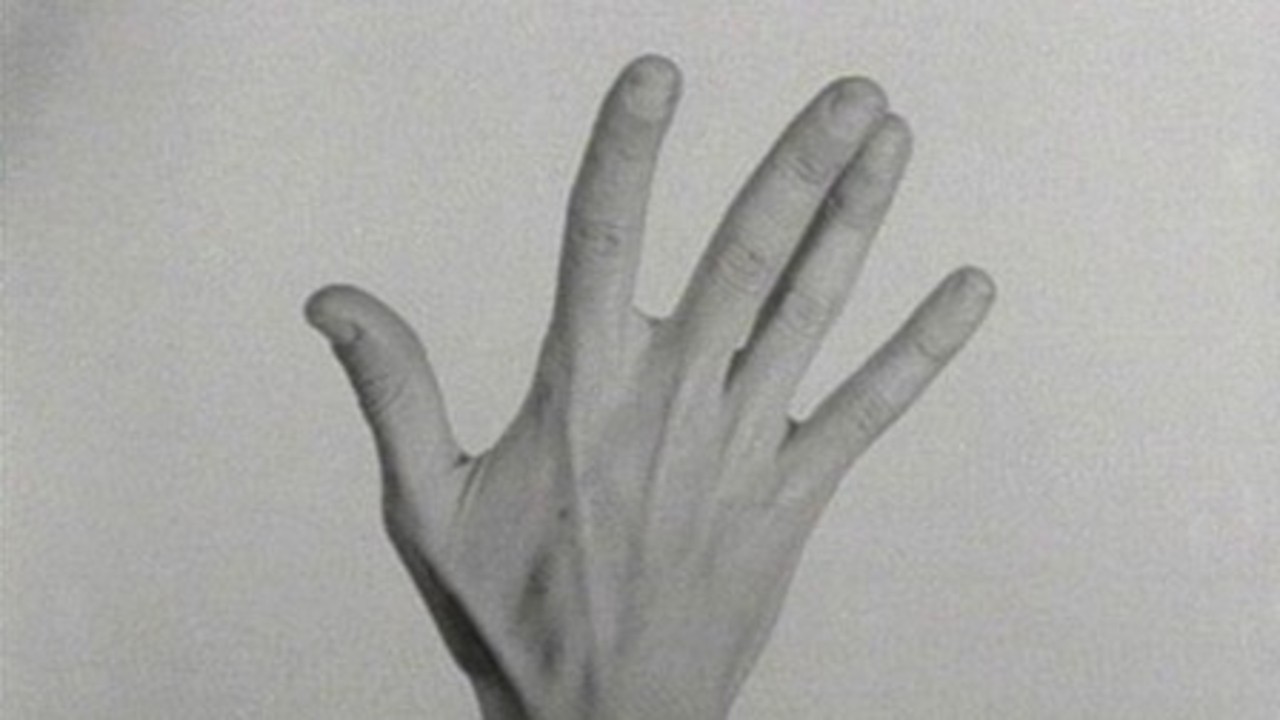
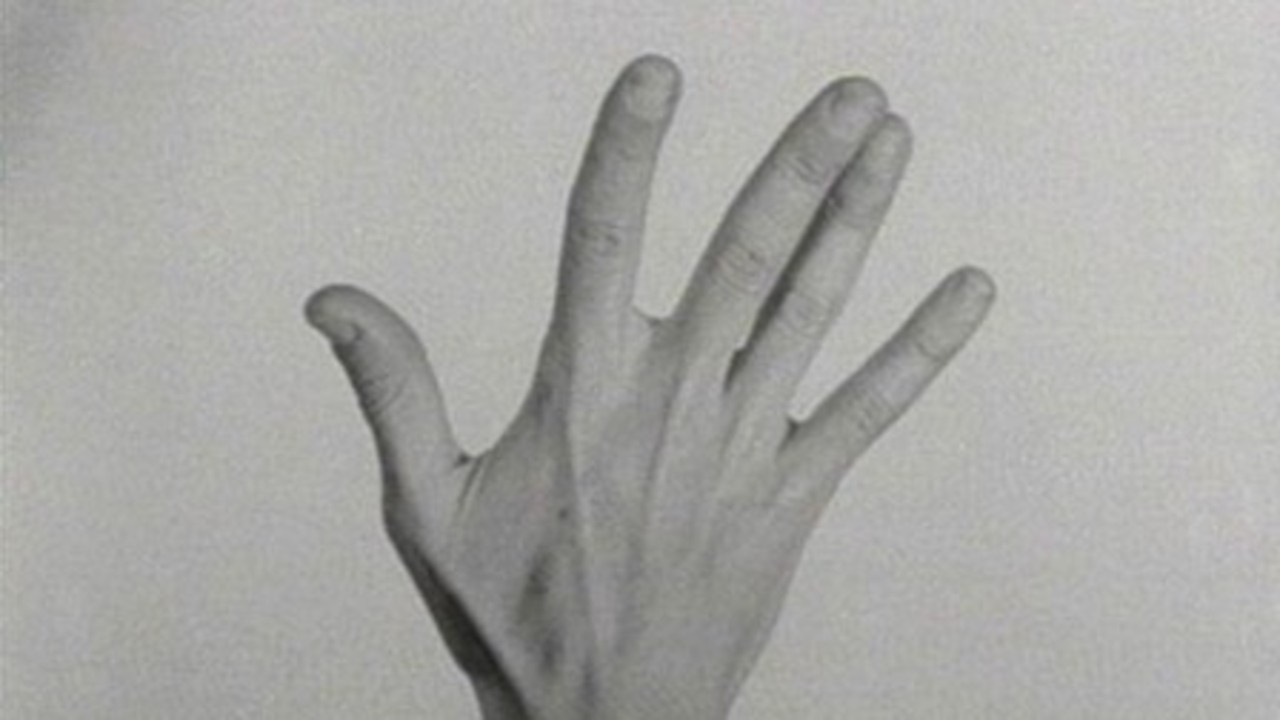
©Yvonne_Rainer_Hand Movie 1966

EAC - Espace de l’art concret

2026

Château de Mouans, 06370 Mouans-Sartoux

The dedicated space “Écouter Voir” provides a canvas to engage with the horizons and friction points between the sonic object and the visual object.
We propose a program that aligns with the theme of this edition of OVNI, « Performancia » exploring concrete perception through the hand as an autonomous, spatialized, and visual language. The project brings together four seminal and contemporary figures from distinct artistic disciplines, united through the prism of video art.

Their common thread is the vital energy of movement, a tangible plasticity to be beheld, and the hand held in tension—the silence of the gesture and the eloquence of the sign. These four works dwell within the realms of artistic research and relational dynamics: non-verbal exchange and the body as both incarnation and efficacy.
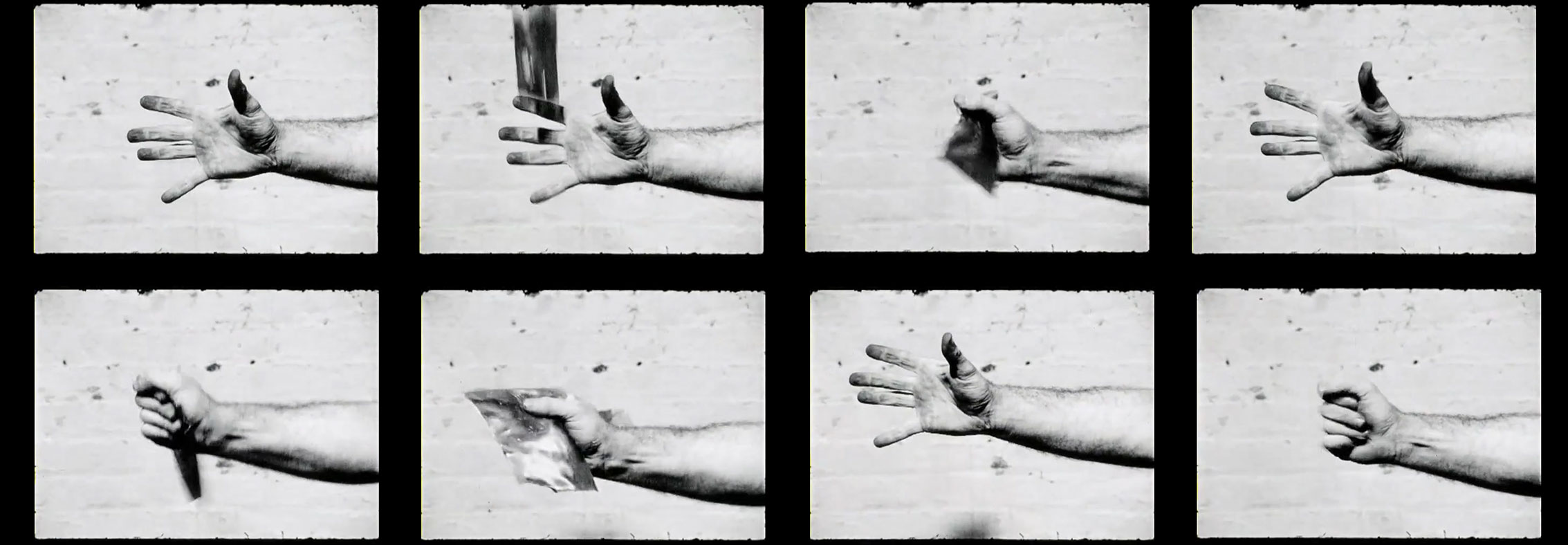
©Richard Serra Hand Catching Lead

Yvonne Rainer

Hand Movie

EAC

Filmed in close-up by artist William Davis while she was confined to a hospital bed following a major surgical procedure, Hand Movie marks Yvonne Rainer’s first foray into the cinematic medium. For five minutes, the lens remains fixed on the choreographer’s fingers as they articulate, unfurl, cross, and fold against the stark backdrop of a white wall. Devoid of both narrative and sound, the film isolates the movement of the hand, elevating it to the sole protagonist of a miniature dance.

This minimal gesture, born from the constraints of a temporarily immobilized body, represents a historic milestone: it shifts the locus of dance away from the entire body (leaps, runs, large ensembles) toward the anatomical extremity, transforming an ordinary bodily movement into an autonomous choreographic performance. Subsequently integrated into her choreographic suite Five Easy Pieces (created between 1966 and 1969), Hand Movie acts as a visual leitmotif that radically redefines the boundaries of what « constitutes » dance.

The year prior to filming Hand Movie, Yvonne Rainer published her celebrated No Manifesto (1965), a foundational text of postmodern dance and the spearhead of the Judson Dance Theater movement. This manifesto stands as a wholesale rejection of the artifice, spectacularization, and psychologism inherent to modern and classical dance:

“No to spectacle. No to virtuosity. No to transformations and magic and make-believe. No to the glamour and transcendency of the star-image. […] No to style. No to eccentricity. No to moving or being moved.”

Hand Movie is the purest visual and conceptual embodiment of this manifesto, opening an immense conceptual breach. It would decisively influence an entire generation of contemporary artists—foremost among them Richard Serra, who found in it the direct impetus to pick up a camera himself and realize his famous Hand Catching Lead in 1968.


©Richard Serra Hand Catching Lead

Richard Serra

Hand Catching Lead

EAC

16mm film, black and white, silent HD video. Camera: Robert Fiore, Duration : 3‘10


« It was Yvonne Rainer’s film Hand Movie that, more than anything else, prompted me to get a camera and do something … That same week, I saw Andy Warhol’s Chelsea Girls. At that time, the materials I used in my sculptures were chosen because they could be worked by hand. Seeing Chelsea Girls and Hand Movie, I felt that this territory was open to me. Until then, I would never have touched a camera. That was in 1967; in ’68, I began shooting..” Richard Serra


Originally a painter, then a sculptor after discovering Brancusi’s studio in Paris, Richard Serra immersed himself in the world of experimental cinema (Bruce Conner, Ron Rice, and Warhol upon his arrival in New York in 1967). From 1970 onwards, he frequently attended the Anthology Film Archives. A close friend of Michael Snow, he screened Wavelength in Europe on several occasions. It was Yvonne Rainer’s Hand Movie that allowed him to bridge cinema and sculpture. Hand Catching Lead is his very first film. He went on to create a series of short films serving as cinematic analogies to the creative processes at work in sculpture, made with the assistance of Philip Glass (who drops the pieces of lead that Serra’s hand attempts to catch): Hand Lead Fulcrum, Hands Scraping, Hands Tied…

©Christine Sun Kim_Close Readings, 2015

Christine Sun Kim

Close Readings

EAC

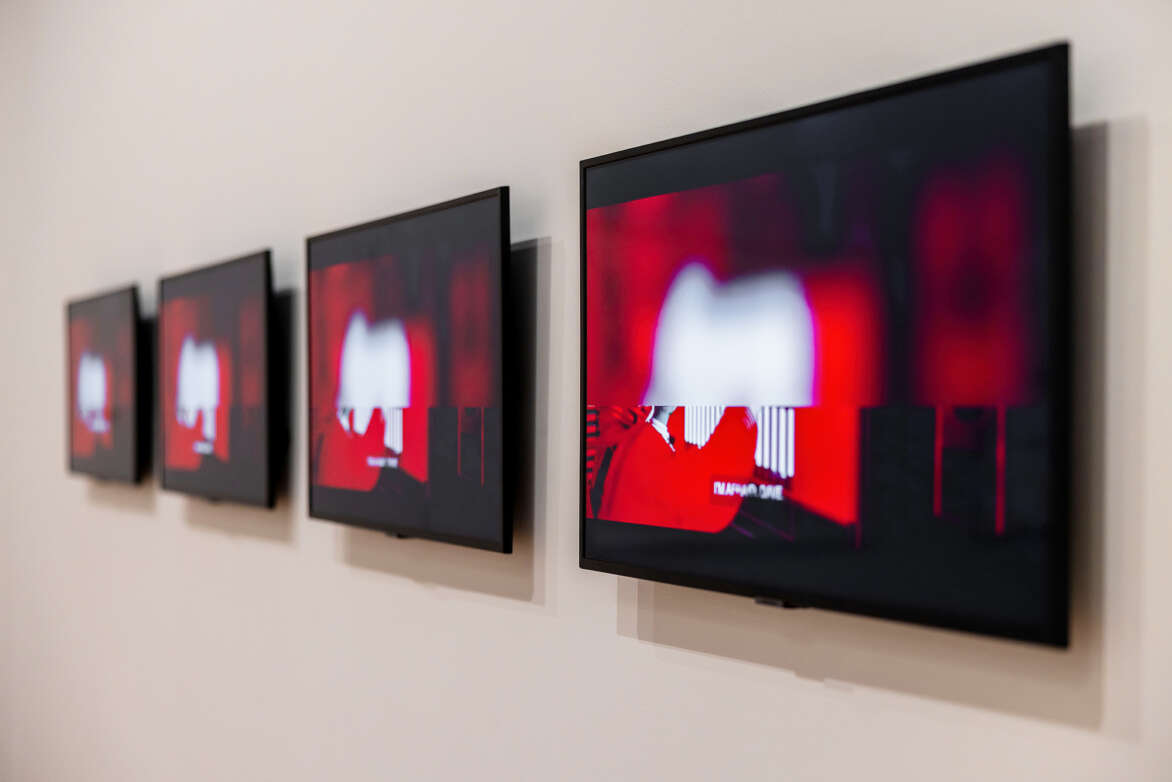
With Close Readings, Christine Sun Kim delivers her first major video work, offering an incisive critique of media accessibility systems. The artist selected excerpts from five cult films deeply embedded in Western popular culture (The Little Mermaid, Ghost, The Addams Family…), all united by their exploration of the voice as a metaphor for emancipation or identity. After stripping away the audio track and partially blurring the original image, Kim invited four of her Deaf and hard-of-hearing friends to entirely rewrite and reinvent the closed captions, relying solely on their own perceptions and the studio’s textual descriptions.

Broadcast synchronously across four screens, these hijacked captions oscillate between sheer poetry (“the sound of a light that never flickers”) and the absurd, radically subverting the purely utilitarian function of cinematic accessibility. By obscuring a portion of the image, the installation upends the traditional balance of power: hearing audiences are stripped of their usual reference points and forced to defer to the subjective, political vision of Deaf spectators. With both force and wit, the work demonstrates that captioning is no mere neutral translation, but rather a fertile terrain for interpretation, creation, and power.


©Lygia-Clark-A-Bichos-1966-B-Dialogo-das-maos

Lygia Clark

Diálogo de mãos

EAC

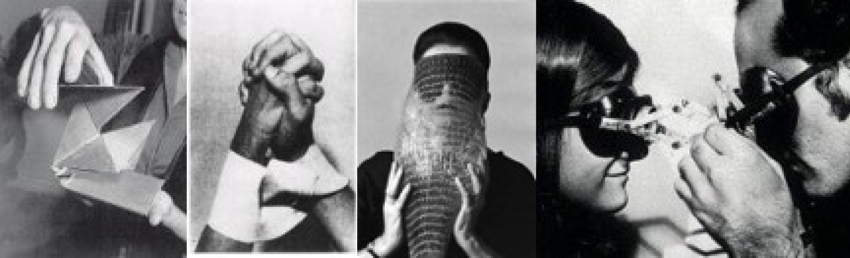
Emerging from the Brazilian Neo-Concrete movement, Lygia Clark progressively abandoned two-dimensional geometry to explore the body as a sensory and therapeutic receptacle. With Diálogo de mãos (Dialogue of Hands), she offers a « relational object » of disarming simplicity yet profound conceptual resonance.
descriptif Two participants have their wrists bound by an elastic band sewn into a Möbius strip. Operating as sources of concrete perception, the two hands explore the participants’ bodies through the infinite twisting motions generated by the shape of the elastic band. « My hand caressing you draws yours along, which follows, entwines, pulls, and returns the touch; then your hand brushing against me, pressed beneath mine which feels you touching me and entwines in turn — we dwell within the curves of desire, bound and transformed by the act unfolding hand to hand.