Website map

Website map

OVNi à Hôtel

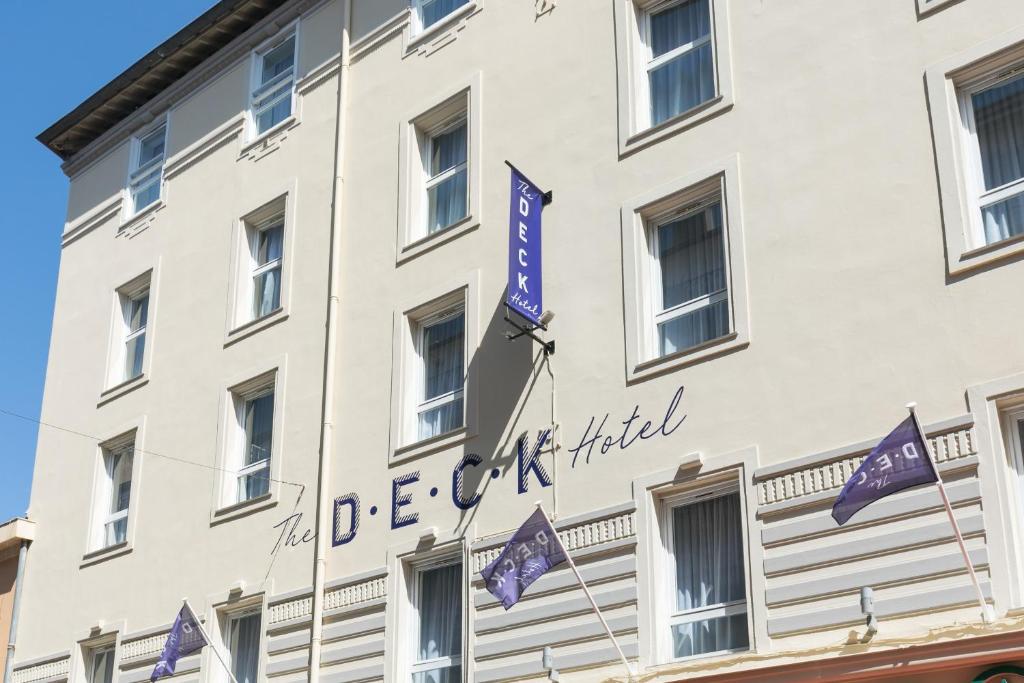
The Deck Hotel by Happyculture © Booking

The Deck Hotel

2 Rue Maccarani, 06000 Nice


by :  


PAVILION BOSIO POST-GRADUATE PROGRAMS

At the invitation of the OVNi Biennial and following an open call for projects, Pavillon Bosio presents visual and sound works by artists who have recently graduated from ESAP, the École Supérieure d’Arts Plastiques de Monaco. Each artist takes ownership of a dedicated room, conceiving an installation that engages with the artistic and scenographic nature of the space — as opposed to a white cube — with constant attention to the relationship with the audience.
This programme is supported by SOGEDA (Société pour les Droits d’Auteurs) of Monaco.
Curators:
Pavillon Bosio
Director: Thierry Leviez
Coordination:
Florent Mattei
Micha Vanony
Artists:
Lou Amara
Elena Bost-Wicinski
Louise Chatelain
Margot Gouzy-Pallanca
Maeva Lu-chi-vang


© Lou Amara
© Lou Amara

Lou Amara

Adumbration

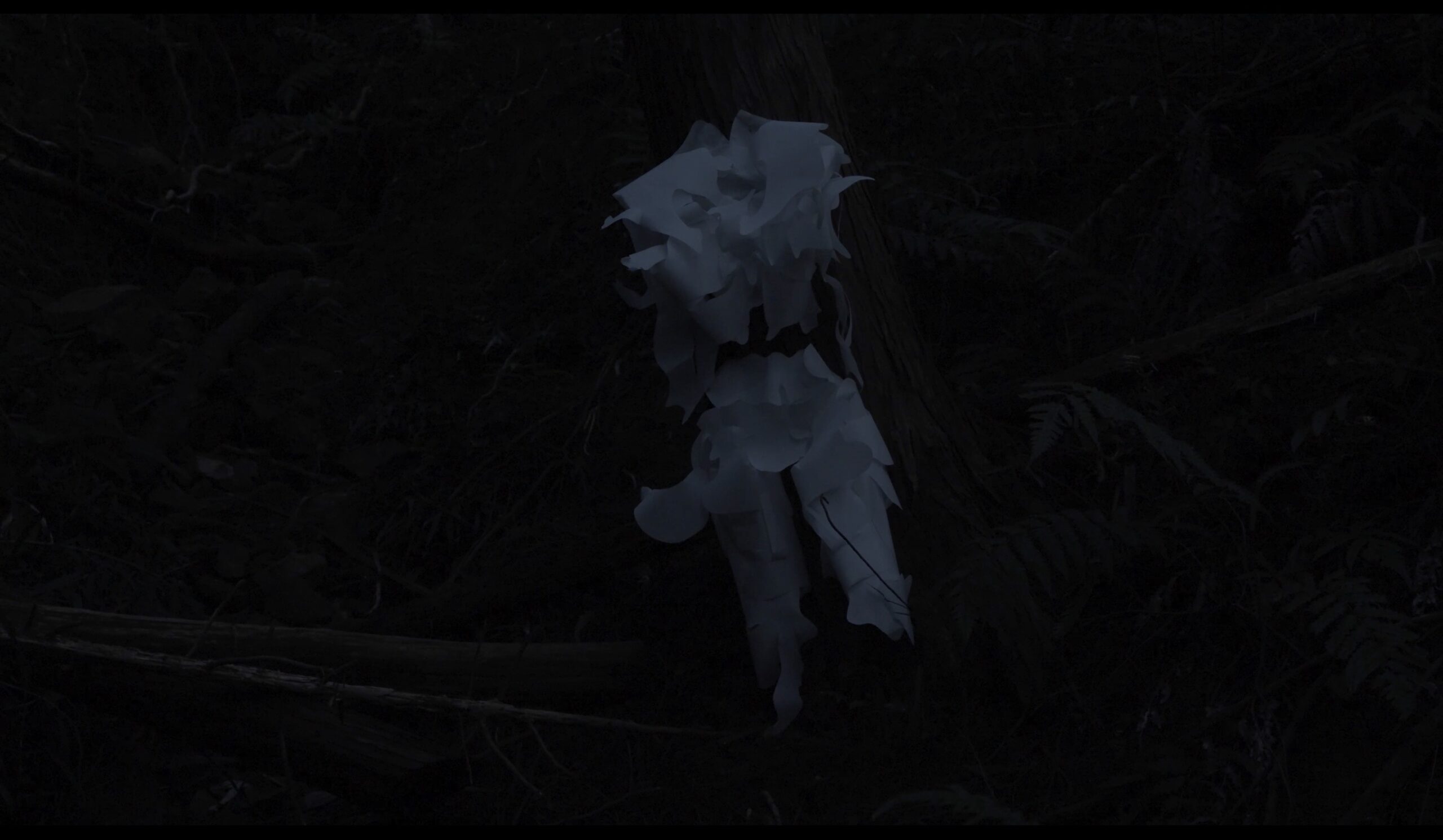
My residency in Takeo was dedicated to exploring and staging my paper sculptures in the heart of nature.

I wanted to remove my work from the white cube and traditional exhibition spaces to confront it directly with the outdoor environment. The objective was to design a hybrid film, on the boundary between documentary and fiction, featuring a world populated by paper beings. The choice of washi paper felt natural, as its texture evokes that of molts and chrysalises. It was from this material that the idea of a speculative reality emerged—one where the human body transforms and goes through various stages of metamorphosis. From the very beginning, working with shadow and darkness proved essential. I conceive of black as a tangible material, something to be sculpted. Here, darkness becomes the catalyst that reveals these paper beings, shaping an environment conducive to their existence.

These natural spaces were thus used as sets. I began by capturing static shots of unique locations, guided by the density of the forest, its twilight, or its micro-phenomena. The approach aimed to render nature almost artificial, on the edge of the uncanny, exploiting the mysterious potential of these sites to anchor my narratives.

 © Elena Bost-Wicinski
© Elena Bost-Wicinski

Elena Bost-Wicinski

Ce qu'il reste de la nuit

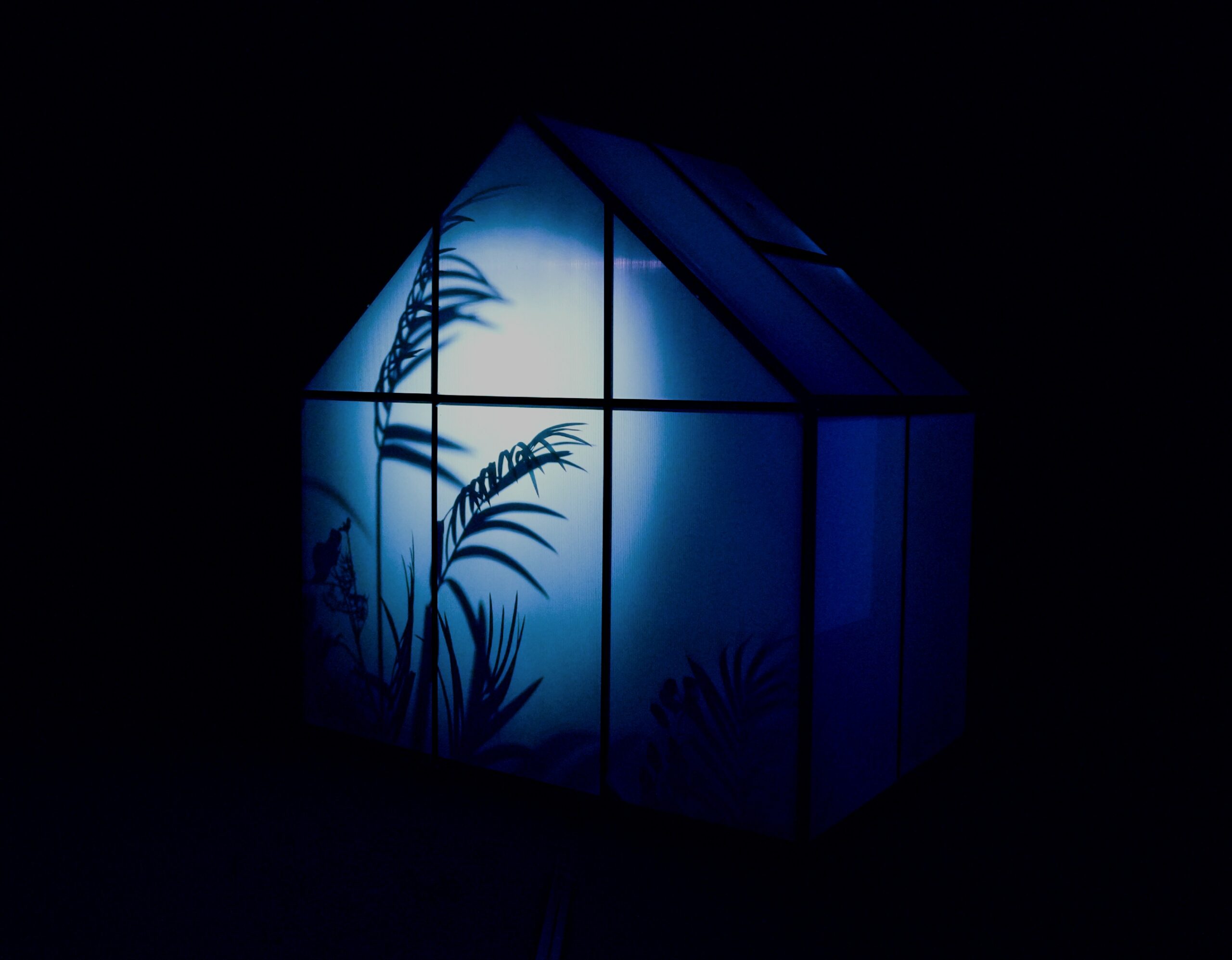
This installation transforms the greenhouse into a space where the living encounters its digital double.  Through 3D scans of real vegetal forms, nature is captured and digitally reconstructed, giving rise to an  immaterial presence. 


At a time when digital tools allow us to capture, reproduce, and transform reality, this installation  questions our relationship with a natural world increasingly shaped by images. Can a copy carry the  memory of what it represents? Do technologies distance us from the natural world, or do they create  new ways of inhabiting it? 


The greenhouse becomes a stage for vegetal apparitions, where nature persists in a ghostly form  through light and image.


© Louise Chatelain
© Louise Chatelain

Louise Chatelain

La Chambre

Through La Chambre (The Bedroom), a research explores the traces left by sexual violence and how they remain in places, objects and memories. Bringing together two films by the artist, Allée des Bouleaux and La Chambre 14, the project connects two spaces linked to the same story: public places where memories of a violent relationship were formed, and the private space where the violence took place.

The bedroom becomes a place of memory, but also a space where everyday life and violence meet again. The work explores how certain places can hold invisible stories,

while the objects within them remain part of a familiar world. By bringing these stories into the exhibition space, an intimate experience becomes a collective one, making

visible what usually remains unspoken.

© Margot Gouzy-Pallanca

Margot Gouzy-Pallanca

Renée et la Bête

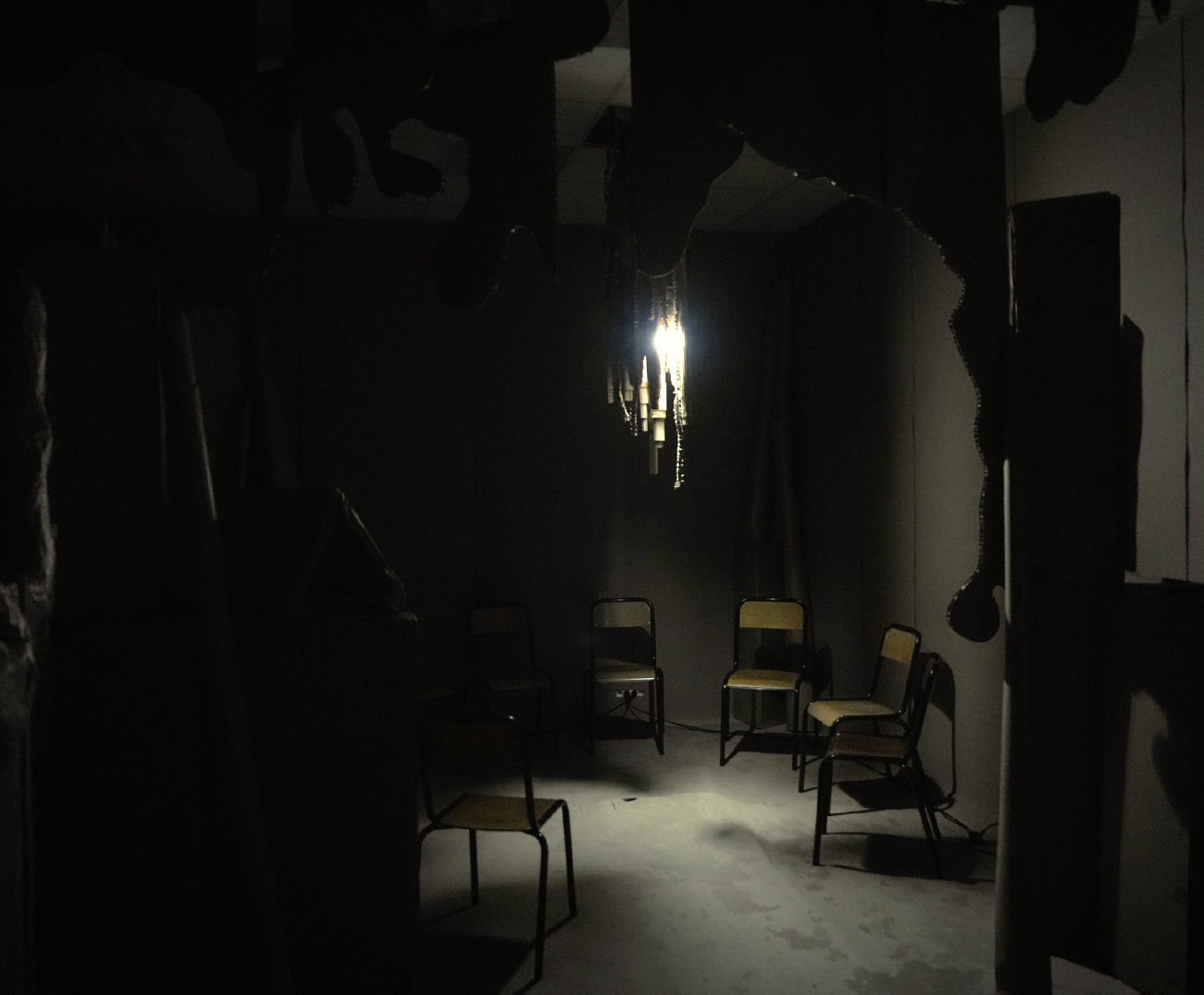
My graduation project takes the form of an immersive installation conceived as a collective journey. Guided by a  sound-based narrative diffused throughout the space, visitors move through three acts that structure both the  story and their physical progression. 


The installation unfolds as a playful pathway. Visitors are placed inside the narrative and embody the character of  Renée. They navigate through an architecture composed of folding screens, organic partitions, hidden recesses and  passages, as if entering the interior of a living organism or a buried memory—that of the Beast. 


Constructed primarily from cardboard, the project creates an artificial world, a threshold into the nostalgia of  childhood, a non-place suspended between reality and imagination. Raised platforms mark out a path through the  space. Videos projected into cavities and displayed on screens evoke the visual language of natural history  museums, with their distancing devices, interactive listening stations and reconstructed narratives. By  appropriating and diverting these exhibition strategies, I situate the installation within an ambiguous territory  between fiction and reality.


These two realms overlap and merge. Myth becomes a means of transcending a personal story marked by loss and  mourning. Art emerges as a catalyst for renewal, driven by a need to express oneself through creation. Fiction thus  becomes a territory where the absent continue to inhabit the world, where pain is transformed into images, forms  and shared narratives. 


The collective dimension lies at the heart of the project. The installation was created through the participation of  friends and fellow students who contributed to its construction. Likewise, the visitor experience is designed to be  shared. Spectators move through the environment together, progressing at the same pace and engaging in a  common act of listening.
© Maëva Lu-chi-vang
© Maëva Lu-chi-vang

Maëva Lu-chi-vang

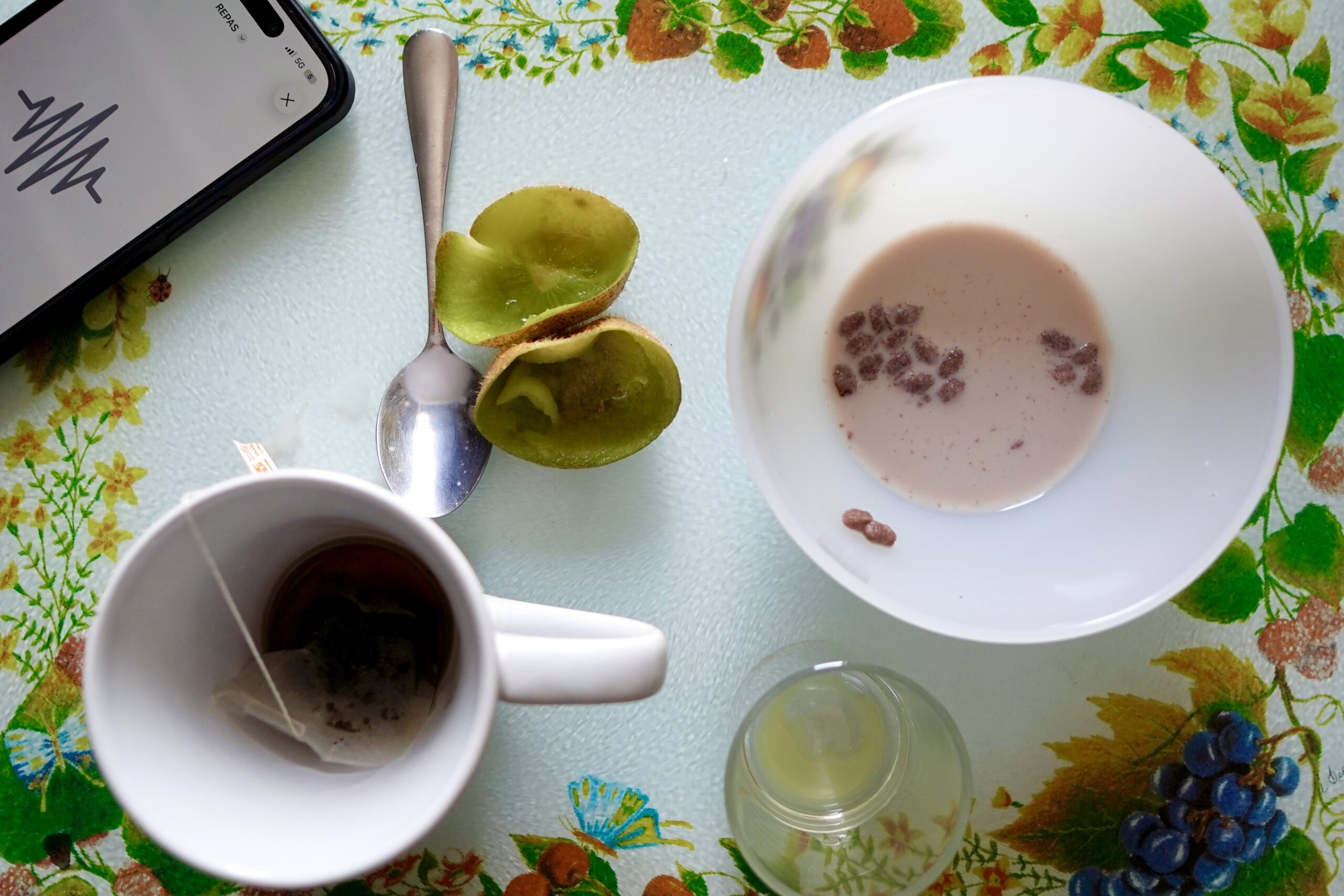
REPAS

Repas is a performative video installation that explores communal living and the construction of an artificial reality. The work seeks to create a connection between distinct spaces and times by bringing together people who do not know one another, inviting them to perform together within the same video installation.


This project builds on my research into collective composition and the act of « forming a chorus ». In my previous works, the headset functioned as a paradoxical device: it isolated each performer in individual listening while simultaneously creating a sense of connection among them. The audience thus witnessed an attempt to come together despite the separation.

With Repas, I’m adding a new layer: the screen. The performers never physically meet. They perform simultaneously, using words, gestures, and sounds that respond to one another, without having shared the same space-time. Only the installation makes this encounter possible.


Repas is the first stage of a project designed to unfold over several years. The principle is to gradually accumulate new videos in order to create a mobile system that functions as both an installation and a performative tool. With each new activation, new presences join those already recorded, causing this attempt at collective composition to evolve over time. The idea is to bring together people who could never have lived at the same time, at the precise moment of their performance in front of the camera.