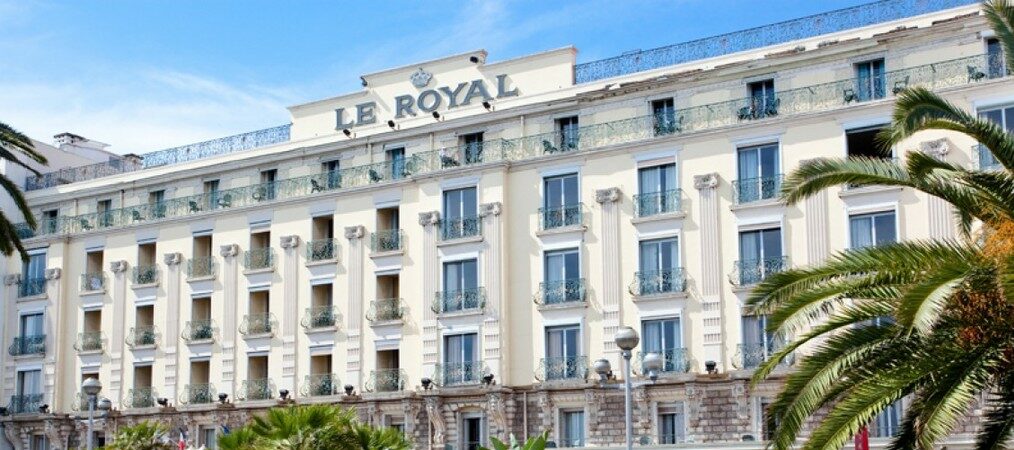
23 Prom. des Anglais, 06000 Nice
At the invitation of the OVNi Biennale, Le Fresnoy—National Studio for Contemporary Arts—presents ten films by artists from its graduating classes, each of which is screened in a room at the Hôtel Royal.
A national institution for artistic training, production, and dissemination conceived by artist Alain Fleischer, Le Fresnoy opened its doors in 1997 in Tourcoing, in a building renovated by architect Bernard Tschumi. There, it fosters free and experimental creation at the intersection of image, sound, and emerging technologies, producing more than fifty works each year.
Reimagined bodies, buried memories, traversed territories: these films explore what appears on screen and what lingers beyond.
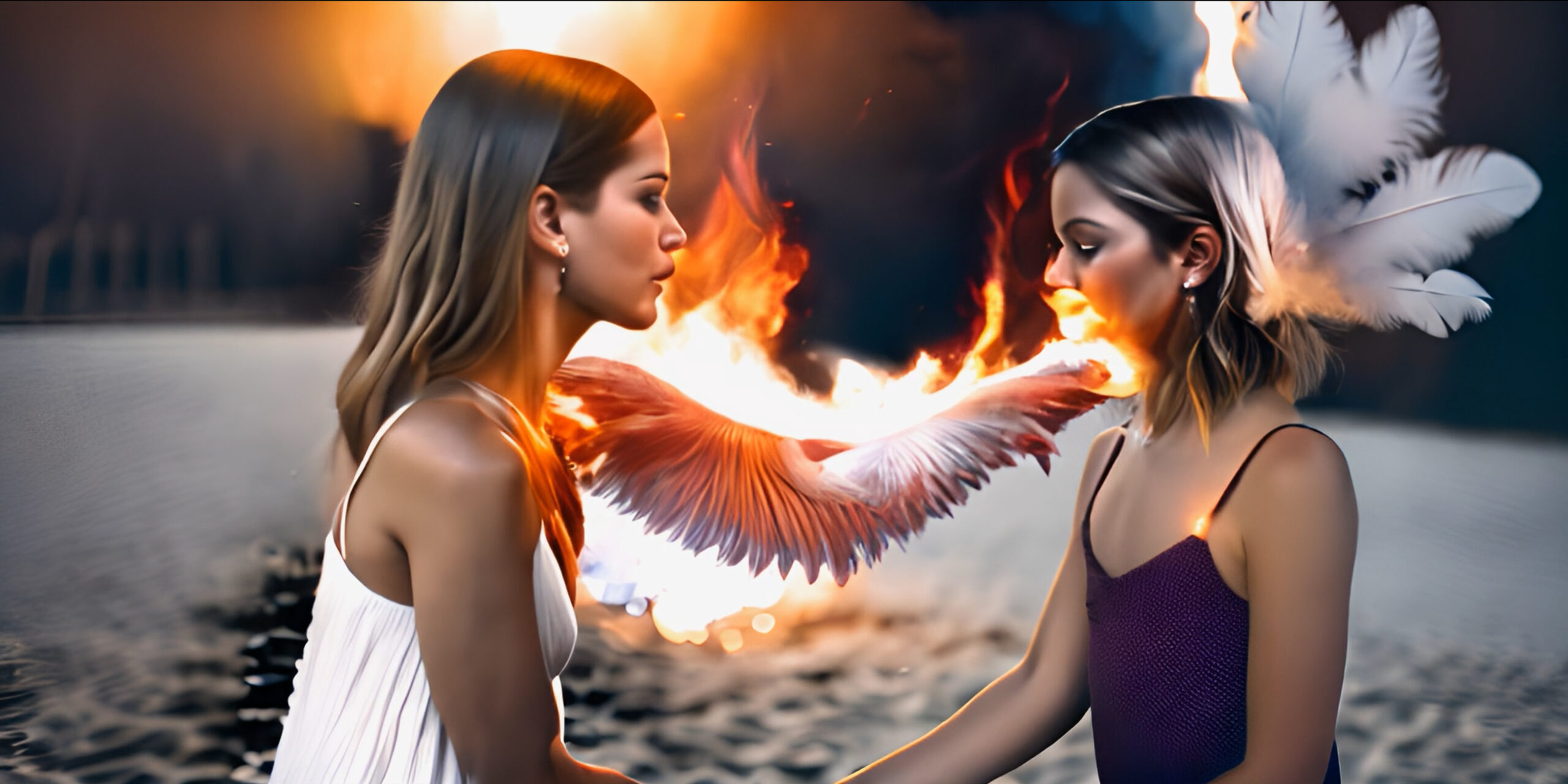
Hava (Eve) and Jeanne, both actresses, sit on the studio floor and repeatedly perform the same scene, “I Have Never Met Anyone Like You,” for a mysterious AI algorithm. When Hava first glances at the AI screen, she discovers a profound desire for Jeanne. Their relationship, observed both on and off set, moves between different gazes—those of cameras and of visible and invisible spectators—and explores the singularity of intimate moments and the authenticity of emotions in the act of artistic creation, calling into question their ability to perceive themselves. The AI’s visions introduce another narrative layer into ancient mythologies of metamorphosis: are they responding to “real” events, or are they there to bring about what happens next? Who are the protagonists—and to whom does the story belong? Is it Hava’s, Jeanne’s, the AI’s, or the director’s?
Like her biblical namesake, the tempted Hava toys with the idea of getting Jeanne to see herself through the AI’s eyes. But what happens when one person’s fantasy meets another’s reality?
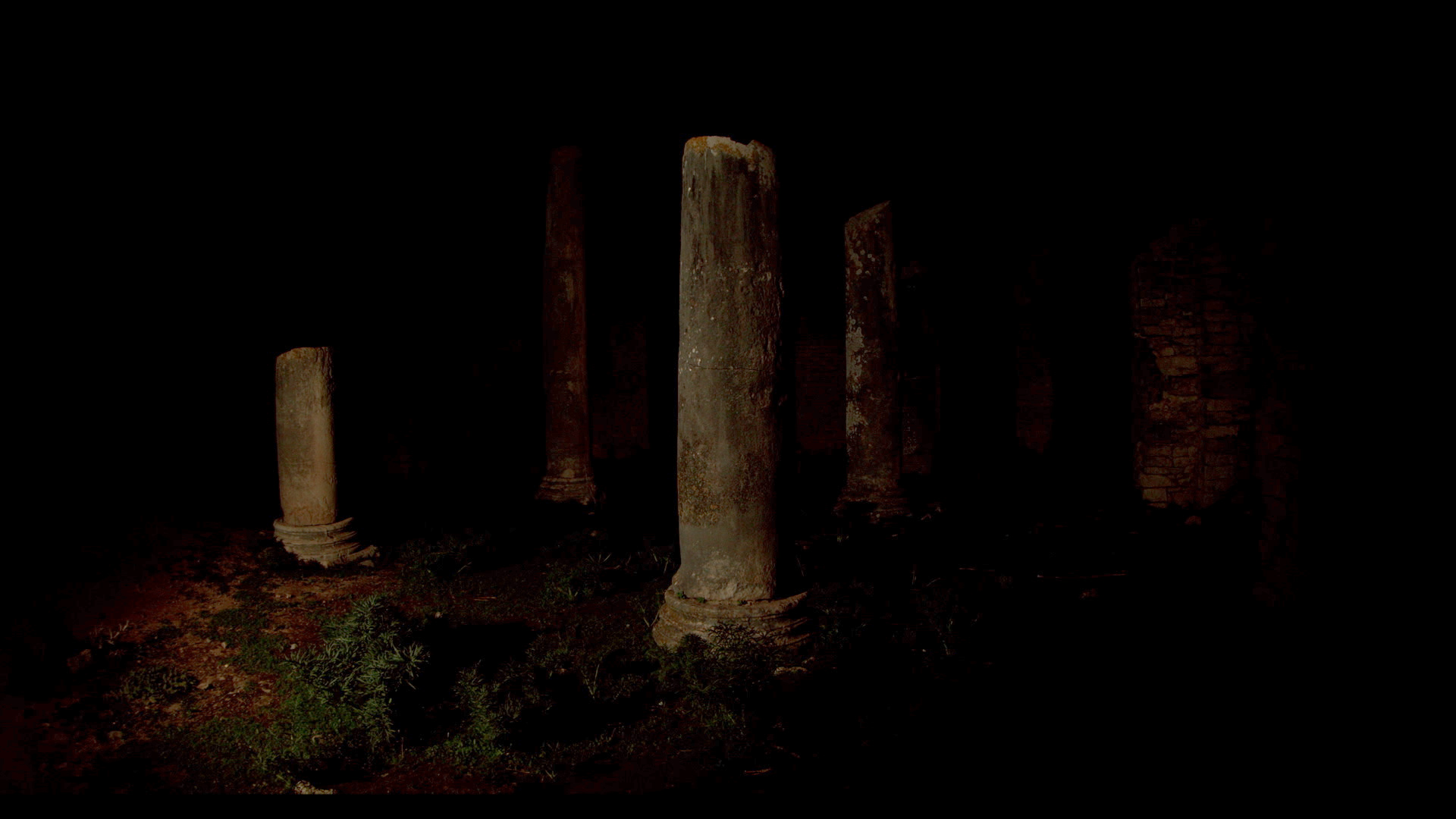
By what grace, still shrouded in relative darkness, does a hand come to wrest a few grains of light from the shadows?
What might seem here like a strange raising of a curtain offstage, without dialogue, says everything about a final act on the threshold of tragedy. And if we think we are watching a haunted descent, what emerges are gestures performed in a time of abandonment. This is the beauty of Younès Ben Slimane’s *We Knew How Beautiful the Islands Were*: with no sound other than the wind, punctuated by the crackle of fire and the scraping of a shovel against dry earth in an improvised cemetery, we can make out the outlines of an elegy in which every shot is a chiaroscuro tableau.
Captivating in its austerity, which silences the pathos associated with the tragedy of migration, this documentary, only faintly inflected with fiction, works in low light and asserts certain features that its nocturnal staging seeks to bring into sharp relief.
Excerpt from a text by Adnen Jdey on Nawaat, 2022.
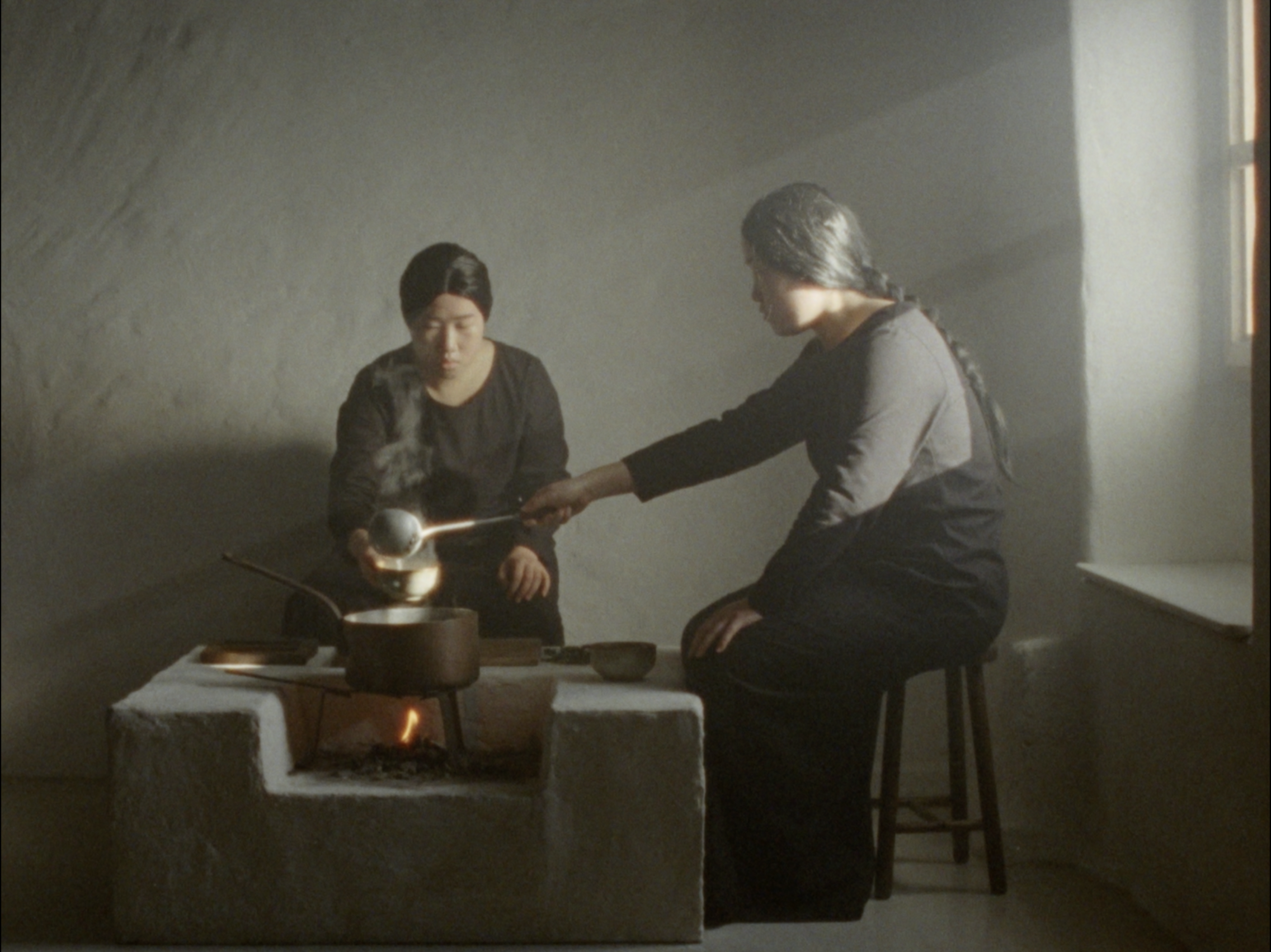
In Phalène, the place and period are uncertain. At most, we might describe the setting as premodern, since nature still seems to be the principal interlocutor. The two heroines go about everyday tasks whose regularity suggests an existence governed by the most ordinary rituals: sleeping, eating, washing—activities that situate the narrative within the domestic sphere. As actions take the place of words, the absence of dialogue heightens the precision of their gestures. This domestic choreography is all the more visible because the two characters appear to be doubles of each other. Their physical resemblance extends into their strange mirrored movements. Daily life is thus imbued with a mystery that the film continually intensifies through the sudden divergence of these two synchronized bodies.
Fever and water, cave and skin, mist and enchantment: these motifs drift together as in a dream, like a boat disturbing the surface of a lake before an organ of stone, without either protagonist needing to make a single stroke of the paddle. Between the twin sisters’ transformation into statues and their immersion in a liquid world, Sarah-Anaïs Desbenoit allows a somewhat magical dialectic to emerge. The spectral dimension running through her film expresses a dialogue between the elements, as though they could only manifest themselves as a disturbance in the orderly arrangement of these overly regulated lives. Body and mind come apart, reality fractures, and the psyche opens to a wandering mood. Sarah-Anaïs Desbenoit’s tableau-like shots are drawn toward myth and, with it, toward an almost primordial narrative seeking to invent figures that ultimately never remain identical to themselves.
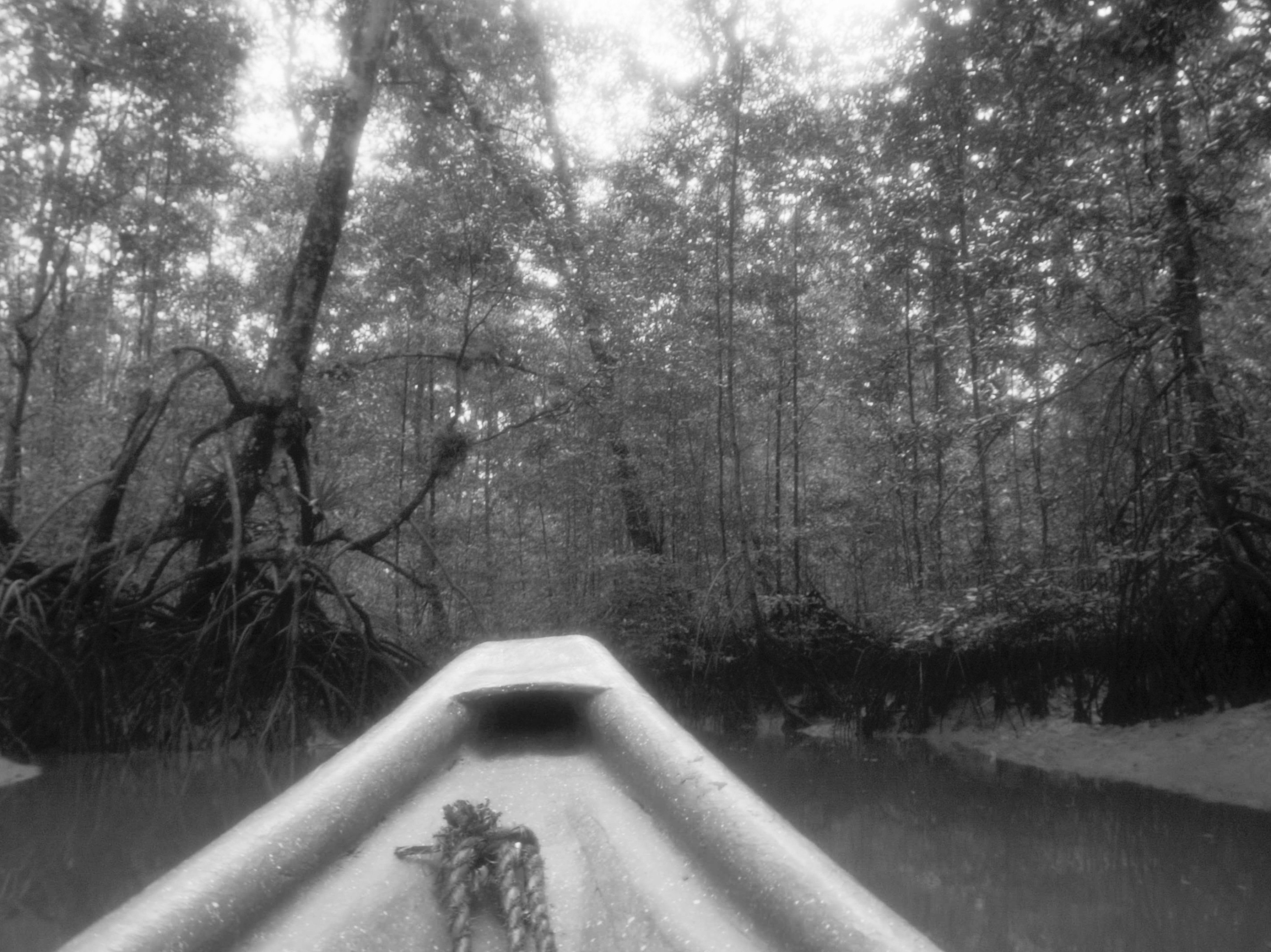
After spending many years away from Colombia, I received an unusual invitation to accompany a musical group to the Colombian Pacific coast. That is how I found myself in those waters, almost without realizing it. Without telling anyone I was coming, I experienced a powerful reunion. During this journey, I tried to find again the home I had left behind when I departed. This film is part of that search: how does one return home? What is that place made of?
The Pacific is where this film finds its grounding, because the music, the presence of water, and the persistence of life in this region allowed me to rediscover paths toward reconciliation and emancipation within the experience of migration. The Pacific is a territory marked by Colombia’s armed conflicts and the scars of colonization. It is a region where formerly enslaved communities sought refuge, and in these same waters thousands of whales arrive each year from Antarctica to give birth.
This film arises from the need to seek out new voices—including poetic ones—that call for new ways of constructing knowledge, unfamiliar ways of being and inhabiting the world, in which individual experience intersects with collective history, with all its wounds, sutures, and transformations.
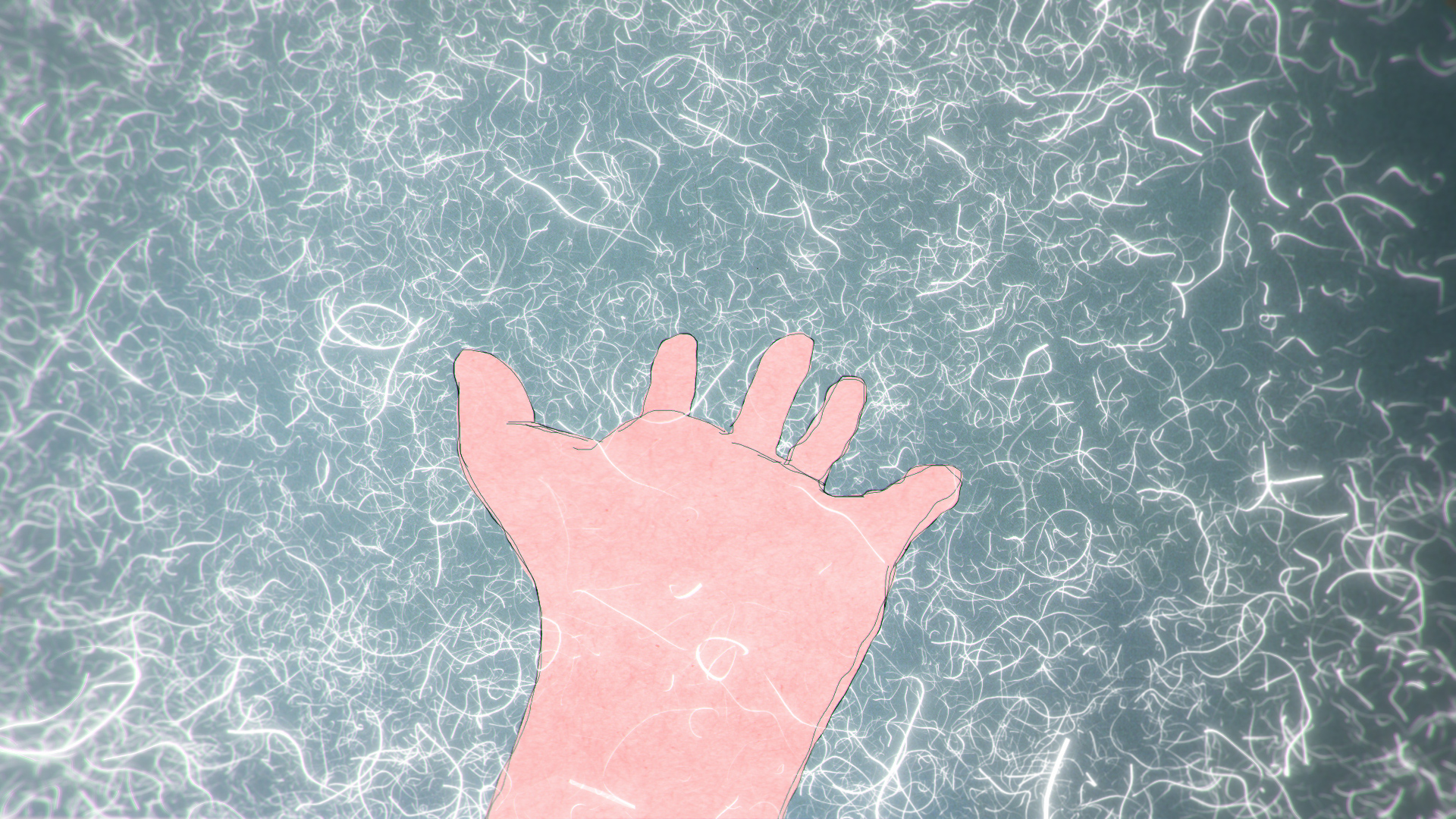
Nature produces extraordinarily poetic accidents. Here I wanted to foreground one of its forms often considered undesirable: animal hair. Its surprising nature means that it is sometimes admired and sometimes rejected. When attached to the body, it is an alluring adornment; once detached, it becomes unwanted, even repulsive. In this film, conceived as a fable, hair takes flight and becomes a form of total art, asserting itself within a dwelling and taking possession of it. In this villa made of lines, hair breathes in a form of unrestrained poetry, acting as a spokesperson for the so-called wild world.
Vidéo, 14' min, 2015
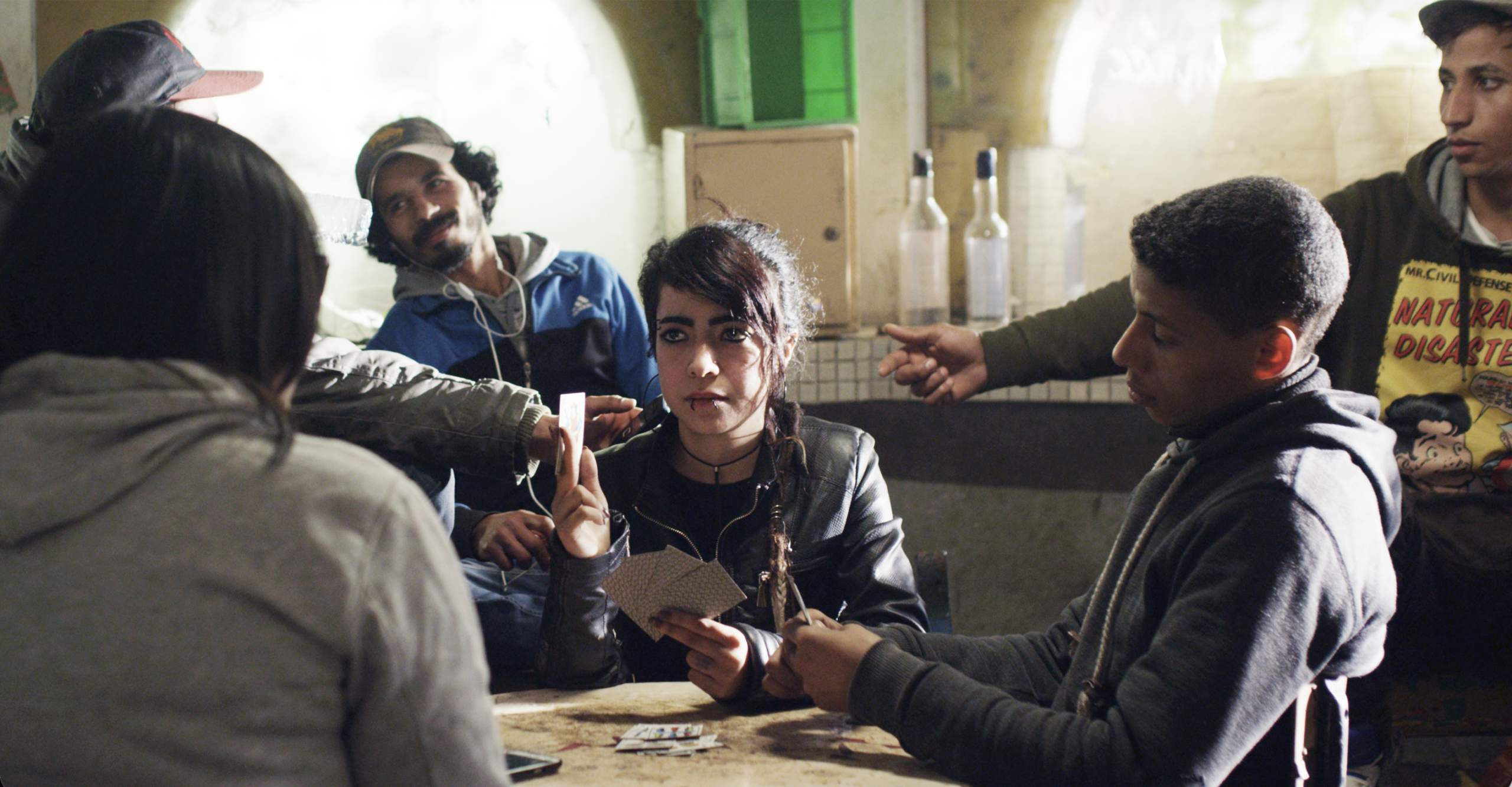
A place with uncertain boundaries and nebulous laws. Characters caught in an existence whose contours elude the camera’s gaze. Such is the world of a former amusement park in the Arab League Garden in Casablanca, through which Randa Maroufi leads us.
Actions frozen in gestures of exchange, waiting, and aggression are performed according to a score orchestrated by the artist, who, in the manner of Eric Baudelaire, explores reality through composition. Yet this reality is also virtual: some of the scenes are drawn from a repertoire of violent self-representations found online, whose visual vocabulary the artist appropriates. Violence is a language, she tells us, and its interpretations depend on context.
A strange vitality emerges from the gentle stillness of the silent tracking shot as it drifts among scenes enacted by people occupying the site, whether merely passing through or living there precariously. (…) At every hidden path, Randa Maroufi’s *Le Park* slips away from us, drawing us into a gentle dream whose outcome is never revealed. Indifferent to our presence, it murmurs its silent rhythm.
These scenes, these lives, the artist approached first with modesty, then with trust, always with respect. Never seeking to claim the untameable park or the lives inhabiting it as her own, Randa Maroufi brings us into contact with an intimate world on the threshold of a fury both real and imagined. With the sharpness and delicacy of a metal point, the artist sketches a forgotten tale at the heart of the city, yet on the margins of the world.
Text by Inès Bouaillon.
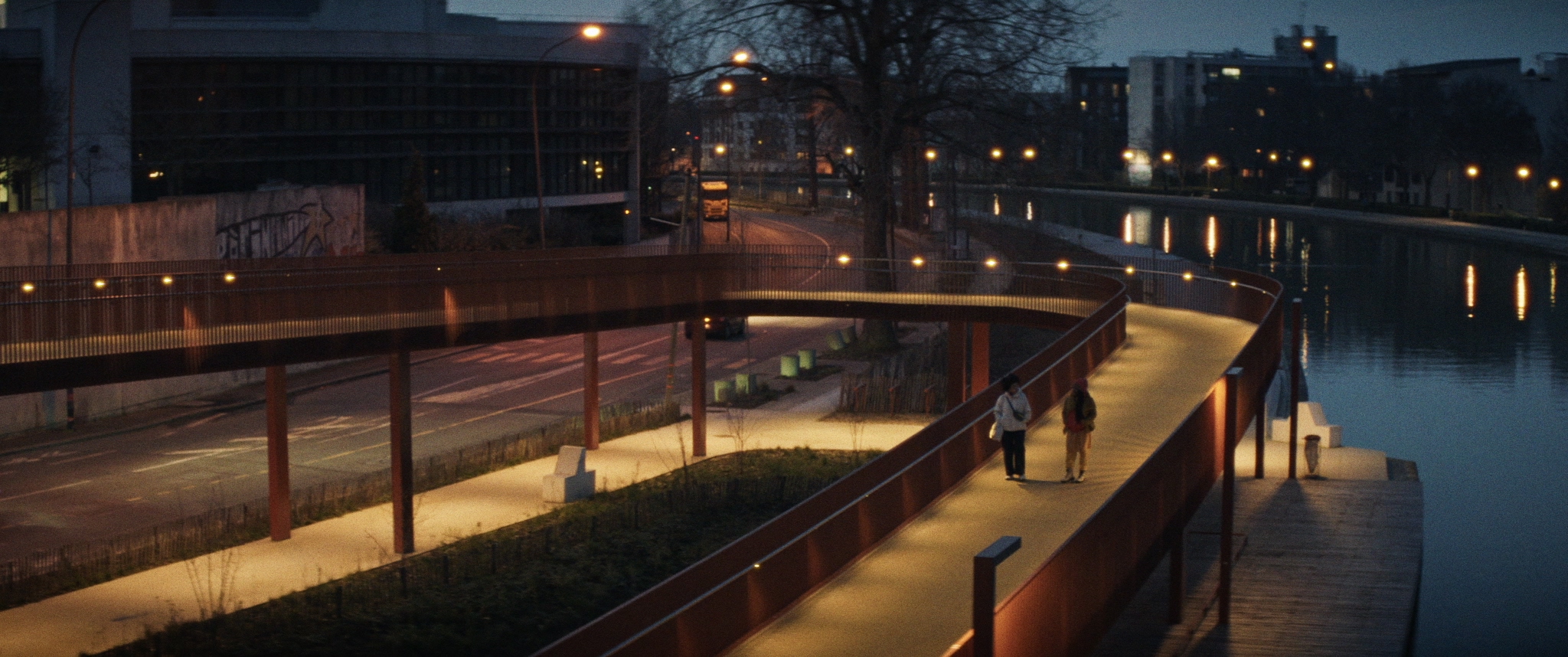
Between the layers of the city lies a fragmented memory: that of the first hip-hop dancers at Châtelet–Les Halles. Sous le béton explores this vanished heritage, buried beneath successive renovations and a lack of archives.
The film weaves a dialogue between past and present, combining documentary accounts with fictional reconstructions. Through the testimonies of key figures—Koïsso, Jean-Claude Guibert, Marguerite Mboulé, and DJ Chabin—it brings back the gestures, voices, and paths of this first generation of urban artists. Within the film, their memory becomes a territory of reconstruction, where contemporary bodies reenact the dances of yesterday in the very places where they once existed.
By relocating the archive within gesture and speech, Sous le béton revives a past the city has tried to erase and asks what it means to pass on a memory that was never written down.
“It is early; still far too early. Stop imagining you are an owl, Isabella. Let us sleep and go back to sleep yourself. We have no use for your dreams or your poetry.”
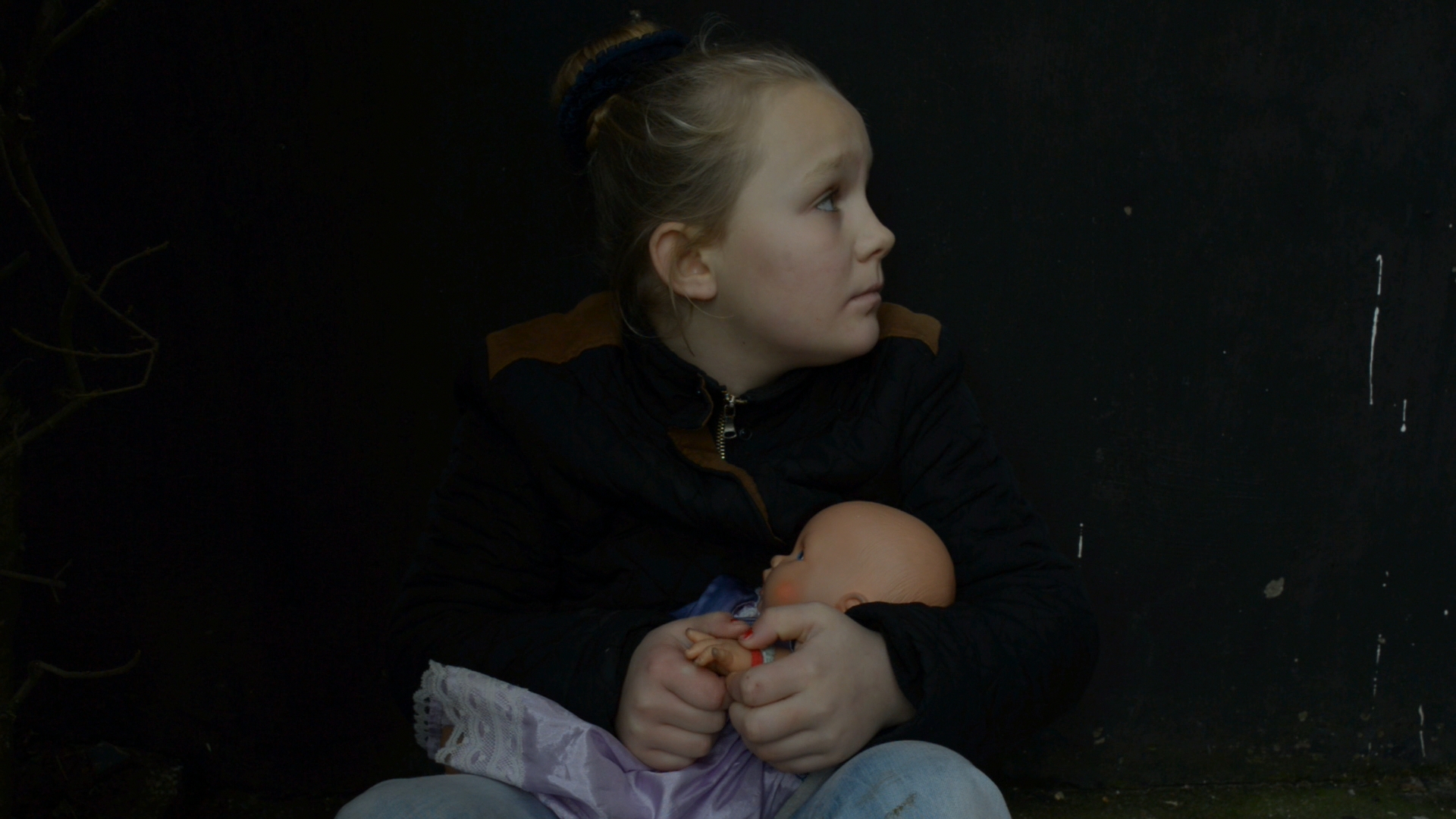
What is the connection between the unruly stories of Adriana, a little girl of today, and the poetry of Isabella, accused of betrayal by her brothers in the sixteenth century? What possible or imagined echoes might exist between the literary text of André Pieyre de Mandiargues and the prerecorded declarations of love of a contemporary talking doll?
Here Adriana tells stories, Camille grumbles, and Océane, out of some indefinable boredom, persistently makes her doll repeat its same old speech. Is this the trace of a program, or, on the contrary, the hope of a possible emancipation?
Freely inspired by André Pieyre de Mandiargues’s play Isabella Morra, this film grew out of a shoot with children living in a housing estate on the outskirts of Boulogne-sur-Mer. Through footage of everyday activities and portraits of children captured in their spontaneous theatricality, a play of resonances develops with the world of the text.
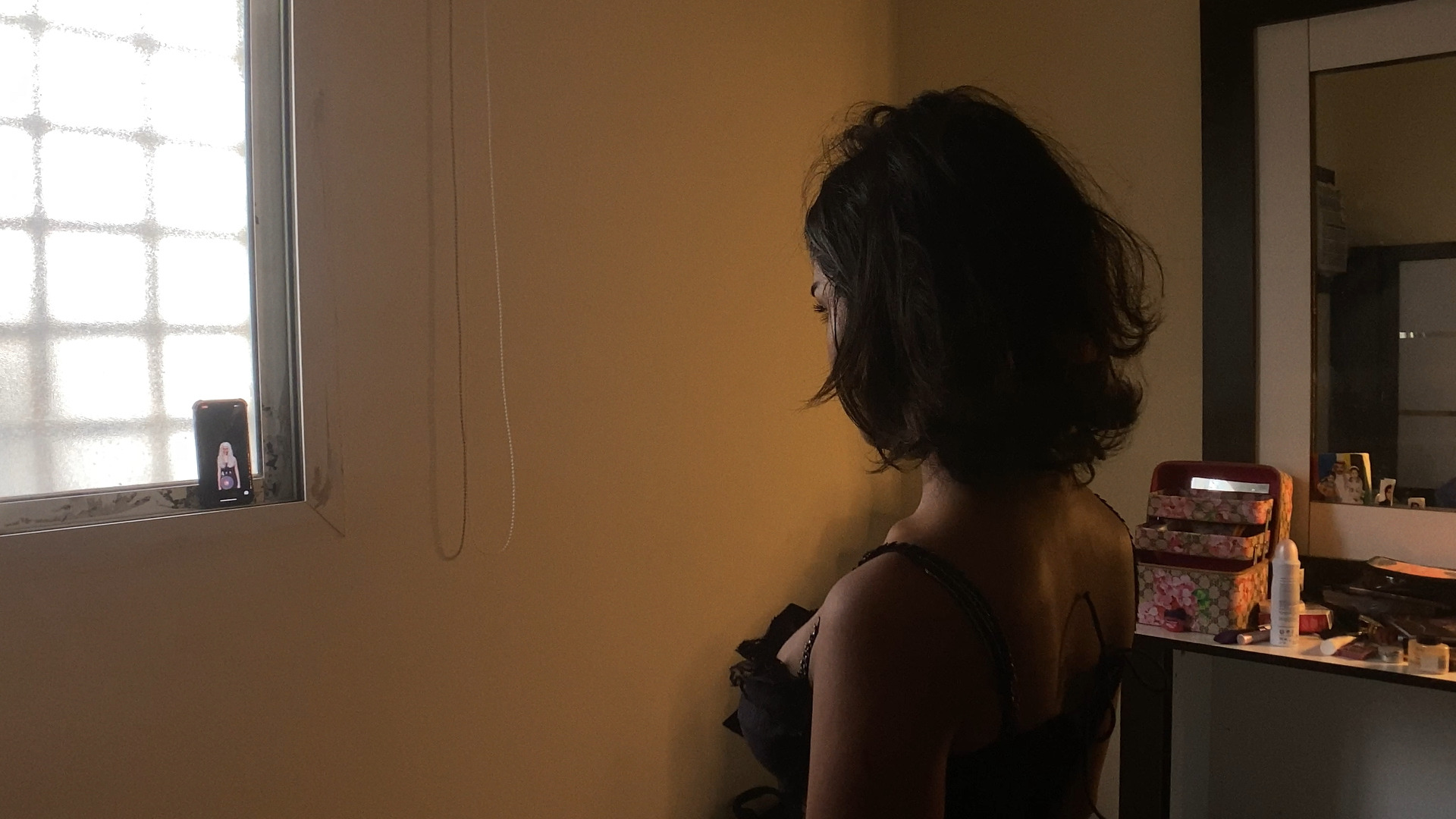
Poses, selfies, and imaginary freedom echo one another in a journey through a teenage girl’s practices on social media. Her desire to exist solely as an image collapses when she loses control of her avatar. Working at a distance, Anhar presents two girls who film themselves and perform fictional versions of themselves in order to explore their private and public lives.
To some extent, this belongs less to the narrow determinism of technological art than to scientific film, stripped of any documentary character yet retaining the beauty particular to scientific imagery—as in Painlevé’s films, which were close to both Artaud and Bataille and cannot simply be reduced to wildlife documentary. These are kinds of scientific fictions that fictionalize science, taking account of the changes induced by observation and by the observer: the pursuit of objectivity reveals itself to be a lure. Aware of the disturbances caused to an animal’s natural habitat by the act of filming—changes in light and heat, notably—such films show, in their own way, not so much the real as a surreal reality.
Or, just as it has been customary since Evans to distinguish between the document and the documentary style, what we have here is less a scientific film than a “scientific style,” or an aesthetic aspiring to be scientific. This by no means entails rejecting technological tools, but rather diverting them from their intended use. What is diverted is not so much what is shown as the process and instrument employed: the thermal camera, repurposed from its customary applications, varied though these already are. This contrasts with Nauman’s installations *Mapping the Studio I and II*, in which he sought to recover the infrared camera’s usual surveillance function.
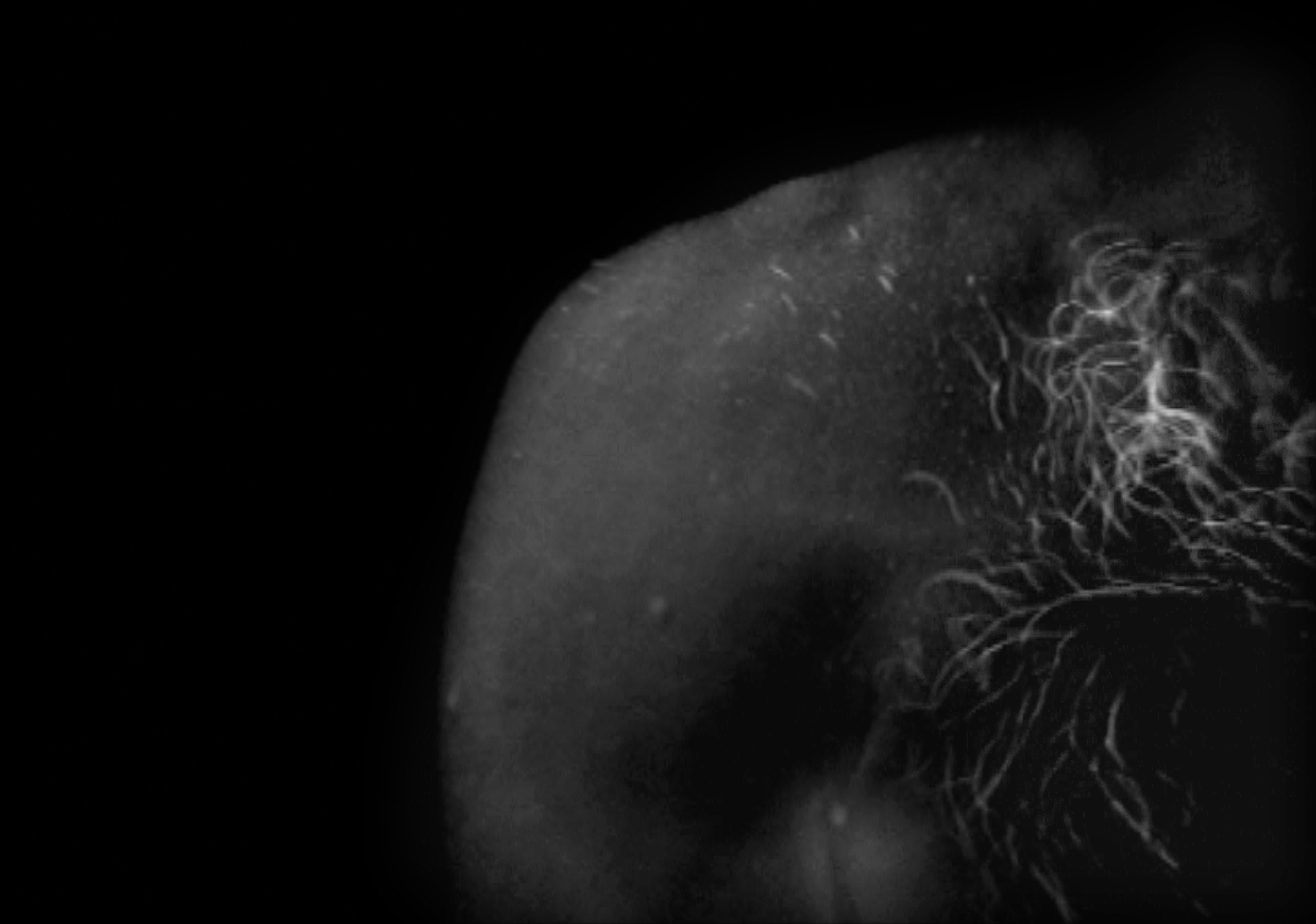
What is mapped here is not the artist’s studio but a body—a body that becomes landscape-like even as it is thermographically recorded and dispersed. Whereas mapping generally functions as an instrument of territorialization, here it becomes an instrument of landscape-making, with the deterritorialization this entails.
Through the combined effect of the thermal camera and the source—or rather, bursts—of heat, under the action of warm breath, the latent thermal image is seemingly “developed”; the “latent content,” the “latent landscape,” appears to be revealed, as if coming to life of its own accord. The skin’s “texture,” with its particular grain, ripples, roughness, pores, hollows and protrusions, folds and creases, “reliefs” and hair, turns into valleys, hillocks, craters, and vegetation.
A body-landscape shaped and reshaped by flashes of heat and light, where all sense of scale disappears, even though, as in Painlevé’s work, the shots are in fact taken from very close range.
If, as Saussier [1] suggests, a landscape can be transposed into traces in the flesh of its inhabitants, is it truly utopian to claim that a portrait of one of those inhabitants could become a portrait of a city—in this case, Lisbon?
See Sylvain Maresca, “Le Document est une forme”; Gilles Saussier, Living in the Fringe, Paris, Figura, 199.