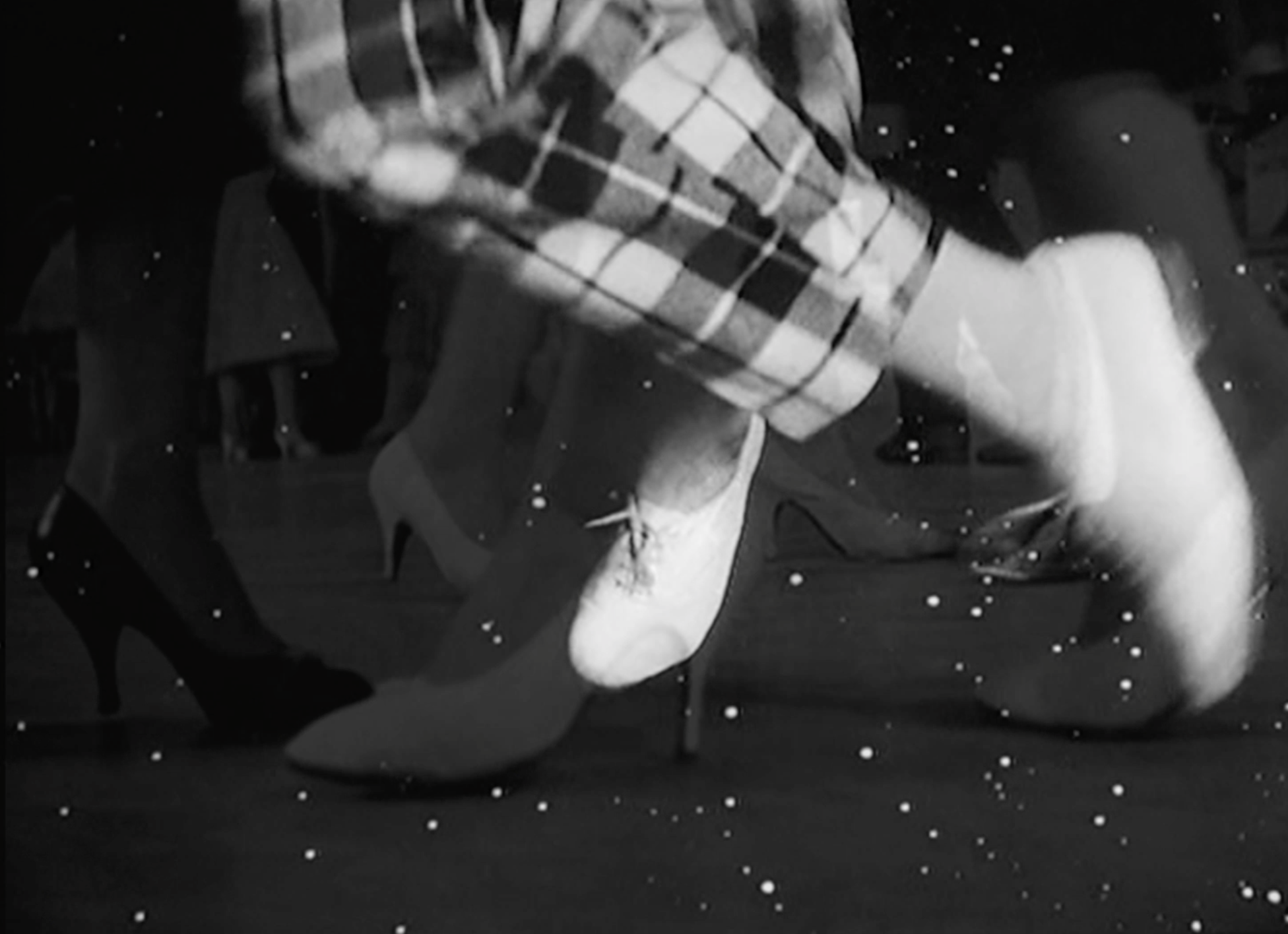

In Glamouring, I film the slow transformation of a man who, through make-up, becomes a woman. I wanted to capture this moment of passage, where the face ceases to be a fixed identity and becomes instead a space of projection, fiction, and representation. The time it takes to apply the make-up acts as a crossing: layer by layer, the original features disappear, allowing another being to emerge.
The sound is the original music of kathakali. The percussion roots the video in the physical and spiritual reality of this ancestral tradition — a form of theatre in which men have long embodied female figures too, and which has for centuries questioned the construction of roles and identities.
Today, this work resonates with contemporary reflections on gender and the fluidity of identity. Without illustrating any theoretical discourse, Glamouring simply shows that gender can be perceived as a construction — a play of signs, gestures, and gazes.
What interests me is that fragile instant when one no longer knows exactly who is appearing: the man, the woman, the performer, or the character. » — Tania Mouraud
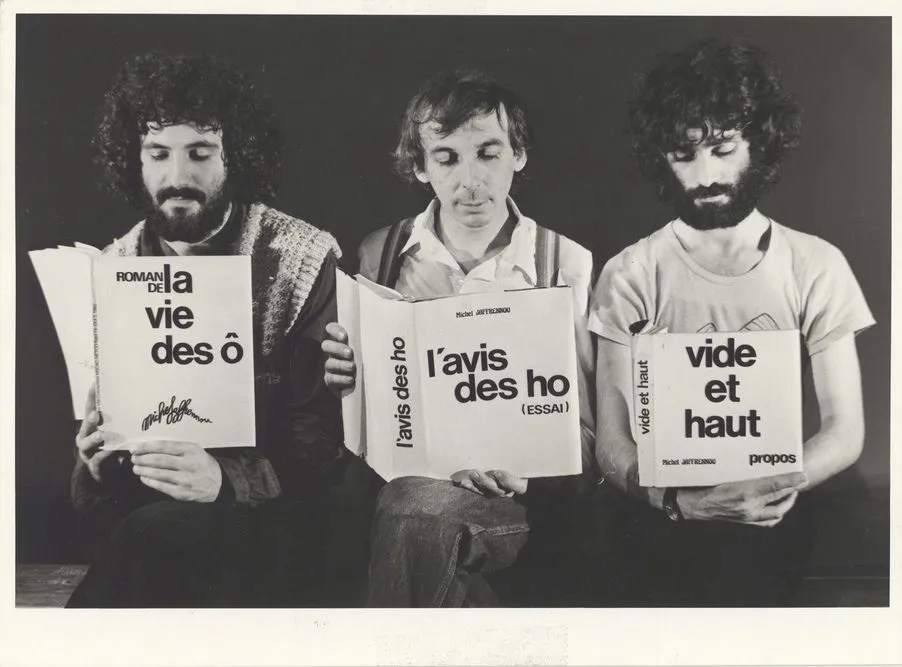
The video flashes are seen as intermediate combinations of humorous and poetic anecdotes. The purpose of this unusual visual game is to turn images into alchemy between TV and image.
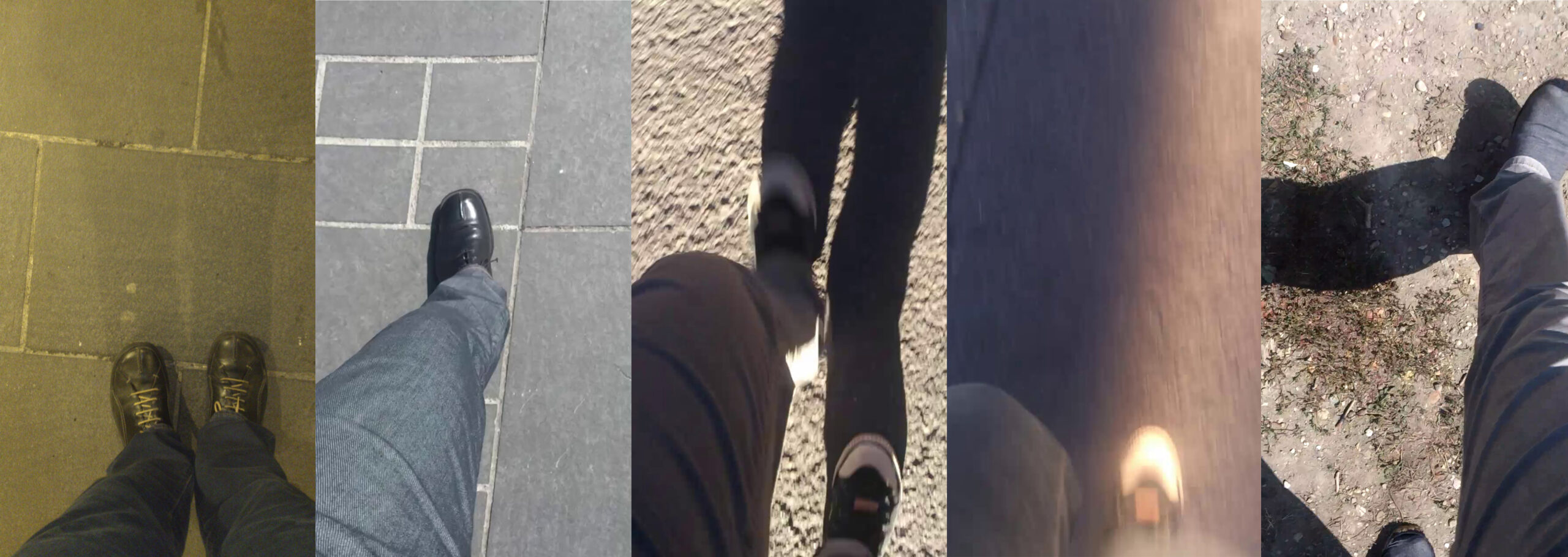
As in his other works, Marcel Bataillard continues to explore the relationship between text and image and to move back and forth between theory and practice. Thus, the film Le sens de la marche (Catwalk the line) literally shows the artist’s gait.
The video shows a succession of the artist’s movements – of whom only the legs are visible, filmed from a first-person perspective and in portrait format – with no geographical or temporal clues other than what is framed. It is therefore only by observing the landscapes traversed and the clothing worn that the viewer can form an idea of the season and the location where these images were recorded. Filmed on a mobile phone between 2013 and 2015, these tracking shots are the result of Marcel Bataillard’s journeys between home and studio and the ‘traces’ of his photographic activity; for the series Au passage and Je suis une légende in particular, all the shots he takes are done on a day-to-day basis without any location scouting or preparatory work.
The hypnotic, haunting soundtrack, composed of a mix of voices and music sourced from the internet, revisits the theme of the artist at work. Marcel Bataillard has selected excerpts from online video tutorials offering advice to aspiring models on how to walk the catwalk(1) properly, or demonstrating methods for budding musicians to learn how to play Johnny Cash’s I Walk the Line(2) correctly – a song designed for the open road.
When Johnny Cash wanders the catwalk… or how to tread the path to success.
(1) The catwalk is the English term for the runway used in fashion shows, which models walk from one end to the other before turning around and returning to the backstage area.
(2) I Walk the Line, a lament by a wayward man who finds the straight and narrow through love, is one of the most famous songs written by Johnny Cash.
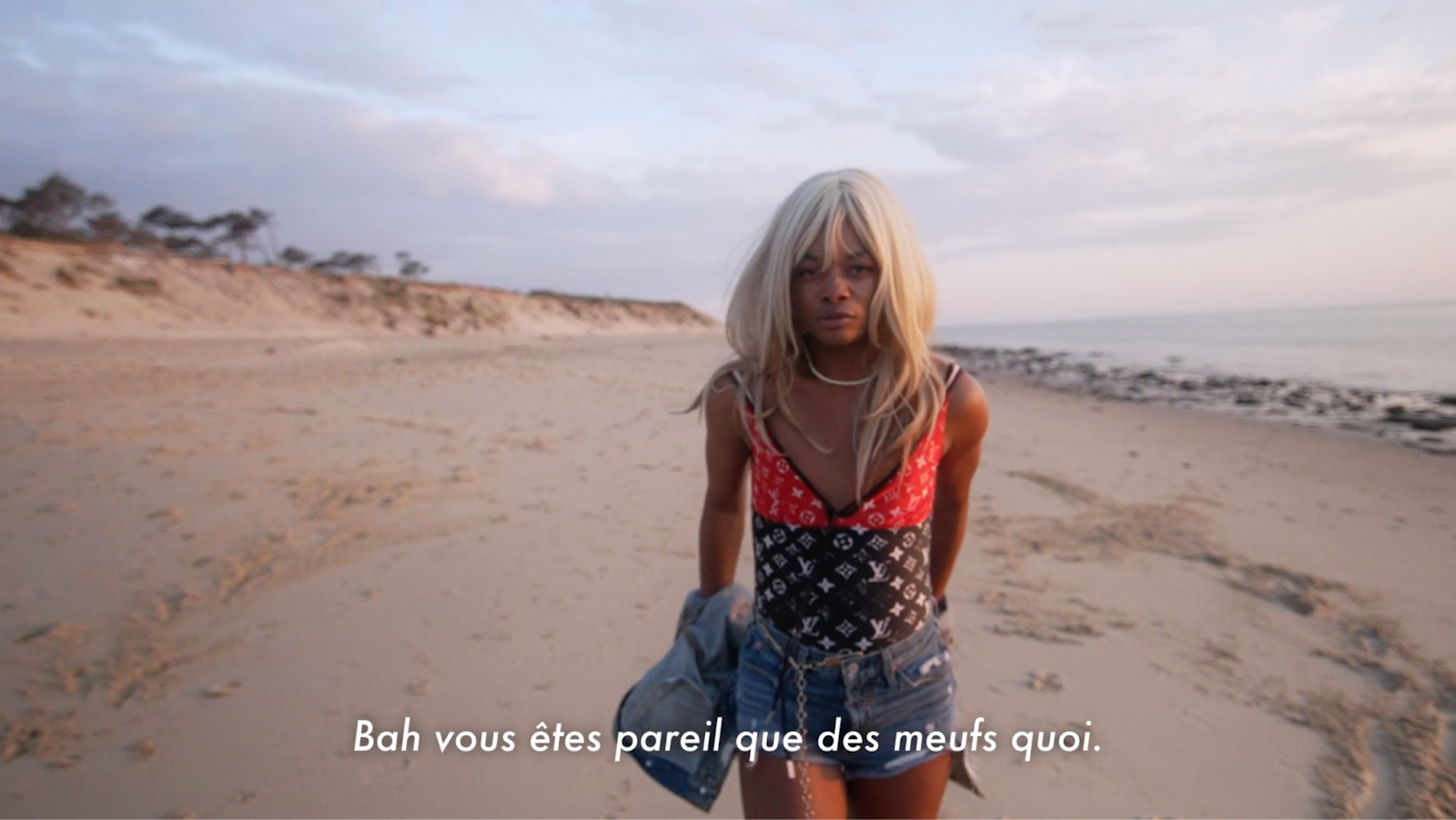
Cristiano grew up on clips of J-Lo and those 2000s divas who are also gay icons. It’s strange to realize that, as a teenager, it was easier to identify with heterosexual women than with the representations of men we were offered. (…) The men who catch Cristiano’s attention share one thing in common: they are discreet. While they use Grindr’s categorical labels to define Cristiano — trans, trav, sissy — they themselves are reluctant to define themselves. They are not gay, they are not bi. Apparently, their practices don’t constitute their identity. Cristiano listens to them with gentleness and curiosity. Before and after their encounters, in the little social time they grant him. » — Samy Lagrange
A graduate of the École supérieure des beaux-arts de Bordeaux in 2022, Cristiano Codeço De Amorim develops an autobiographical and transdisciplinary artistic practice retracing his journey and feelings, from a childhood in Portugal to his life in France since 2007. His work explores a process of awakening through installations, mediatized performances, videos, writings, sculptures, and drawing. Through the lens of family, Cristiano addresses subjects such as immigration, working-class identity, gender, homosexuality, and self-acceptance — through femininity — while questioning masculinity, perceived as a problem to be solved, and sexuality, seen as an enigma to be deciphered. All of it sprinkled with pop culture. Digital platforms and social networks inspire him and become his playgrounds.
Prix Utopi.e #3 CWB
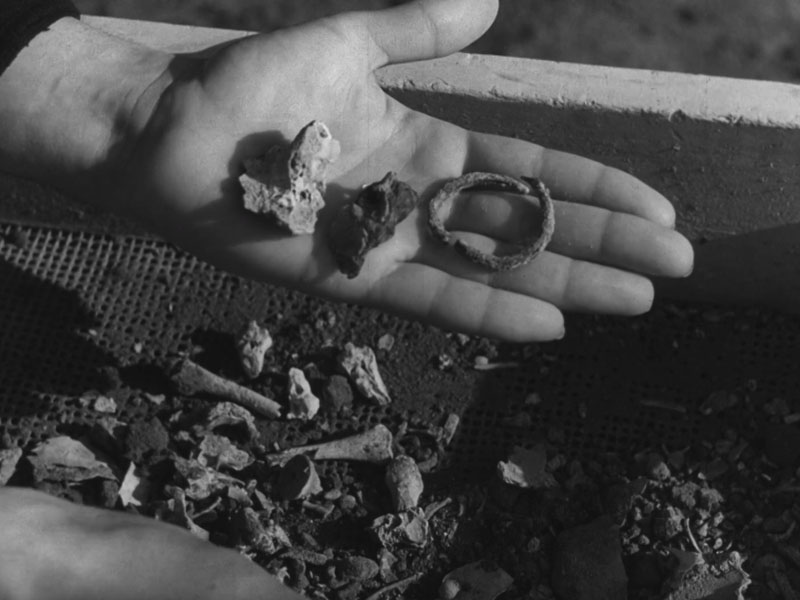
The film Images de Tunisie unfolds as a counter-ethnography, situated between archival documents and personal footage. Camera held as an extension of the body, the artist questions the image’s capacity to shape a narrative.
IMAGES DE TUNISIE repurposes and recontextualises archival material drawn from newsreels produced by Les Actualités Françaises in the 1940s, weaving them together with newly shot footage filmed at the same sites of vernacular Berber architecture in southern Tunisia. These black-and-white documentaries once served French propaganda in the colonies of North Africa, Tunisia among them.
Younès Ben Slimane explains: « The film’s title refers to Georges Barrois’s ethnographic documentary Images de Tunisie(1946), which intrigued me for its capacity to create images and shape narratives. I returned to these sites to reinterpret them through a personal lens, using a handheld camera that becomes like an extension of the body. »
Moving between archive and intimate material, the film generates a fertile tension between these two registers of imagery. This interplay becomes the film’s keystone, transforming it into a meditation on the evolution of cinema and its power to reinvent narrative.
Younès Ben Slimane is an artist and filmmaker, a graduate of Le Fresnoy in 2022. His practice sits at the crossroads of cinema, architecture, and the visual arts. Through his work in film and installation, he brings these different mediums into dialogue, better unfolding their potential and their limits.
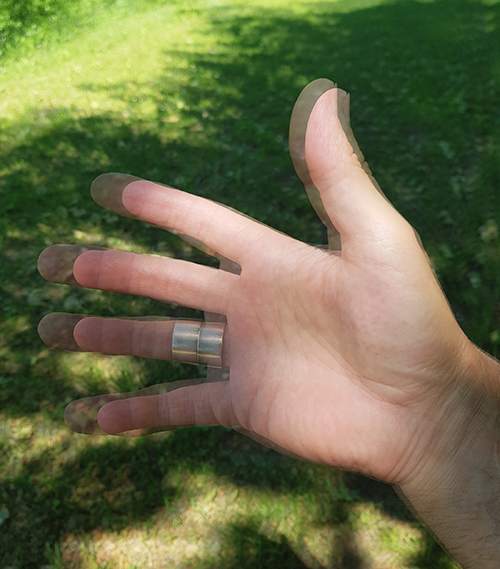
Film, fantastical tale, album, installation, and live concert — HideBehind is a total transmedia work.
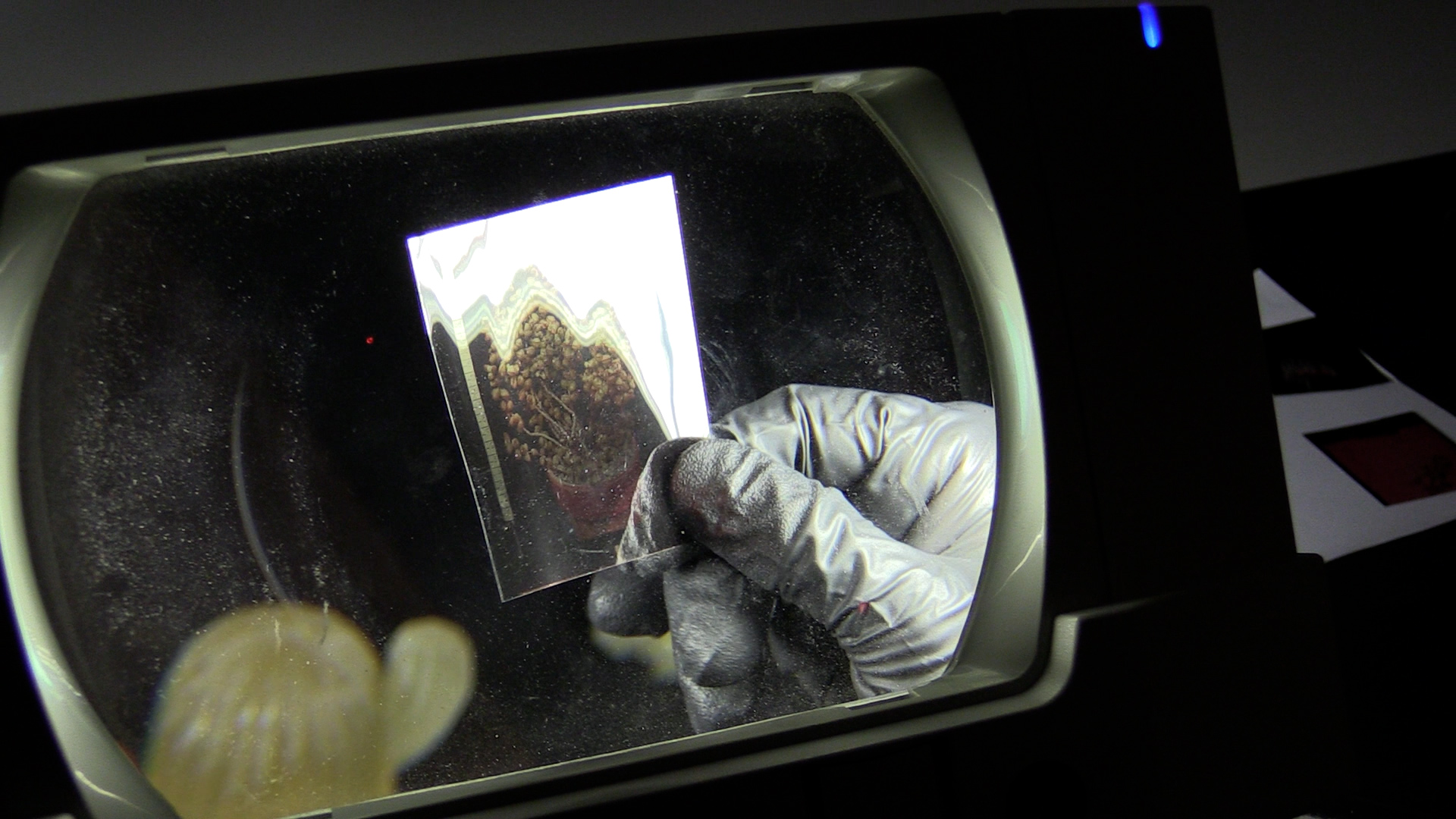
Jardins Partagés is a production for the 2026 Biennale de Lyon, co-produced with the Nouveau Musée National de Monaco as part of the 2025 school-based residency and digital creation residency.
Jardins Partagés is an installed film born from the encounter between two Mediterranean gardens, two forgotten archives — or rather, two archives that don’t exist — and an intergenerational journey: children, teenagers, and elderly people brought together around something that had nearly disappeared.
In Monaco, middle-school students explore the Jardin Exotique, microphones in hand, questioning the gardeners about their intimate relationship with plants. The camera follows their gestures: a hand grasping a succulent, a gaze studying a resin flower under a microscope, bodies learning to move like cacti. In parallel, an AI trained on Gustave Humbert’s unpublished manuscript generates new hybrid species, photographed like scientific specimens with a measuring scale — somewhere between 1970s botanical archives and extraterrestrial visions. Forms that don’t exist, yet seem as though they’ve always been there.
In Lyon, other generations wander through the Jardin Rosa Mir: children, teenagers, elderly people, touching walls made of shells and pebbles, dancing like plants, leaning in together over the details of a garden built stone by stone by one man alone. At night, headlamps draw shapes out of the darkness. The camera shoots in photogrammetry: bodies and gardens gradually dissolve into clouds of colored points, a point cloud that drifts, deforms, disappears. The real liquefies. What remains is form — the memory of form.
These two narratives gradually intertwine, without hierarchy. Images from Monaco slip into those from Lyon. The AI-generated hybrid species appear as visions within the Lyon garden, ghost plants growing between the shells. The 3D models dissolve into particles, reassembling elsewhere — in another garden, another era.
Two voices run through the film. The first is Humbert’s, reconstructed by AI from his never-published manuscript; it comments on what it sees with the gentle precision of a botanist in love with his plants. The second is the voice of the Jardin Rosa Mir itself, trained not on archives that exist, but on what is missing: the silence surrounding Jules Senis Mir, the absence of testimonies, the years without photographs. A voice made of gaps, of blank spaces, of what was never said. These two voices do not address humans — they speak to one another, like two gardens that have finally found a way to communicate across time.
The film moves between several visual registers: grainy DV video from the field archives, medium-format botanical photography with a measuring scale, dissolving 3D point clouds and photogrammetry, a green screen where bodies dance surrounded by speculative AI-generated gardens, a microscope revealing the infinitely small details of a resin flower. These textures coexist without seeking unity, as in a garden where the mineral and the vegetal, the artificial and the living, accumulate without trying to resemble one another.
Jardins Partagés is not a film about the past. It is a question posed to the night: what do the stones, the shells, and the plants do when no one is watching?
At the end, each participant places their piece on the central column. The column absorbs everything. It keeps watch.
Monaco / Lyon, 2025–2026