Behind the Walls: OVNi × Supervues — Village Edition, with Mona Vătămanu and Florin Tudor
|
|
|
Presentation
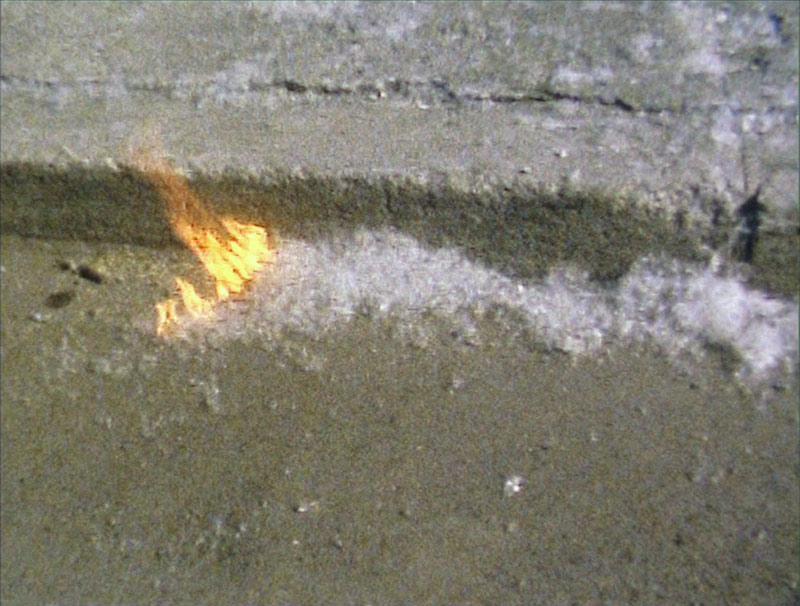
The film Rite of Spring by Mona Vǎtǎmanu and Florin Tudor evokes the “principle of creative destruction” through the simple yet powerful act of children burning clouds of white poplar pollen scattered across the streets of Bucharest. This poetic gesture, marked by the innocence and spontaneity of play, suggests both the promise of renewal and the potential for chaos. At times, the flames spiral out of control, setting trees ablaze and prompting the intervention of firefighters. The charred trunks left behind stand as a stark reminder of the fragile boundary between creation and destruction.
The fleeting fires in the film act as catalysts for change, evoking both the hope of transformation and the unsettling possibility of collapse. These images resonate with moments of unrest and instability, reflecting growing tensions in the world today.
The work ultimately highlights the fragility of both social and natural orders, revealing how easily balance can be disrupted and echoing the complex dynamics of change in contemporary societies.
//
BIO
Mona Vatamanu (b. 1968, Romania) and Florin Tudor (b. 1974, Switzerland; based in Bucharest) have been collaborating since the early 2000s.
Both multimedia artists, they graduated from the Faculty of Visual Arts at the Academy of Fine Arts in Bucharest; Florin Tudor also holds a degree in art history and theory. Together, they initiated the Coop Media Festival in Bucharest.
Their multidisciplinary practice spans installation, painting, photography, and film. Engaging critically with collective memory—and its counterpart, amnesia—they explore history as both a political subject and material, re-inscribing it into the present through performative reenactments.
Their work addresses the ambivalences, repressions, and inhibitions of the former Eastern Bloc, examining the remnants of ideological struggles through questions of violence and the role of artistic practice. While their approach often carries an almost archaeological sensibility, reflecting on the disillusionment following the collapse of the socialist utopia, it is distinguished by a broader, universal perspective that challenges dominant narratives of world history.